

On this page
Spinal muscular atrophy
Also known as Werdnig-Hoffmann disease (SMA type I)
SMA is a group of inherited conditions that damage motor neurons, which are nerve cells in the spinal cord and brainstem. This damage leads to muscle weakness and wasting, impacting movement, breathing, and swallowing. It primarily affects infants and children, though adult-onset forms exist.
Available at Jeen Health
Clinical tests that include this
Overview
Spinal muscular atrophy (SMA) is a hereditary neuromuscular condition that leads to the progressive weakening and wasting of muscles. This occurs because of a loss of specialised nerve cells, known as motor neurons, located in the spinal cord and the lower part of the brain. These motor neurons are responsible for sending signals from the brain to the muscles, enabling movement. When motor neurons are impaired or die, the muscles do not receive these signals, causing them to become weak and waste away over time [PMID:33678096].
SMA encompasses a range of conditions, traditionally classified into types 0 to 4 based on the age of onset and the highest motor milestones achieved. Type 1, often referred to as Werdnig-Hoffmann disease, is the most severe and common form, typically presenting in infancy. Other types can manifest later in childhood or even adulthood, with varying degrees of severity and progression. The condition's impact can range from severe, life-limiting muscle weakness in infants to more subtle, progressive weakness in adults [PMID:28751522].
Although SMA is a rare condition, affecting approximately 1 in 6,000 to 10,000 live births, it is one of the most common genetic causes of infant mortality and morbidity. Advances in genetic testing and treatment options have significantly altered the outlook for many individuals with SMA, particularly when diagnosed early. Understanding the genetic basis of SMA is crucial for accurate diagnosis, genetic counselling, and access to available therapies.
Symptoms & clinical features
The symptoms of spinal muscular atrophy primarily revolve around muscle weakness and its consequences, but the specific presentation and severity can vary widely depending on the type of SMA. Generally, proximal muscles (those closer to the body's centre, such as the shoulders, hips, and back) are more affected than distal muscles (those further away, like hands and feet). This muscle weakness is typically symmetrical, meaning it affects both sides of the body equally.
In severe infant-onset forms (Type 1), symptoms often appear within the first few months of life. Affected infants may present with profound muscle weakness, floppy limbs (hypotonia), and difficulty with basic movements like head control or sitting. Feeding difficulties, a weak cry, and impaired breathing due to weakness of the respiratory muscles are also common and can be life-threatening. Individuals with Type 2 SMA, which generally appears between 6 and 18 months, might be able to sit independently but typically cannot stand or walk without support. They often experience tremors in their fingers, and scoliosis (curvature of the spine) is a frequent complication [PMID:33678096].
Later-onset forms, such as Type 3 (juvenile onset) and Type 4 (adult onset), have a milder presentation and slower progression. Individuals with Type 3 SMA usually develop symptoms after 18 months of age, often being able to walk independently at first but experiencing increasing difficulty with activities like running, climbing stairs, or getting up from a seated position. Type 4 SMA is the rarest form, with symptoms emerging in adulthood, typically after age 30. This form usually involves mild to moderate muscle weakness, tremors, and muscle twitching (fasciculations), and individuals generally maintain the ability to walk throughout their lives, though mobility may become limited over time.
Video: Genetics 101
Affected organs
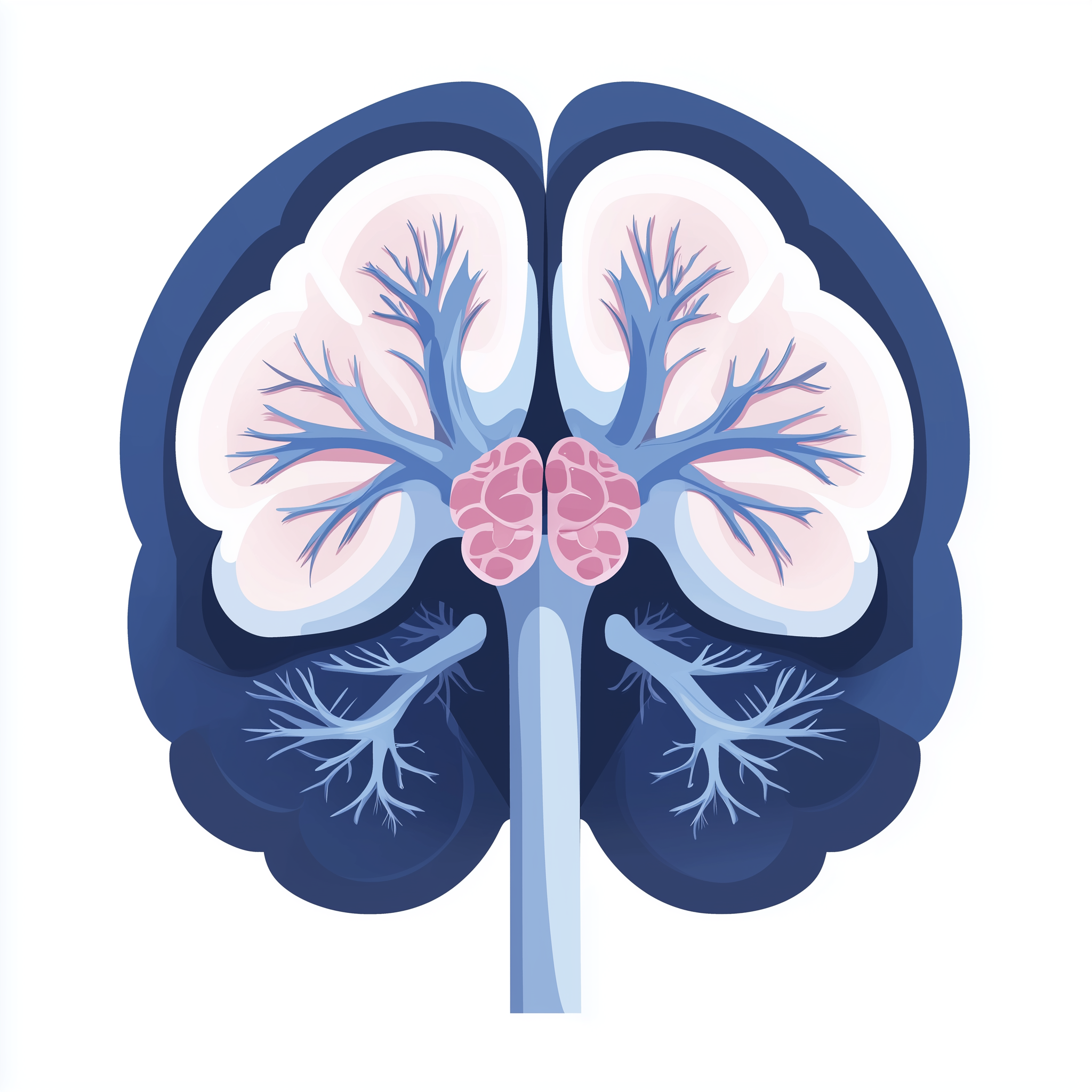
Spinal muscular atrophy primarily impacts the nervous system and the musculoskeletal system. The core problem lies with motor neurons, which are nerve cells located in the spinal cord and brainstem. These motor neurons are vital for transmitting signals from the brain to voluntary muscles throughout the body. In SMA, these motor neurons progressively degenerate and die, leading to the primary clinical features of the condition.
As motor neurons are lost, the muscles they innervate (supply with nerves) no longer receive proper signals. This leads to muscle atrophy, meaning the muscles waste away and become weak. This muscular involvement can affect almost all voluntary muscles, including those responsible for movement of the limbs, trunk, neck, and head. Importantly, the muscles involved in breathing (respiratory muscles) and swallowing (bulbar muscles) can also be severely affected, particularly in more severe forms of SMA. Weakness in these muscles can lead to breathing difficulties, recurrent respiratory infections, and problems with feeding and speech. The heart muscle and smooth muscles of internal organs are generally not directly affected by SMA, which distinguishes it from some other neuromuscular conditions.

Risks & severity
The severity of spinal muscular atrophy varies significantly, ranging from severe forms that manifest in infancy and are often life-limiting to milder forms with adult onset and a near-normal life expectancy. This spectrum is largely influenced by the number of copies of a 'backup' gene called SMN2, which is discussed further in the genetic causes section.
Type 1 SMA, the most severe, accounts for about 60% of all SMA cases. Onset is typically before 6 months of age, and without treatment, most infants with Type 1 SMA do not survive past two years due to respiratory complications. Type 2 SMA usually presents between 6 and 18 months, with individuals able to sit but not stand or walk independently; life expectancy varies but is generally longer than Type 1. Type 3 SMA has an onset after 18 months, and affected individuals can walk initially but may lose this ability later in life. Type 4 SMA, with adult onset, is the mildest form, and individuals typically have a normal life expectancy with slowly progressive muscle weakness [PMID:28751522].
Factors influencing the overall prognosis include the specific type of SMA, the number of SMN2 gene copies, and the availability and timing of therapeutic interventions. Early diagnosis and access to new treatments have significantly improved outcomes across the spectrum of SMA types, particularly in very young children. Complications such as respiratory infections, feeding difficulties, and scoliosis can affect the health and quality of life for individuals with SMA, irrespective of type, and require careful management.
Genetic causes
Spinal muscular atrophy is primarily caused by changes in the SMN1 gene, located on chromosome 5. This gene is responsible for producing a crucial protein called Survival Motor Neuron (SMN) protein. The SMN protein is essential for the healthy functioning and survival of motor neurons, which are the nerve cells that control voluntary muscle movement [PMID:28751522].
In most cases of SMA (around 95%), the condition is caused by a specific type of genetic change in SMN1 where both copies of the gene are either missing or have a specific variant called a 'gene conversion' that makes them non-functional. Without functional SMN1, the body cannot produce enough SMN protein, leading to the degeneration and death of motor neurons.
Humans also have a very similar gene called SMN2, often referred to as a 'backup' gene. SMN2 can also produce SMN protein, but most of the protein it produces is a shorter, non-functional version. However, a small proportion of SMN2-produced protein is functional. The number of copies of the SMN2 gene can vary between individuals, typically ranging from 0 to 8. Having more copies of the SMN2 gene generally correlates with producing more functional SMN protein, which can lead to a milder form of SMA because it partially compensates for the lack of SMN1 protein [PMID:28751522].
- SMN1 survival of motor neuron 1, telomericThe SMN1 gene encodes the survival motor neuron (SMN) protein, which is vital for the health and function of motor neurons and is primarily associated with spinal muscular atrophy.
Inheritance pattern
Spinal muscular atrophy is inherited in an autosomal recessive pattern. This means that an individual must inherit two altered copies of the SMN1 gene - one from each parent - to develop the condition. Parents who carry one altered copy of the SMN1 gene and one functional copy are known as carriers. Carriers typically do not show any symptoms of SMA because they have enough functional SMN protein from their one working gene copy.
When two SMA carriers have children, there is a: * 25% (1 in 4) chance that their child will inherit two altered copies of SMN1 and therefore develop SMA. * 50% (2 in 4) chance that their child will inherit one altered copy and one functional copy, making them a carrier like their parents. * 25% (1 in 4) chance that their child will inherit two functional copies of SMN1 and will not have SMA, nor will they be a carrier.
These probabilities apply to each pregnancy. Family members of an individual with SMA, particularly siblings, may wish to consider genetic counselling to understand their carrier status and the associated risks. Carrier screening for SMA is also available for individuals planning a family.
When both parents are carriers, each child has a 25% chance of being affected, 50% of being a carrier, and 25% of being unaffected.
Subtypes & variants
This page covers Spinal muscular atrophy as a single condition. Several distinct variants and clinical subtypes are recognised in the literature - they share the underlying biology and broad management approach, but differ in severity, age of onset, or causative gene:
- Type I (Werdnig-Hoffmann) OMIM 253300
Most severe SMA type, presenting before 6 months. Without treatment, death from respiratory failure typically before age 2. SMN1 gene-replacement therapy (onasemnogene abeparvovec) and SMN2-modulating therapies (nusinersen, risdiplam) have transformed the natural history.
Diagnosis & testing
Diagnosing spinal muscular atrophy typically begins with a clinical suspicion based on characteristic symptoms such as muscle weakness, hypotonia (floppy muscles), and absent reflexes, particularly in infants and young children. A paediatrician or neurologist may refer an individual for further investigation if SMA is suspected.
Confirmation of SMA is primarily achieved through genetic testing. Blood tests can analyse the SMN1 gene to identify the specific genetic changes, most commonly the deletion of both copies of SMN1. This genetic test is highly accurate and can also determine the number of SMN2 gene copies, which helps predict the potential severity of the condition. In the UK, genetic testing for SMA is available through the NHS Genomic Medicine Service (GMS) and is supported by specific R-codes for diagnostic purposes, such as R89 for 'Neuromuscular disorders - severe infantile onset' or R105 for 'SMA - childhood/adult onset'. Referral for genetic testing is typically made by a clinical geneticist or a specialist paediatric neurologist. Newborn screening programmes for SMA are increasingly being implemented in various regions, allowing for very early diagnosis and intervention, which is crucial for improved outcomes.
Management & lifestyle
The management of spinal muscular atrophy has undergone a significant transformation with the advent of disease-modifying therapies. Current approaches focus on multidisciplinary care, symptom management, and supportive treatments tailored to the individual's specific type of SMA and severity. The aim is to maximise function, manage complications, and improve quality of life. Management plans are typically coordinated by specialist neuromuscular centres within the NHS.
Disease-modifying therapies work by increasing the amount of functional SMN protein in the body. These treatments include gene therapy (e.g., onasemnogene abeparvovec), antisense oligonucleotide therapy (e.g., nusinersen), and small molecule therapy (e.g., risdiplam). Eligibility for these treatments is determined by specialist clinicians according to NHS England guidelines, considering factors such as SMA type, age, and SMN2 copy number. Early treatment initiation is often associated with better outcomes.
Supportive care is crucial and involves a team of specialists including neurologists, respiratory physiotherapists, dietitians, occupational therapists, and speech and language therapists. This care may include respiratory support (e.g., non-invasive ventilation), nutritional support (e.g., feeding tubes), physical therapy to maintain muscle function and prevent contractures, and orthopaedic interventions for scoliosis. Regular monitoring and proactive management of potential complications are key components of the ongoing care pathway for individuals living with SMA.
UK care pathway
In the UK, the care pathway for individuals with spinal muscular atrophy (SMA) is primarily managed through the NHS Genomic Medicine Service (GMS). If SMA is suspected, typically by a paediatrician or neurologist, a referral to a clinical genetics service or a specialist neuromuscular centre is made. These centres are equipped to provide comprehensive diagnostic testing and specialist care. Genetic testing, which is often performed using blood samples, confirms the diagnosis by identifying changes in the SMN1 gene and determining SMN2 copy number, under relevant NHS R-codes such as R89 or R105. Access to genetic counselling is also an integral part of this pathway, providing support and information to affected individuals and their families. This ensures families understand the inheritance pattern, prognosis, and available management and treatment options, including novel therapies that have emerged in recent years.
Frequently asked questions
Is SMA curable?
Currently, there is no cure for SMA, but significant advancements have been made in disease-modifying therapies. These treatments can slow down the progression of the disease, improve motor function, and enhance quality of life, especially when started early.
How is SMA inherited?
SMA is an autosomal recessive condition. This means a child must inherit two altered copies of the SMN1 gene - one from each parent - to develop the condition. Parents who each carry one altered copy are typically unaffected but have a 25% chance with each pregnancy of having a child with SMA.
Can SMA be detected before birth?
Yes, prenatal diagnosis for SMA is possible if both parents are known carriers of the SMN1 gene change. This can be done through chorionic villus sampling (CVS) or amniocentesis during pregnancy. Newborn screening programmes are also being introduced in some areas for early detection.
What is the role of SMN2 in SMA?
The SMN2 gene acts as a 'backup' gene for SMN1. While SMN1 normally produces functional SMN protein, SMN2 produces mostly a shorter, non-functional version. However, it also produces a small amount of functional protein. Individuals with more copies of SMN2 generally produce more functional protein, which often leads to a milder form of SMA.
What support is available for families in the UK?
Families in the UK affected by SMA can access support through NHS specialist neuromuscular centres. These centres offer multidisciplinary care, including access to therapies, physiotherapy, occupational therapy, and respiratory support. Patient advocacy groups also provide valuable information, resources, and community support.
References
- Kolb SJ, Kissel JT. Spinal Muscular Atrophy. Neurologic clinics. 2015. PMID: 26515624
- Mercuri E, Finkel RS, Muntoni F. Diagnosis and management of spinal muscular atrophy: Part 1: Recommendations for diagnosis, rehabilitation, orthopedic and nutritional care. Neuromuscular disorders : NMD. 2018. PMID: 29290580
- Arnold ES, Fischbeck KH. Spinal muscular atrophy. Handbook of clinical neurology. 2018. PMID: 29478602
- Dubowitz V. Spinal Muscular Atrophy Revisited. Neuromuscular disorders : NMD. 2019. PMID: 31227066
- Drakou E, Wright S, Delfiner LD. Treatment Guidelines and Rehabilitation in Spinal Muscular Atrophy and Duchenne's Muscular Dystrophy. Physical medicine and rehabilitation clinics of North America. 2025. PMID: 40581438
- Chabrol B, Desguerre I. Infantile spinal muscular atrophy (SMA). Archives de pediatrie : organe officiel de la Societe francaise de pediatrie. 2020. PMID: 33357590
- Wessel HB. Spinal muscular atrophy. Pediatric annals. 1989. PMID: 2666923
- Finkel RS, Hughes SH, Parker J. Risdiplam for Prenatal Therapy of Spinal Muscular Atrophy. The New England journal of medicine. 2025. PMID: 39970420