

On this page
Merosin-deficient congenital muscular dystrophy
MDC1A is a severe form of muscular dystrophy, typically presenting at or soon after birth. It primarily affects skeletal muscles, leading to significant motor difficulties and sometimes impacting breathing and feeding. The condition is caused by changes in the LAMA2 gene.
Available at Jeen Health
Clinical tests that include this
Overview
Merosin-deficient congenital muscular dystrophy type 1A (MDC1A) is a rare, inherited condition characterised by muscle weakness and hypotonia (reduced muscle tone) present from birth or early infancy [PMID:33678082]. It is one of the most common forms of congenital muscular dystrophy, a group of genetic disorders that affect muscle development and function from an early age. Individuals with MDC1A often experience progressive muscle weakness, which can impact motor skills like sitting, standing, and walking.
The condition is named after 'merosin', a specific type of laminin protein (laminin-211) that is deficient or absent in affected individuals. This protein is crucial for the structural integrity and function of muscle cells. The severity of MDC1A can vary, but it often leads to significant disability and requires comprehensive medical support.
Symptoms & clinical features
The symptoms of MDC1A typically become apparent very early in life, often at birth or within the first few months. One of the primary signs is hypotonia, where babies appear 'floppy' and have poor head control. Generalised muscle weakness is also prominent, affecting muscles throughout the body.
Motor development is usually delayed; for example, infants may struggle to achieve milestones such as rolling over, sitting independently, or crawling. Over time, individuals may develop contractures, which are shortenings of muscles and tendons around joints, limiting movement. Respiratory issues, such as difficulty breathing and recurrent chest infections, are common due to weakness of the breathing muscles [PMID:24765103]. Some children may also experience feeding difficulties, requiring support to ensure adequate nutrition. In some cases, brain abnormalities, such as white matter changes, may be observed, though these do not always lead to severe neurological symptoms.
Video: Genetics 101
Affected organs
MDC1A primarily affects the skeletal muscles, which are responsible for movement. These muscles progressively weaken, leading to the motor difficulties described. The heart muscle (cardiac muscle) is generally not as severely affected in MDC1A compared to some other forms of muscular dystrophy, but cardiac function may still be monitored.
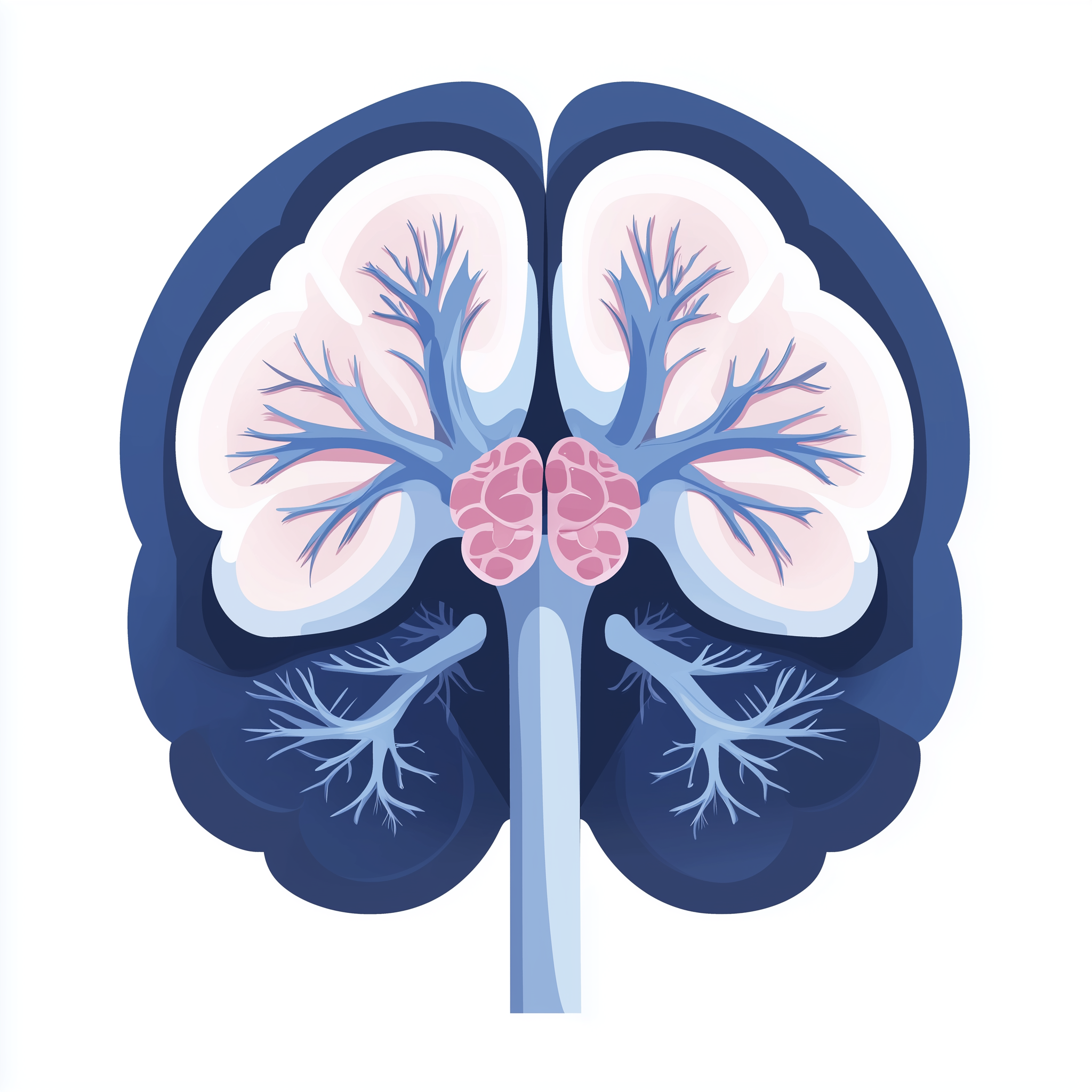
Breathing muscles, particularly the diaphragm and intercostal muscles, are often weakened, leading to respiratory insufficiency. This can result in shallow breathing, difficulty coughing, and an increased risk of lung infections. In some individuals, the brain may also be affected, with changes in the white matter observed on imaging. These brain changes may not always cause noticeable intellectual or cognitive difficulties, but a small proportion of individuals may experience seizures or developmental delays [PMID:33678082].

Risks & severity
MDC1A presents with a spectrum of severity, ranging from severe early-onset forms to milder presentations that may appear later in childhood [PMID:24765103]. The severe form typically manifests at birth with significant muscle weakness and respiratory challenges, often leading to a shorter life expectancy due to respiratory complications. Individuals with this form often do not achieve independent walking.
Milder forms, sometimes referred to as 'late-onset' or 'limb-girdle muscular dystrophy-like' forms, may present later in childhood or even early adulthood with less severe muscle weakness. These individuals may achieve independent walking and have a slower progression of symptoms. However, even in milder cases, muscle weakness is progressive, and respiratory function usually requires monitoring.
Genetic causes
Merosin-deficient congenital muscular dystrophy type 1A is caused by pathogenic variants in the LAMA2 gene. This gene provides instructions for making the alpha 2 subunit of laminin, which is a vital component of laminin-211 and laminin-221 proteins. These laminin proteins are crucial elements of the extracellular matrix, a complex network of molecules that provides structural support and signalling cues to cells.
In muscle tissue, laminin-211, also known as merosin, anchors muscle fibres to the surrounding extracellular matrix. It plays a critical role in maintaining the integrity of muscle cells during contraction and relaxation. When pathogenic variants occur in the LAMA2 gene, the production of functional laminin alpha 2 is reduced or absent. This deficiency weakens the connection between muscle cells and their surrounding support structure, leading to muscle damage, degeneration, and progressive weakness over time.
- LAMA2 laminin subunit alpha 2The LAMA2 gene provides instructions for producing the alpha-2 subunit of laminin proteins, essential components of the extracellular matrix that are vital for maintaining skeletal muscle stability.
Inheritance pattern
MDC1A is inherited in an autosomal recessive pattern. This means that an individual must inherit two altered copies of the LAMA2 gene - one from each parent - to develop the condition. People who have only one altered copy of the LAMA2 gene are called carriers. Carriers typically do not show symptoms of MDC1A themselves because they have one working copy of the gene.
If both parents are carriers, there is a 25% chance with each pregnancy that their child will inherit two altered copies of the gene and develop MDC1A. There is a 50% chance their child will be a carrier, and a 25% chance their child will inherit two working copies of the gene and not be affected or a carrier.
When both parents are carriers, each child has a 25% chance of being affected, 50% of being a carrier, and 25% of being unaffected.
Diagnosis & testing
Diagnosis of MDC1A is typically suspected based on clinical signs and symptoms, such as hypotonia and muscle weakness present from infancy. Muscle biopsy, which involves taking a small sample of muscle tissue for examination under a microscope, can show characteristic features of muscular dystrophy and may reveal an absence or reduction of merosin protein. However, genetic testing is the definitive method for confirming the diagnosis.
Genetic testing for LAMA2 variants is available through the NHS Genomic Medicine Service (GMS) as part of the rare disease testing pathway. Referrals for genetic testing are usually made by paediatricians, neurologists, or clinical geneticists. The relevant NHS National Genomic Test Directory R-code for muscular dystrophy panels that include LAMA2 is R172 (Early onset muscular dystrophy) or R173 (Later onset muscular dystrophy) depending on age of onset.
Management & lifestyle
While there is currently no cure for MDC1A, management focuses on supportive care to address symptoms and improve quality of life. This involves a multidisciplinary team, typically including paediatricians, neurologists, physiotherapists, occupational therapists, respiratory specialists, and dietitians.
Physiotherapy and occupational therapy are essential to maintain muscle strength, prevent contractures, and aid mobility. Orthopaedic interventions, such as splinting or surgery, may be considered to manage contractures. Respiratory support is often a crucial aspect of care, ranging from chest physiotherapy to non-invasive ventilation, especially during sleep. Nutritional support, including feeding tubes if necessary, ensures adequate growth and energy for affected individuals. Regular monitoring of respiratory and cardiac function is also part of the management plan. Genetic counsellors provide information and support to families regarding the genetic aspects of the condition and inheritance patterns.
UK care pathway
In the UK, individuals suspected of having genetic conditions like MDC1A are generally referred by their GP or specialist to a clinical genetics service. These services are part of the NHS Genomic Medicine Service, which provides access to advanced genomic testing. A clinical geneticist or genetic counsellor will assess the individual's symptoms and family history to determine the most appropriate genetic tests. Testing for conditions like MDC1A is listed in the NHS National Genomic Test Directory, under specific R-codes (e.g., R172 for early onset muscular dystrophy) that guide clinicians on which tests to request. Genetic counsellors play a key role in explaining the test results, inheritance patterns, and implications for the wider family.
Frequently asked questions
What is merosin and why is it important in MDC1A?
Merosin is another name for laminin-211, a protein that plays a vital role in keeping muscle cells attached to their surrounding support structure. In MDC1A, there isn't enough functional merosin, which leads to muscle weakness and damage.
Will my child with MDC1A be able to walk?
The ability to walk varies significantly in MDC1A. Some children with milder forms may achieve independent walking, while those with more severe, early-onset forms typically do not. Physiotherapy can help maximise motor skills.
Is there a cure for Merosin-deficient congenital muscular dystrophy?
Currently, there is no cure for MDC1A. However, supportive care, including physiotherapy, respiratory support, and nutritional management, can help manage symptoms and improve quality of life for affected individuals.
How does MDC1A affect breathing?
MDC1A often weakens the muscles involved in breathing, such as the diaphragm. This can lead to shallow breathing, difficulty coughing, and an increased risk of chest infections. Many individuals require respiratory support, especially at night.
What are the chances of having another child with MDC1A?
Since MDC1A is inherited in an autosomal recessive pattern, if you already have a child with the condition, both parents are typically carriers. With each future pregnancy, there is a 1 in 4 (25%) chance of having another child with MDC1A.