

On this page
Age-related macular degeneration
AMD is a leading cause of vision loss in people over 50, affecting central vision needed for tasks like reading and recognising faces. It often progresses slowly, and its severity can vary significantly among individuals.
Overview
Age-related macular degeneration (AMD) is a common eye condition that primarily affects older adults. It involves damage to the macula, a small but critical part of the retina at the back of the eye. The macula is responsible for our central, high-resolution vision, which is essential for activities like reading, driving, and recognising faces. AMD does not typically lead to complete blindness, as peripheral (side) vision is usually unaffected.
AMD typically begins to develop after the age of 50. It is a progressive condition, meaning it can worsen over time, though the rate of progression varies greatly between individuals. There are two main types: 'dry' AMD, which is more common and progresses slowly, and 'wet' AMD, which is less common but can cause more rapid and severe vision loss.
Symptoms & clinical features
In its early stages, AMD often has no noticeable symptoms. As the condition advances, individuals may begin to experience subtle changes in their vision. These can include blurred central vision, difficulty recognising faces, and problems reading.
Distortion of straight lines, where they appear wavy or bent, is a key symptom of AMD and is often one of the first signs of wet AMD. Other symptoms can include a dark or empty area appearing in the centre of vision, reduced brightness of colours, or a general decrease in vision clarity. These symptoms typically affect central vision while peripheral vision remains intact [PMID:33674640].
Video: Genetics 101
Affected organs
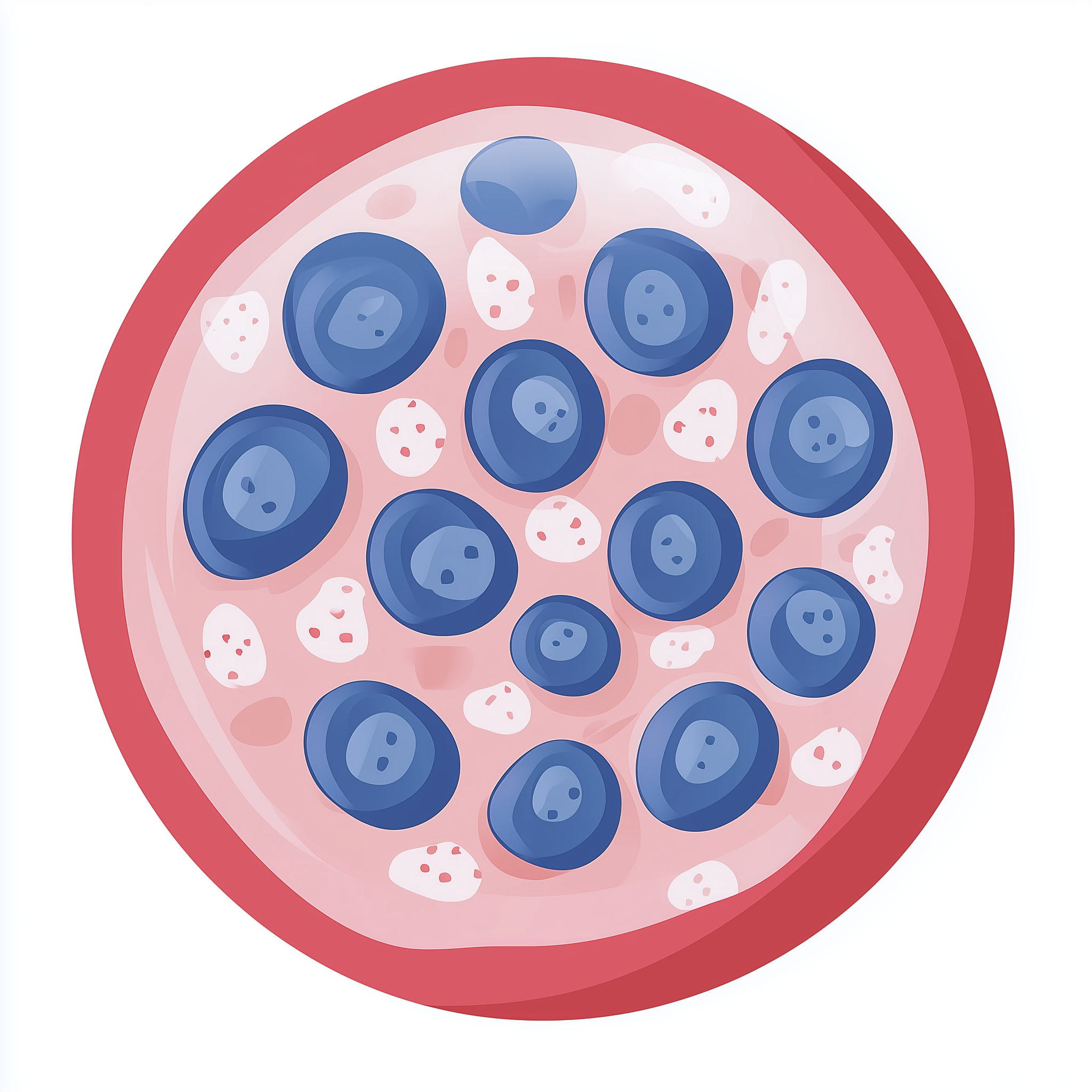
Age-related macular degeneration primarily affects the eyes, specifically the macula within the retina. The macula contains a high concentration of light-sensitive cells called photoreceptors, which are vital for converting light into signals that the brain interprets as detailed images. Damage to these cells and the supporting layers under the macula is characteristic of AMD.

Risks & severity
AMD is a leading cause of vision loss among individuals over the age of 50, with its prevalence increasing significantly with age [PMID:33674640]. Around 10% of people over 55 are affected by some form of AMD. The condition's severity can range from mild, with little to no impact on vision, to severe central vision loss.
Risk factors for developing AMD include increasing age, a family history of the condition, and smoking. Environmental factors, such as diet and sun exposure, may also play a role. 'Dry' AMD typically progresses slowly over many years, leading to gradual vision loss. 'Wet' AMD, while less common, can cause more rapid and severe vision deterioration due to abnormal blood vessel growth under the retina.
Genetic causes
Age-related macular degeneration is considered a polygenic or complex condition, meaning it is influenced by multiple genetic and environmental factors. Several genes have been identified that are associated with an increased risk of developing AMD.
Key genes linked to AMD risk include CFH (complement factor H), CFB (complement factor B), and C3 (complement C3), all of which are involved in the complement system [PMID:36511197]. The complement system is part of the body's innate immune defence, and variations in these genes can affect its regulation. Another important gene is ARMS2 (age-related maculopathy susceptibility 2), although its exact function in the development of AMD is still being researched [PMID:33674640]. Changes in these genes may alter how the eye responds to environmental stresses and contribute to the degenerative processes seen in AMD.
Inheritance pattern
Age-related macular degeneration follows a polygenic or complex inheritance pattern. This means that an individual's risk of developing AMD is influenced by variations in multiple genes working together, as well as by environmental and lifestyle factors. It is not inherited in a simple dominant or recessive way.
If one or more family members have AMD, it can increase an individual's risk, suggesting a genetic predisposition. However, having these genetic factors does not guarantee that someone will develop the condition, and conversely, not having them does not provide complete protection. Environmental factors, such as smoking, also play a significant role in determining who develops AMD and how severely.
Diagnosis & testing
Diagnosing age-related macular degeneration typically begins with a comprehensive eye examination by an optometrist or ophthalmologist. This usually involves checking vision acuity and examining the back of the eye, particularly the macula, using specialised equipment.
Dilating eye drops may be used to get a clearer view of the retina. Further diagnostic tests can include optical coherence tomography (OCT), which provides detailed cross-sectional images of the retina, and fluorescein angiography, where a dye is injected into the bloodstream to highlight blood vessels in the eye. Genetic testing is not routinely used for diagnosing AMD, but can sometimes be considered in a research context or for specific risk assessment. Referrals for these tests in the UK would typically be made through NHS R-codes for ophthalmology services.
Management & lifestyle
While there is currently no cure for age-related macular degeneration, various strategies aim to slow its progression and manage symptoms. For 'dry' AMD, management often focuses on lifestyle modifications, such as not smoking, eating a healthy diet rich in leafy green vegetables and fish, and taking specific vitamin and mineral supplements (known as AREDS formulation) where appropriate [PMID:36511197]. Regular eye checks are crucial to monitor for progression.
For 'wet' AMD, more active treatments are available. These commonly include anti-VEGF (vascular endothelial growth factor) injections directly into the eye, which can help to reduce the growth of abnormal blood vessels and leakage. Low vision aids and rehabilitation services can significantly help individuals adapt to central vision loss and maintain independence. Management is typically managed by an ophthalmologist within the NHS, often in specialist macular clinics. Genetic counsellors can provide information about the genetic predisposition and inheritance patterns in affected families.
UK care pathway
In the UK, if you or your doctor suspect you have age-related macular degeneration, you would typically be referred to an ophthalmologist, a doctor specialising in eye conditions. This referral would usually be made through routine NHS pathways, often through your GP or optometrist. The NHS Genomic Medicine Service (GMS) may be able to provide genetic testing, particularly where there is an atypical presentation or a strong family history, and this would fall under relevant R-codes for ophthalmic conditions. Genetic counsellors are available to discuss the genetic aspects of AMD, its inheritance, and implications for family members.
Frequently asked questions
What is the difference between 'dry' and 'wet' AMD?
'Dry' AMD is the more common form, developing slowly as the macula thins with age. 'Wet' AMD is less common but can cause faster vision loss due to abnormal blood vessel growth under the retina that leaks fluid or blood.
Can I prevent AMD?
While you cannot completely prevent AMD, you can reduce your risk by not smoking, eating a healthy diet, maintaining a healthy weight, and protecting your eyes from excessive sun exposure. Regular eye check-ups are also important.
Will AMD cause me to go completely blind?
AMD typically affects only your central vision, meaning you usually retain your peripheral (side) vision. Therefore, it rarely leads to complete blindness, but it can significantly impair your ability to perform tasks requiring sharp central vision.
Are there treatments for AMD?
For 'dry' AMD, certain vitamin supplements and lifestyle changes are often recommended to slow progression. For 'wet' AMD, treatments like anti-VEGF injections directly into the eye can help stabilise or even improve vision by targeting abnormal blood vessel growth.
Is AMD hereditary?
AMD has a genetic component, meaning a family history can increase your risk. However, it is also influenced by multiple other factors, including lifestyle and environment, so it doesn't follow a simple inheritance pattern like some other genetic conditions.
References
- Thomas CJ, Mirza RG, Gill MK. Age-Related Macular Degeneration. The Medical clinics of North America. 2021. PMID: 33926642
- Girgis S, Lee LR. Treatment of dry age-related macular degeneration: A review. Clinical & experimental ophthalmology. 2023. PMID: 37737509
- Shaikh A, Pera MF. Cell therapy for age-related macular degeneration. Mammalian genome : official journal of the International Mammalian Genome Society. 2026. PMID: 42207296
- Flaxel CJ, Adelman RA, Bailey ST. Age-Related Macular Degeneration Preferred Practice Pattern®. Ophthalmology. 2020. PMID: 31757502
- Mehta S. Age-Related Macular Degeneration. Primary care. 2015. PMID: 26319344
- Vemulakonda GA, Bailey ST, Kim SJ. Age-Related Macular Degeneration Preferred Practice Pattern®. Ophthalmology. 2025. PMID: 39918524
- Balaratnasingam C, Curcio CA. Biomarkers in age-related macular degeneration. Clinical & experimental ophthalmology. 2024. PMID: 38845112
- Querques G, Avellis FO, Querques L. Age-related macular degeneration. Clinical ophthalmology (Auckland, N.Z.). 2011. PMID: 21654887