



Skip to content

Breast Cancer

BRCA1/2 & panel testing for hereditary breast cancer risk.

Ovarian Cancer

Inherited risk across BRCA and Lynch-related genes.

Prostate Cancer

Germline risk assessment for prostate cancer.

Colorectal Cancer

Lynch syndrome & polyposis hereditary screening.

Pancreatic Cancer

Familial pancreatic cancer gene testing.

Melanoma

Inherited melanoma & skin cancer risk genes.

Endometrial Cancer

Lynch syndrome & inherited womb cancer risk.

BRCA Testing All cancer testing
Prenatal screening tests
NIPT overview KNOVA NIPT Panorama NIPT PrenatalSafe 3UK Panorama Microdeletions PrenatalSafe Complete Plus Niptify Unity Aneuploidy Screen Unity Complete Screen

Not sure which NIPT is right?

Compare accuracy, scope and turnaround, or speak to a genetic counsellor.

NIPT statistics →
Our approach
About Us Location Finder What is Genetics? Genetic Tests Understanding Statistics Polygenic Risk Scores Blog
Consultations & sequencing
Clinical Geneticist Genetic Counselling Whole Genome Sequencing Whole Exome Sequencing Next Generation Sequencing

Carrier Screening

Find out if you carry recessive conditions before pregnancy.

Karyotype

Chromosome analysis for structural & numerical changes.

Genetic Disease Risk Popular

Polygenic risk score across 21 common conditions.

Medication Check Popular

Pharmacogenomics - how your genes affect 112+ medications.

Newborn Genetic Screening

Wider screening than the NHS heel-prick, from a cheek swab.

Polycystic Kidney Disease

Genetic testing for PKD1/PKD2 inherited kidney disease.

Library Fees
  • Mission
    About UsWhat is Genetics?Genetic TestsAdvanced Genetic TestsClinical GeneticistGenetic CounsellingMidwife CounsellingUnderstanding StatisticsWhole Genome SequencingWhole Exome SequencingNext Generation SequencingBlog
  • Cancer
    Breast CancerProstate CancerOvarian CancerColorectal CancerPancreatic CancerEndometrial CancerBRCA TestingMelanoma Skin Cancer
  • Reproductive
    Carrier ScreeningKaryotype
  • NIPT

    NIPT Brand Options

    KNOVA NIPTPrenatalSafe 3UKPrenatalSafe Complete PlusPanorama NIPTPanorama MicrodeletionsNiptifyUnity Aneuploidy ScreenUnity Complete ScreenNIPT StatisticsMidwife Counselling
  • Panels

    NIPT Brand Options

    Polycystic Kidney DiseaseNewborn Genetic Screening
  • Library
  • Fees
Book Now
Testing for >1000 conditions using your DNA
Cancer Screening
  • Breast Cancer
  • Prostate Cancer
  • Ovarian Cancer
  • Colorectal Cancer
  • Pancreatic Cancer
  • Endometrial Cancer
  • BRCA Testing
  • Melanoma Skin Cancer
NIPT Screening
  • Basic NIPT
  • PrenatalSafe 3 UK
  • PrenatalSafe Complete Plus
  • Panorama Microdeletions
  • Niptify
  • Panorama Basic
  • Unity Complete Screen
  • Knova NIPT
  • NIPT Statistics
Reproductive
  • Carrier Screening
  • Karyotype
Other
  • What are Genetics?
  • Our Mission
  • Genetic Counselling
  • Understanding Statistics
Panels
  • Polycistic Kindey Disease
Library
Book Now
Menu
WhatsApp

Carrier Screening

Unlock your genetic secrets with personalised genetic counselling and carrier screening for 1,008 hereditary genes.

Home Test £660
Trustpilot
Trustpilot
Home Test £660
Medically reviewed by Ailidh Watson, Lead Genetic Counsellor·Last reviewed January 2026

Saliva vs Blood: Same DNA Accuracy for Genetic Testing

Saliva or blood? The same DNA, the same accuracy.

1,008 Genes Tested

Relating to 1,000s of diseases. View Full Gene List

Cystic Fibrosis

Sickle Cell Disease

Spinal Muscular Atrophy

Maple Syrup Urine Disease

Ornithine Transcarbamylase

Phenylketonuria

Gaucher Disease

Wilson Disease

Cystic Fibrosis

Sickle Cell Disease

Spinal Muscular Atrophy

Maple Syrup Urine Disease

Ornithine Transcarbamylase

Speak to a Genetic Counsellor Today

Carrier Test options

Carrier Screening

Carrier Screening

Pre-conception screen of 1,008 genes for inherited recessive disease - for couples planning a pregnancy.

From £660
Karyotype Chromosome Analysis

Karyotype Chromosome Analysis

Chromosome-level analysis of all 46 chromosomes - detects numerical changes (aneuploidies) and large structural rearrangements. Useful for couples investigating recurrent miscarriage or fertility issues.

From £290
Newborn Genetic Screening

Newborn Genetic Screening

A simple oral-swab screen of your newborn for inherited conditions where early intervention changes outcomes - including treatable metabolic disorders, hearing impairment risk, and immune deficiencies.

From £720

Why test?

1 in 25 people in the UK is a carrier of a serious genetic condition often without knowing it. Carrier screening helps identify whether you or your partner carry inherited conditions that could affect your children. With early insight, you can make informed decisions and plan for the future with confidence.

>90%

Of the population will carry one or more mutation from the 1,008 genes we screen for in our carrier screening test. Making this test actionable and clinically significant.
Genetic Counselling

The Power of Pedigree

A key part of your test is a 30-minute personalised session with one of our genetic counsellors. Genetics can be complex, but you're not alone. We're here to guide you through it. By exploring your family history, we can uncover valuable insights that could make a real difference to your health. We recommend attending this session with your partner.

The Test

1,008-Gene Carrier Screening

Our 1,008-gene Carrier Screening Test analyses 1,008 well-studied genes linked to inherited genetic conditions. Unlike broader tests that include genes with unclear impact, the panel focuses on clinically relevant results. You get clear answers, backed by science, that support confident decision-making, especially when planning a family.

The Lab

Fulgent Genetics - Trusted Partner

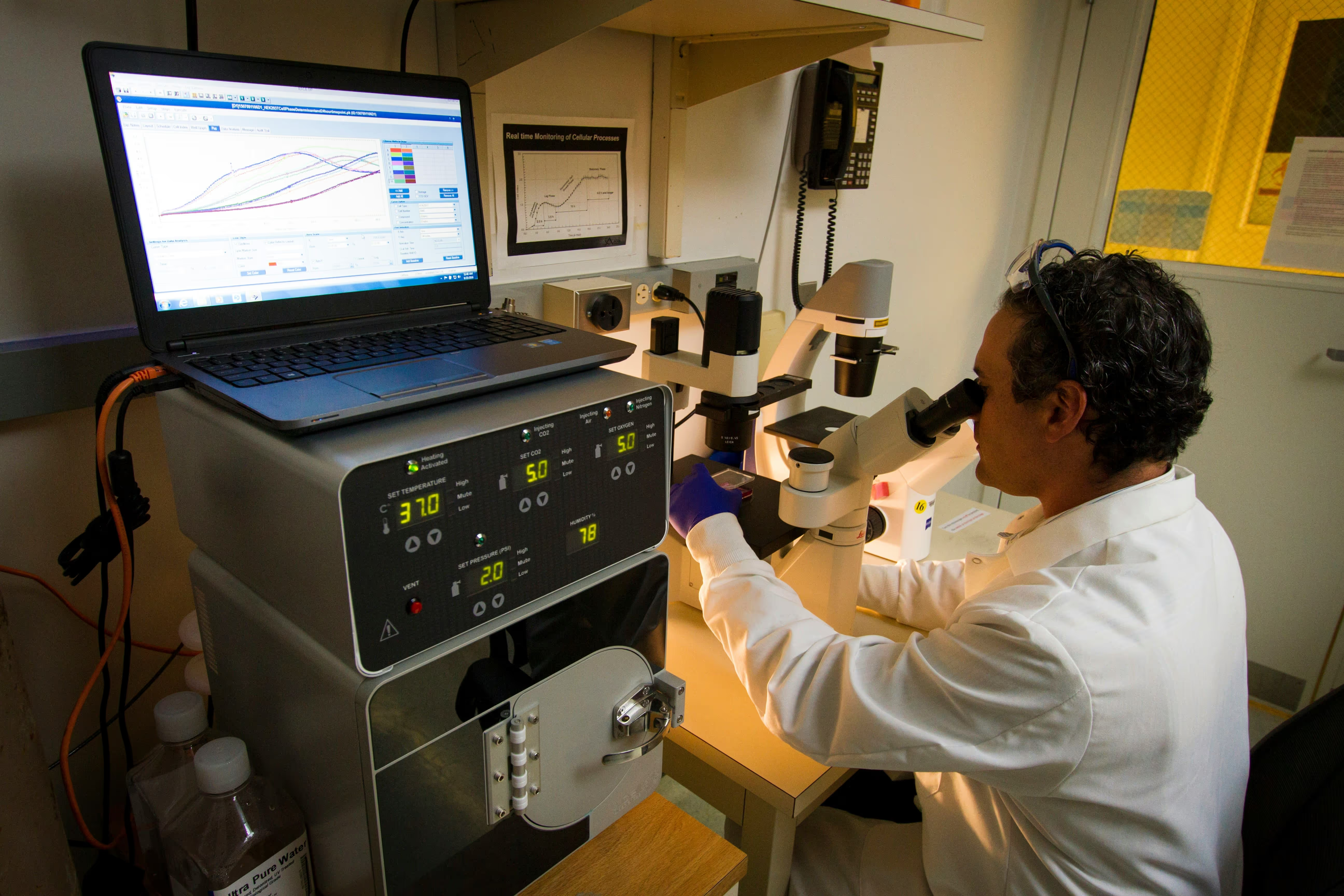
Fulgent Genetics, based in California, is a global leader in genetic testing and analysis. We’ve partnered with them because quality matters, especially when it comes to your health. Their state-of-the-art Illumina sequencing technology delivers over 98% depth at 20x coverage, ensuring your results are both reliable and clinically meaningful.
Research

World-class experts

Medicine is always evolving and so are we. Our expert team stays up to date with the latest research and clinical guidelines, so you’re always getting advice that’s current, trusted, and tailored to you.

How it works

Trusted specialists

Spital Clinic - Top rated Primary Care Clinic in London on Doctify
Chat with our Genetic Counsellor, receive your at-home DNA kit with a quick cheek swab, send it back, and get your results in under 4 weeks.

1

Speak to our expert geneticists,
design your personalised test

2

Get your test through the mail,
easy oral self-swab

3

Get your detailed report and
recommendations

1

Online Genetic Counselling

Speak to our expert geneticists,
design your personalised test

2

Cheek Swab @ Home

Get your test through the mail,
easy oral self-swab

3

Report & Recommendations

Get your detailed report and
recommendations

Gene List

Comprehensive carrier screening panel

1,008 genes across 13 clinical categories, screening for recessive and X-linked conditions that a healthy parent may silently carry.

Blue, underlined gene symbols open a full profile in the Jeen genetics library. 42 profiles live so far · new pages publish weekly.

Gene categoryAssociated genesConditions
Metabolic Disorders
273 genes · 24 with profile
AAAS, ABCA12, ABCA3, ABCA4, ABCB11, ABCB4, ABCC8, ABCD1, ABCD4, ACAD9, ACADM, ACADS, ACADSB, ACADVL, ACAT1, ACOX1, ACSF3, ADA, AGA, AGL, AGPAT2, AGPS, AGXT, AHCY, AKR1D1, ALDH3A2, ALDH4A1, ALDH7A1, ALDOB, ALG1, ALG12, ALG3, ALG6, ALOX12B, ALOXE3, ALPL, AMN, AMT, ANTXR2, ARG1, ARSA, ARSB, ARSE, ASL, ASNS, ASPA, ASS1, ATM, ATP7A, ATP7B, ATP8B1, BCHE, BCKDHA, BCKDHB, BCS1L, BTD, CANT1, CBS, COQ4, COX10, COX15, COX20, COX6B1, CP, CPS1, CPT1A, CPT2, CRADD, CTNS, CTSA, CTSC, CTSD, CTSF, CTSK, CYBA, CYBB, DBT, DDC, DGUOK, DHCR24, DHCR7, DHDDS, DLAT, DLD, DPYD, ETFA, ETFB, ETFDH, ETHE1, FA2H, FAH, FBXL4, FBP1, FH, FMO3, FOLR1, FOXRED1, FTCD, FUCA1, FXN, G6PC, G6PC3, G6PD, GAA, GALC, GALE, GALK1, GALNS, GALNT3, GALT, GAMT, GATM, GBA, GBE1, GCDH, GDAP1, GFPT1, GLA, GLB1, GLDC, GNE, GNS, GRHPR, GSS, GUSB, GYS2, HADH, HADHA, HADHB, HAX1, HCFC1, HEXA, HEXB, HGD, HGSNAT, HINT1, HLCS, HMGCL, HMGCS2, HOGA1, HPD, HPS1, HPS3, HPS4, HPS5, HPS6, HSD17B10, HSD17B3, HSD17B4, HSD3B2, HSD3B7, HYAL1, IDH3B, IDS, IDUA, ITPA, IVD, LIPA, LIPN, MAT1A, MCCC1, MCCC2, MCEE, MCOLN1, MLYCD, MMAA, MMAB, MMACHC, MMADHC, MPI, MPV17, MTHFD1, MTHFR, MTR, MTRR, MTTP, MUT, MVK, NAGA, NAGLU, NAGS, NEU1, NGLY1, NPC1, NPC2, OAT, OTC, PAH, PANK2, PC, PCBD1, PCCA, PCCB, PDHA1, PDHB, PDHX, PDP1, PEPD, PET100, PFKM, PGK1, PHGDH, PHKA1, PHKA2, PHKB, PHKG2, PHYH, PMM2, PNP, PNPO, PPT1, PRPS1, PSAP, PTS, PYGL, PYGM, QDPR, RTEL1, SACS, SAMD9, SAMHD1, SARS2, SBDS, SCO1, SCO2, SERPINA1, SGSH, SLC12A1, SLC12A3, SLC16A2, SLC17A5, SLC19A2, SLC19A3, SLC22A5, SLC25A13, SLC25A15, SLC25A20, SLC26A2, SLC26A3, SLC27A4, SLC34A3, SLC35A3, SLC37A4, SLC39A4, SLC3A1, SLC45A2, SLC46A1, SLC4A1, SLC5A5, SLC6A19, SLC6A8, SLC7A7, SLC7A9, SMPD1, SPR, SUCLA2, SUMF1, SUOX, SURF1, TAT, TERT, TF, TFR2, TG, TGM1, TH, TK2, TPP1, TTPA, TYMP, TYR, TYRP1, UGT1A1Inborn errors of metabolism including amino acid disorders (PKU, maple syrup urine disease), organic acidemias, fatty acid oxidation disorders, urea cycle disorders, glycogen storage diseases, lysosomal storage disorders, peroxisomal disorders, porphyria, and other metabolic conditions
Blood & Coagulation Disorders
28 genes · 1 with profile
EPB42, F11, F2, F5, F7, F8, F9, GP1BA, GP9, HAMP, HBA1, HBA2, HBB, HFE, HJV, ITGA2B, ITGA6, ITGB3, ITGB4, MPL, NBEAL2, NBN, NCF2, NCF4, RHAG, SEC23B, CDAN1, PGM3Hemoglobinopathies (sickle cell disease, thalassemias), bleeding disorders (hemophilia, von Willebrand disease), platelet disorders, iron metabolism disorders, and other hematological conditions
Neuromuscular Disorders
31 genes · 2 with profile
CAPN3, CASP14, CHAT, CHRNE, CHRNG, CLCN1, COLQ, DMD, DOK7, DYSF, FKBP10, FKRP, FKTN, FHL1, MTM1, MTMR2, NEB, PLEKHG5, POMGNT1, POMT1, POMT2, RAPSN, SELENON, SGCA, SGCB, SGCD, SGCG, SLC5A7, SMN1, TAZ, ESCO2Muscular dystrophies (Duchenne, Becker, limb-girdle), congenital myopathies, spinal muscular atrophy, myasthenic syndromes, and neuromuscular junction disorders
Sensory Disorders (Hearing & Vision)
53 genes · 2 with profile
ABCA4, AIPL1, CDH23, CERKL, CHM, CHST6, CIB2, CLRN1, CNGA1, CNGA3, CNGB1, CNGB3, CRYL1, EYS, FAM161A, GJB1, GJB2, GJB6, GPR143, GUCY2D, LHCGR, LOXHD1, LRAT, MAK, MYO7A, NDP, NR2E3, OCA2, OPA3, OTOF, PCDH15, PDE6A, PJVK, PRCD, PRDM5, RD3, RDH12, RDH5, RLBP1, RP2, RPE65, RPGR, RPGRIP1, RPGRIP1L, RS1, SAG, TMPRSS3, USH1C, USH1G, USH2A, WHRN, SLC26A4, CRB1Hereditary hearing loss (non-syndromic and syndromic), Usher syndrome, retinitis pigmentosa, Leber congenital amaurosis, albinism, color blindness, and other vision/hearing disorders
Neurological & Neurodevelopmental Disorders
68 genes · 3 with profile
ADGRG1, ADGRV1, AFF2, AHI1, AIMP1, AIRE, ARX, ATRX, BLM, BRWD3, CC2D1A, CC2D2A, CDCA7, CLP1, CNTNAP2, CTC1, CUL4B, DCX, DLG3, DNMT3B, EIF2AK3, EIF2B1, EIF2B2, EIF2B3, EIF2B4, EIF2B5, ELP1, EMD, FGD1, FMR1, FTSJ1, HELLS, IGHMBP2, IL1RAPL1, INPP5E, KCTD7, KDM5C, L1CAM, LMNA, LPAR6, LRPPRC, MED17, MEFV, MEGF8, MID1, MLC1, MRE11, NDRG1, NHEJ1, NONO, OPHN1, PAK3, PHF8, PQBP1, PUS1, SH3TC2, SLC12A6, SLC1A4, SMARCAL1, SYN1, SYNE4, THOC2, UPF3B, VPS13A, VPS13B, ZDHHC9, ZNF469, ZNF711Intellectual disability, autism spectrum disorders, epilepsy, leukodystrophies, spastic paraplegias, ataxias, and other neurological conditions affecting brain development and function
Connective Tissue & Skeletal Disorders
39 genes
ADAMTS2, ALMS1, BMPER, COL11A2, COL17A1, COL27A1, COL4A3, COL4A4, COL4A5, COL7A1, CRTAP, CUL7, DDR2, DLL3, EDA, EFEMP2, EVC, EVC2, GDF5, GRIP1, KIF14, LAMA2, LAMA3, LAMB3, LAMC2, LARS, LTBP4, MESP2, OBSL1, P3H1, PLOD1, PLOD2, PLP1, PRICKLE1, SERPINF1, TNXB, WISP3, WNT1, WNT10AEhlers-Danlos syndromes, osteogenesis imperfecta, chondrodysplasias, epidermolysis bullosa, Alport syndrome, and other connective tissue and skeletal disorders
Primary Immunodeficiencies
46 genes
AK2, BTK, CD247, CD3D, CD3E, CD3G, CD40LG, CD59, CD8A, CIITA, CORO1A, DCLRE1C, DOCK8, FOXN1, FOXP3, IKBKB, IL2RA, IL2RG, IL7R, JAK3, LCK, LIG4, MALT1, NDUFA11, NDUFAF2, NDUFAF5, NDUFS4, NDUFS6, NDUFS7, NDUFV1, PRF1, PRKDC, PTPRC, RAG1, RAG2, RFX5, RFXANK, RFXAP, SNX10, SP110, STK4, STX11, STXBP2, UNC13D, WAS, ZAP70Severe combined immunodeficiency (SCID), X-linked agammaglobulinemia, chronic granulomatous disease, Wiskott-Aldrich syndrome, and other primary immunodeficiency disorders
Kidney & Urinary Tract Disorders
26 genes · 1 with profile
AGPAT2, AQP2, ATP6V0A2, ATP6V0A4, ATP6V1B1, ATP6V1E1, AVPR2, CLCN5, CLCNKB, GNPAT, GNPTAB, GNPTG, INVS, KCNJ1, KCNJ11, LMAN1, LMBRD1, NPHP1, NPHP3, NPHS1, NPHS2, OCRL, PKHD1, SLC4A11, VDR, VLDLRPolycystic kidney disease, nephrotic syndrome, renal tubular acidosis, Dent disease, Bartter syndrome, Gitelman syndrome, and other kidney disorders
Endocrine Disorders
36 genes
AMH, AMHR2, AR, CASR, CYP11A1, CYP11B1, CYP11B2, CYP17A1, CYP19A1, CYP1B1, CYP21A2, CYP27A1, CYP27B1, CYP4F22, CYP7B1, DUOX2, DUOXA2, GHR, GHRHR, GNRHR, IYD, LHX3, LIFR, NR0B1, POU1F1, POU3F4, PROP1, SRD5A2, ST3GAL5, STAR, TBX19, TCIRG1, TPO, TRHR, TSHB, TSHRCongenital adrenal hyperplasia, disorders of sex development, congenital hypothyroidism, growth hormone deficiency, and other endocrine disorders
Ciliopathies & Cell Biology Disorders
44 genes · 2 with profile
B9D1, B9D2, BBS1, BBS10, BBS12, BBS2, BBS4, BBS5, BBS7, BBS9, BSND, CASQ2, CCDC103, CCDC151, CCDC39, CCDC8, CCDC88C, CEP104, CEP152, CEP290, MKKS, MKS1, RSPH9, SDCCAG8, TCTN1, TCTN2, TCTN3, TMEM138, TMEM216, TMEM231, TMEM237, TMEM38B, TMEM67, TMEM70, DNAH5, DNAI1, DNAI2, DNAL1, DYNC2H1, HYLS1, SPATA7, RAB23, IFT140, TRAPPC11Bardet-Biedl syndrome, Joubert syndrome, Meckel syndrome, nephronophthisis, primary ciliary dyskinesia, and other ciliopathy disorders
Cancer Predisposition & DNA Repair
33 genes · 2 with profile
ATM, BLM, BRIP1, DDB2, ERCC2, ERCC3, ERCC4, ERCC5, ERCC6, ERCC8, FANCA, FANCB, FANCC, FANCD2, FANCE, FANCF, FANCG, FANCI, FANCL, LYST, MRE11, NBN, POLG, POLH, POLR1C, RNASEH2A, RNASEH2B, RNASEH2C, TREX1, WRN, XPA, XPC, ZBTB24Fanconi anemia, xeroderma pigmentosum, Bloom syndrome, ataxia-telangiectasia, and other DNA repair disorders that predispose to cancer
Peroxisomal Disorders
15 genes
PEX1, PEX10, PEX11B, PEX12, PEX13, PEX14, PEX16, PEX19, PEX2, PEX26, PEX3, PEX5, PEX6, PEX7, GNPATZellweger spectrum disorders, rhizomelic chondrodysplasia punctata, and other peroxisome biogenesis disorders
Other Genetic Conditions
89 genes · 5 with profile
ADK, ANO10, ANO5, AP1S1, AP1S2, AP3B1, AP3D1, APOPT1, ARL13B, ARL6, BLOC1S3, BLOC1S6, BMP1, C19orf12, C8orf37, CAD, CAVIN1, CHMP1A, CLCF1, CLN3, CLN5, CLN6, CLN8, COASY, CPLANE1, CRLF1, DCAF17, DDX11, DOLK, DTNBP1, EXOSC3, FRAS1, FREM2, GORAB, LDLR, LDLRAP1, LPL, LRP2, MANBA, MAN2B1, MCPH1, MFSD8, NIPAL4, NTRK1, OSTM1, PIP5K1C, PIGN, PLA2G6, PNPLA1, POC1A, PPIB, RMRP, ROGDI, SDR9C7, SELENON, SEPSECS, SGP11, SGP21, SGP7, SKIV2L, SLC2A10, SLC2A2, SNAP29, SPG11, SPG21, SPG7, SPINK5, TBCE, TECPR2, TNFSF11, TRDN, TRIM32, TRIM37, TRMU, TRPM6, TSEN2, TSEN34, TSEN54, TSFM, TTC37, TTC7A, TTC8, TULP1, VPS45, VPS53, VRK1, VSX2, AMPD2, ERBB3Various rare genetic disorders including mitochondrial disorders, neuronal ceroid lipofuscinoses, spastic paraplegias, and other miscellaneous genetic conditions
No genes match your search. Try a different term or clear the filter.
Reading this table. Each row groups genes by clinical category. Blue, underlined symbols (like BRCA1) are live profiles in the Jeen genetics library; plain text symbols are listed for panel reference only. Use the search box to locate any gene or category in seconds.

What's Next?

What happens if my DNA shows a higher-risk gene?

01

Genetic Counselling

Our pre-test counselling is designed to help you understand the scope of the test and explain the meaning of a high risk result.

02

Follow Up

For high risk results, we will offer further counselling and advise on the next steps. Our clinicians can liase with your fertility clinic if required.

03

Further Support

Planning a pregnancy? Our partner clinic, London Pregnancy Clinic, can support you from pre-conception, all the way to delivering a healthy baby.

Genetic
Counselling

Get started

Our Pricing

Transparent. Personalised. No surprises.

Product

Genetic Counselling 30 minutes (Carrier)*
Book Now!
Carrier Screening (any part of 1,008 genes)
Book Now!
Combined Cancer + Carrier Screening Test
Book Now!
Carrier Screening Test (Couple)
Book Now!
Carrier Screening Known Mutation
Book Now!
Carrier Screening Single Gene
Book Now!
Karyotype Chromosome Analysis - Standard
Book Now!
Karyotype Chromosome Analysis - Standard Couples
Book Now!
Consultant Geneticist Consultation
Coming Soon!
GP Lifestyle Consultation
Book Now!

Price

£80
£660
£999
£1,200
£400
£530
£290
£550
£400
£60

Frequently Asked Questions

What is carrier screening?

Carrier screening is a type of genetic test that checks whether you carry a gene for a hereditary condition, even if you don’t have any symptoms yourself. It’s most often used by individuals or couples planning a family, to understand the risk of passing on certain inherited conditions to their children.

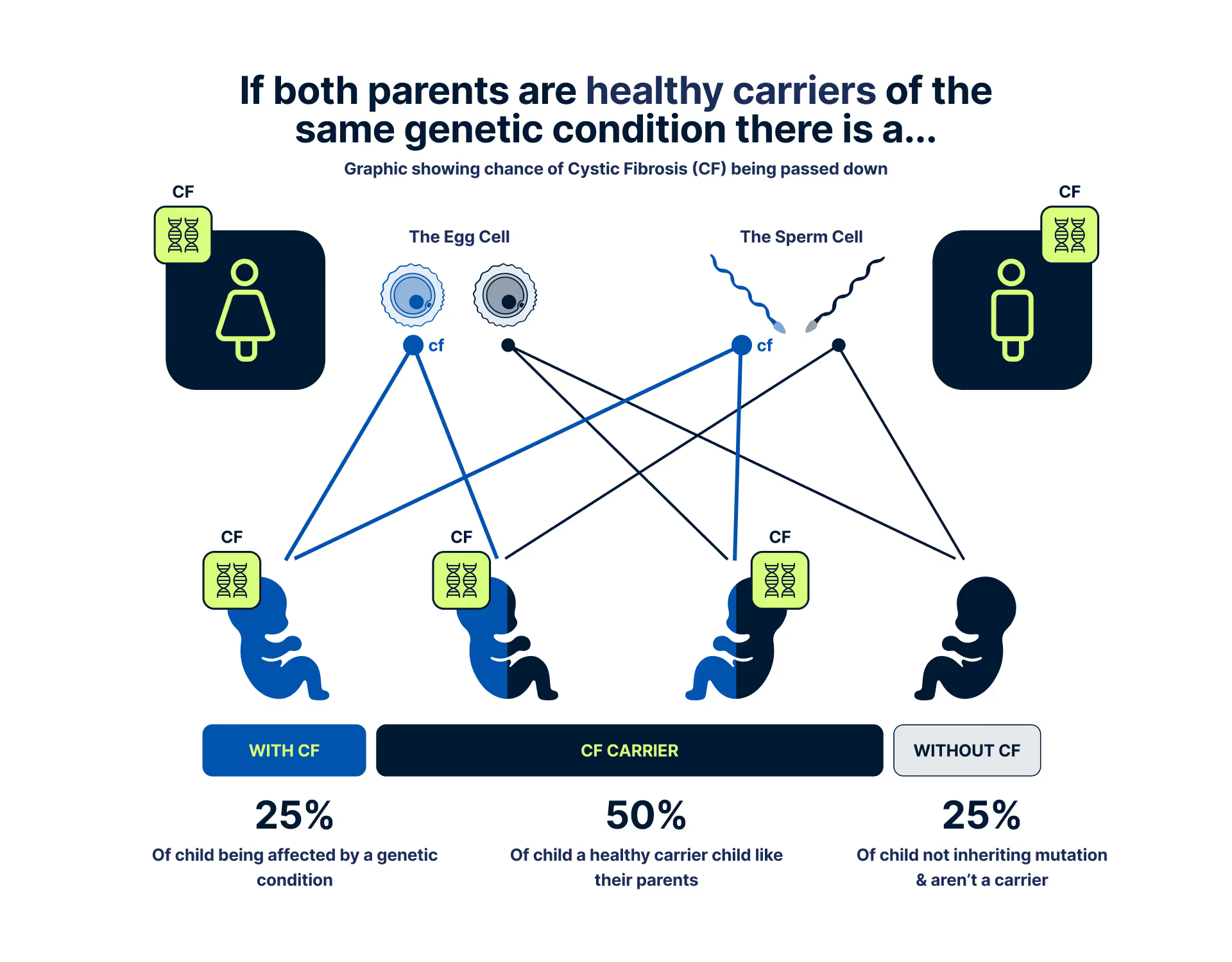
Everyone carries some changes in their genes, but most don’t cause any health problems. Carrier screening looks for specific conditions that could be passed on if both partners carry the same faulty gene. If both you and your partner are carriers for the same condition, there’s a chance your child could be affected.

What conditions does carrier screening test for?

Carrier screening tests for a range of inherited conditions, including cystic fibrosis, Tay-Sachs disease, sickle cell anaemia, thalassaemia, and spinal muscular atrophy. At Jeen Health, our panel is pan-ethnic and includes 1,008 clinically relevant genes.

We focus on conditions that are serious, inherited in a recessive or X-linked manner, and have known health impacts. This means we test for conditions that could significantly affect a child’s quality of life, and that may not show up in either parent’s health.

Can I have carrier screening if I’m already pregnant?

Mostly yes, you can have carrier screening during pregnancy - depending on how far along you are. Ideally, carrier screening is done before conception so you have more time and options, but it’s still valuable if you’re already pregnant.

If you’re found to be a carrier during pregnancy, we may recommend testing your partner too. If both partners carry the same gene variant, there’s a 1 in 4 (25%) chance the baby could inherit the condition. Our genetic counsellors will support you through the next steps.

Is carrier screening accurate?

Yes, carrier screening is highly accurate at detecting known gene variants associated with inherited conditions. However, no test is 100% perfect, it’s possible, though rare, to be a carrier for a very rare or unknown variant not covered by the test.

At Jeen Health, we use advanced laboratory techniques and clinically validated panels to provide the most accurate results possible. Your results are interpreted by specialists to ensure they’re meaningful and reliable.

How long does it take to get results?

Results usually take 3-4 weeks from when your sample reaches our lab. We’ll keep you updated and book a follow-up consultation to explain your results once they’re ready.

If further testing is needed for your partner, we’ll move quickly to support you and keep the process smooth. Our aim is to give you answers without delays, so you can plan your next steps with confidence.

What’s the difference between carrier screening and a karyotype?

Carrier screening checks whether you (and/or your partner) carry genetic changes in specific genes that could be passed on to a child. Most commonly autosomal recessive or X-linked conditions. It’s usually done before pregnancy or early in pregnancy, and it focuses on the conditions included in the panel.

A karyotype (chromosome analysis) looks at the number and structure of chromosomes (a chromosome “picture”). It can detect issues like extra or missing chromosomes and some large chromosomal rearrangements (such as translocations). It’s often used in cases like recurrent miscarriage, infertility investigations, abnormal scan findings, or when analysing pregnancy tissue, and it typically requires a blood sample (for parental karyotypes) or CVS/amnio in pregnancy.

Learn more about karyotype (chromosome analysis).

Who should consider carrier screening?

Carrier screening is recommended for anyone planning a pregnancy or currently expecting, especially if there's a family history of genetic conditions or if you come from an ethnic background with higher risks of certain inherited diseases. However, even people with no known history can be carriers without knowing it.

It’s particularly helpful for couples who want to make informed decisions about starting a family. Carrier screening can provide peace of mind or allow you to explore options like IVF with genetic testing, egg or sperm donation, or early diagnosis and support if you decide to conceive naturally.

How is carrier screening done?

Carrier screening can be done easily and painlessly. Most people use an at-home saliva kit, collecting a cheek swab with a soft swab in just a few minutes. In some cases, depending on your location and test type, a blood sample may be required, this can be arranged either at our partner Spital Clinic in London or through a home phlebotomy visit.

Once your sample reaches the lab, your DNA is analysed to check for specific gene variants linked to inherited conditions. Our expert team will review the results, and you'll receive a detailed report along with a follow-up consultation to walk you through what it means for you and your family.

What happens if I’m found to be a carrier?

If you’re found to be a carrier, it means you have one copy of a gene variant linked to a particular condition. Carriers usually do not have symptoms, but if your partner is also a carrier for the same condition, there may be a chance of passing the condition on to your child (depending on the inheritance pattern).

Our genetic counsellors will explain your results and what they mean for you. Depending on your partner’s results and your family plans, next steps may include partner testing, discussing reproductive options, or simply keeping this information in mind for future pregnancies.

In some situations, such as complex results, a strong family history, or higher-risk findings, you may also be advised to speak with a clinical geneticist for more detailed medical guidance.

Do both partners need to get tested?

It’s ideal for both partners to be tested, but we usually start by testing one. If that person is not a carrier, no further testing is needed. If they are, then their partner should be tested to check for the same condition.

This step-by-step approach helps keep testing straightforward and cost-effective. Our team will guide you based on the results and help you understand your reproductive risks together.

Is carrier screening covered by the NHS?

Carrier screening is available on the NHS in specific situations, such as if you or your partner are from certain ethnic backgrounds or have a known family history of a particular condition. However, comprehensive screening for multiple conditions is not routinely offered.

Jeen Health provides private carrier screening with the support of expert genetic counsellors. This gives you access to broader testing, at your convenience, from the comfort of your home.

What are X-linked conditions?

X-linked conditions are genetic disorders caused by changes in genes found on the X chromosome, one of the two sex chromosomes. Since males only have one X chromosome (and one Y), if they inherit a gene variant on the X chromosome, they’re more likely to be affected by the condition. Females have two X chromosomes, so if one carries a faulty gene, the other can often compensate, which means women are usually carriers without symptoms.

Some common X-linked conditions include Duchenne muscular dystrophy and fragile X syndrome. If you’re a female carrier of an X-linked condition, there’s a 50% chance of passing the gene to each child. Sons who inherit it are more likely to be affected, while daughters may become carriers like you.

Sources & references

The statistics and clinical claims on this page are supported by the following authoritative sources.

  • NHS Inform
  • NCBI / PMC

Explore more

  • polygenic disease-risk score
  • polycystic kidney disease testing
  • inherited genetic conditions
  • karyotype chromosome analysis
  • speak to a genetic counsellor before pregnancy
  • clinical geneticist consultation

Book your appointment

Choose a time that suits you - no account needed.

Trouble loading? Open the booking page.

Contact

Get in touch

Our team of expert specialists is here to help - whether you're curious about testing, your results, or what's right for you. We're just a message away.

Contact details

  • my@jeen.health
  • +44 20 3870 9099
  • WhatsApp us
  • 36 Spital Square, London E1 6DY
Book a consultation
Which test(s) are you interested in? (optional)

Reproductive & Newborn

Prenatal Testing (NIPT)

Hereditary Cancer Screening

Disease Panels

Or email us directly at my@jeen.health - we reply within one working day.

Jeen Health

Advanced private genetic testing - hereditary cancer, NIPT and carrier screening - with expert genetic counselling at every step.

In partnership with London Pregnancy Clinic & Spital Clinic.

Tests

  • Hereditary Cancer
  • NIPT Screening
  • Carrier Screening
  • Karyotype
  • Newborn Screening

Company

  • Our Mission
  • What are Genetics?
  • Library
  • Blog
  • Fees

Support

  • Genetic Counselling
  • Understanding Statistics
  • Partners
  • Book Now

Contact

  • my@jeen.health
  • +44 20 3870 9099
  • WhatsApp us
  • 36 Spital Square, London E1 6DY

© 2026 Jeen Health. All rights reserved.

Privacy Policy Terms & Conditions Return Policy