



Newborn Genetic ScreeningNewborn Genetic Screening - view 2Newborn Genetic Screening - view 3Newborn Genetic Screening - view 4Newborn Genetic Screening - view 5Newborn Genetic Screening - view 6 1 / 6
Newborn Genetic Screening
Patient reviews

Newborn Genetic Screening

£720 See variants below

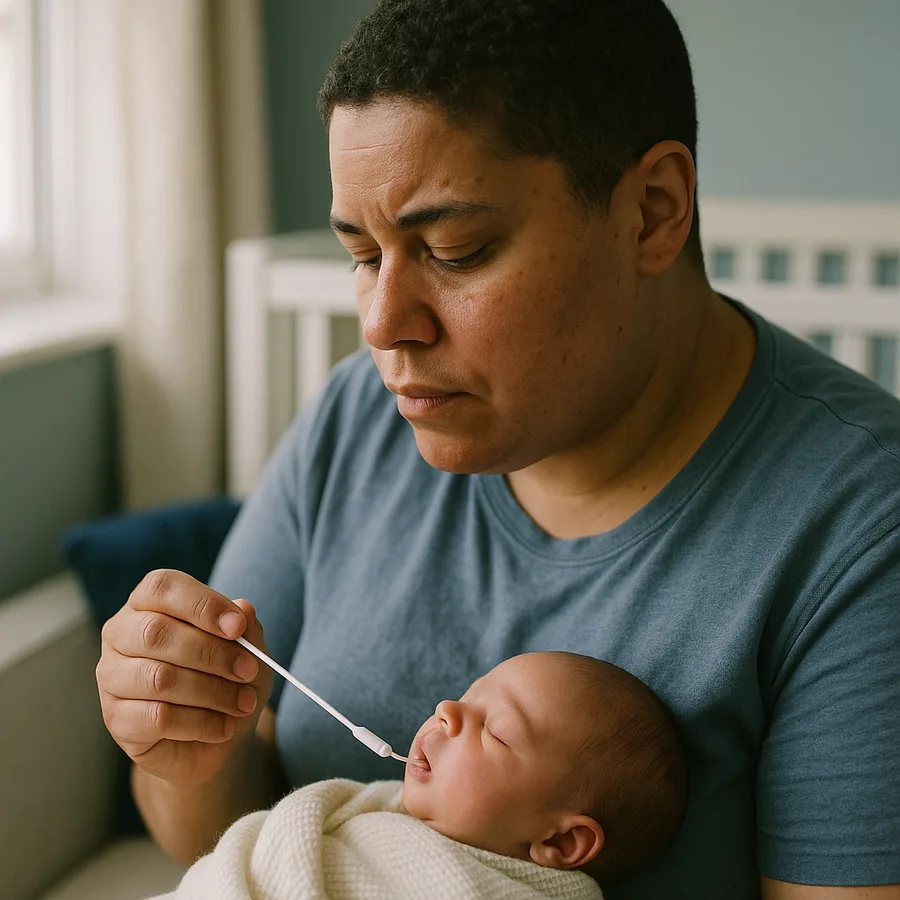
A simple oral-swab screen of your newborn for inherited conditions where early intervention changes outcomes - including treatable metabolic disorders, hearing impairment risk, and immune deficiencies.

Turnaround time 3-4 weeks
Population 1 in 33*
Most advanced labs Accurate testing →

Sample method

Klarna's credit agreements are not regulated by the FCA. Use of these and any missed payments may affect your ability to obtain credit from Klarna and other lenders. 18+, UK residents only. Subject to status. T&Cs apply. Klarna terms apply.

● In stock · Secure checkout via Stripe

Saliva or blood? The same DNA, the same accuracy.

Useful information

The logistics, simply.

Everything you need to know about shipping, blood draw, and suitability.

Kit delivery & logistics

1. Get your kit from us. Free delivery of your test kit, dispatched by next-day delivery after your included 45-minute specialist genetic counsellor consultation and once your test choice is confirmed. Changed your mind? Return the kit unused within 30 days at no charge.

2. Easy returns. After sample collection, send your sample in the pre-paid bag to the nearest depot (details in your email). Turnaround is counted in working days from when your sample reaches the laboratory.

Turnaround
3-4 weeks
Laboratory
USA

Sample / draw options

At-home cheek swab : At-home cheek swab kit; you collect the sample yourself and post it back.

Test suitability

Genetic testing with Jeen Health is suitable for adults who have completed a pre-test consultation with one of our genetic counsellors - in clinic, over video, or by phone.

Genetic testing with Jeen Health is only available to individuals aged 18 and over.

How it works

Three steps. That's it.

Simple, clinician-supported steps to take your test with Jeen.

01

Talk to a clinician

Book your included 45-minute consultation with our specialist genetic counsellor. Confirm the test that's right for you.

02

Consent + collect

Complete your consent form online, receive your kit, and collect your sample at home or via a clinic of your choice.

03

Results + follow-up

Your results are reviewed by your genetic counsellor. We share them with you securely, and book a follow-up consultation with onward referrals if your result is high-risk.

Clinic network

200+ collection points across the UK

A simple, low-cost option with flexible scheduling. For many patients, this is the quickest and most practical way to complete the test.

200+
Partners
+£40
Add-on cost
2d
Avg booking

This map is served by Google Maps, which sets its own cookies on your device.

Partner clinics are also listed below. How we use cookies

FAQ

Frequently asked questions.

What does Newborn Genetic Screening test for?

Newborn Genetic Screening screens for 200+ early-onset genetic conditions where prompt diagnosis changes outcomes - including treatable metabolic disorders, hearing-impairment risk, immune deficiencies, and primary cardiomyopathies. Results are reviewed by your genetic counsellor before being shared with parents.

When should we test our newborn?

Any time in the first weeks of life is ideal. The test uses a simple oral swab (no blood draw, no needles), so it can be done at home as soon as you're ready. Earlier diagnosis means earlier intervention for any treatable conditions identified.

Is the test painful or invasive?

No - collection takes about 30 seconds and uses an oral (cheek) swab. There are no needles, no blood draw, and no clinic visit needed. You collect the sample at home and post it back in the included pre-paid envelope.

How long do results take?

Standard turnaround is 3-4 weeks from when the lab receives your sample. Results are reviewed by your genetic counsellor and shared with parents. If a finding warrants clinical action, we book a follow-up consultation; routine low-risk results are shared securely without one.

How much does Newborn Genetic Screening cost?

Newborn Genetic Screening costs £720. The price includes a free 45-minute pre-test consultation with our specialist genetic counsellor, the oral-swab kit shipped to you, lab analysis at our partner laboratory, and a clinical-grade report. A follow-up consultation is offered if your result is high-risk.
Panel composition

All 258 genes by category

Genes grouped by the clinical area they're associated with. Click any underlined symbol to read the gene's plain-English overview on Jeen Library - or browse per-gene carrier frequencies for population-stratified rates.

Gene category
Associated genes
Conditions
Metabolic Disorders 119 genes
ABCC8, ABCD1, ACADM, ACADVL, ACAT1, ADA, AGL, AGXT, AKR1D1, ALDH7A1, ALDOB, ALPL, ARG1, ARSA, ARSB, ASL, ASS1, ATP7A, ATP7B, BCKDHA, BCKDHB, BTD, CBS, CPS1, CPT1A, CPT2, CTNS, CYBA, CYBB, DBT, DLD, ETFA, ETFB, ETFDH, ETHE1, FAH, FBP1, FOLR1, G6PC, G6PD, GAA, GALC, GALE, GALK1, GALNS, GALT, GAMT, GATM, GBA, GCDH, GLA, GLB1, GRHPR, GSS, GUSB, GYS2, HADH, HADHA, HADHB, HAX1, HLCS, HMGCL, HMGCS2, HOGA1, HPD, HPS1, HPS4, HSD3B2, HSD3B7, IDS, IDUA, IVD, LIPA, MAT1A, MCCC1, MCCC2, MCEE, MLYCD, MMAA, MMAB, MMACHC, MMADHC, MPI, MTR, MTRR, MTTP, MUT, NAGS, NPC1, OAT, OTC, PAH, PCBD1, PCCA, PCCB, PHGDH, PNPO, PTS, PYGL, QDPR, SLC22A5, SLC25A13, SLC25A15, SLC25A20, SLC34A3, SLC37A4, SLC39A4, SLC45A2, SLC4A1, SLC5A5, SLC7A7, SMPD1, SPR, SURF1, TAT, TG, TH, TTPA, UGT1A1
Inborn errors of metabolism including amino acid disorders (PKU, maple syrup urine disease), organic acidemias, fatty acid oxidation disorders, urea cycle disorders, glycogen storage diseases, lysosomal storage disorders, peroxisomal disorders, porphyria, and other metabolic conditions
Blood & Coagulation Disorders 5 genes
EPB42, F9, HBB, MPL, NCF2
Hemoglobinopathies (sickle cell disease, thalassemias), bleeding disorders (hemophilia, von Willebrand disease), platelet disorders, iron metabolism disorders, and other hematological conditions
Neuromuscular Disorders 2 genes
SMN1, TAZ
Muscular dystrophies (Duchenne, Becker, limb-girdle), congenital myopathies, spinal muscular atrophy, myasthenic syndromes, and neuromuscular junction disorders
Sensory Disorders (Hearing & Vision) 12 genes
CDH23, CRYL1, GJB2, GJB6, GPR143, OTOF, SLC26A4, TMPRSS3, USH1C, USH1G, USH2A, WHRN
Hereditary hearing loss (non-syndromic and syndromic), Usher syndrome, retinitis pigmentosa, Leber congenital amaurosis, albinism, color blindness, and other vision/hearing disorders
Neurological & Neurodevelopmental Disorders 1 gene
Intellectual disability, autism spectrum disorders, epilepsy, leukodystrophies, spastic paraplegias, ataxias, and other neurological conditions affecting brain development and function
Connective Tissue & Skeletal Disorders 3 genes
COL4A3, COL4A4, COL4A5
Ehlers-Danlos syndromes, osteogenesis imperfecta, chondrodysplasias, epidermolysis bullosa, Alport syndrome, and other connective tissue and skeletal disorders
Primary Immunodeficiencies 19 genes
BTK, CD3D, CD3E, CD40LG, CIITA, DCLRE1C, DOCK8, FOXP3, IL2RG, IL7R, JAK3, PRF1, PTPRC, RAG1, RAG2, RFX5, RFXANK, RFXAP, ZAP70
Severe combined immunodeficiency (SCID), X-linked agammaglobulinemia, chronic granulomatous disease, Wiskott-Aldrich syndrome, and other primary immunodeficiency disorders
Kidney & Urinary Tract Disorders 6 genes
AQP2, AVPR2, KCNJ11, LMBRD1, PKHD1, VDR
Polycystic kidney disease, nephrotic syndrome, renal tubular acidosis, Dent disease, Bartter syndrome, Gitelman syndrome, and other kidney disorders
Endocrine Disorders 19 genes
CASR, CYP11B1, CYP11B2, CYP17A1, CYP27A1, CYP27B1, DUOX2, DUOXA2, IYD, LHX3, NR0B1, POU1F1, PROP1, STAR, TCIRG1, TPO, TRHR, TSHB, TSHR
Congenital adrenal hyperplasia, disorders of sex development, congenital hypothyroidism, growth hormone deficiency, and other endocrine disorders
Cancer Predisposition & DNA Repair 4 genes
ERCC2, ERCC5, XPA, XPC
Fanconi anemia, xeroderma pigmentosum, Bloom syndrome, ataxia-telangiectasia, and other DNA repair disorders that predispose to cancer
Other Genetic Conditions 68 genes
ABCG5, ACAD8, ACVRL1, ADAMTS13, ANK1, ANKH, BMPR1A, CFTR, COL1A1, COL1A2, CRLF1, ELANE, ENG, FBN1, GCH1, GLUD1, HNF4A, IGSF1, INS, JAG1, KCNE1, KCNQ2, LAMP2, LDLR, LPL, MC2R, MEN1, MYO15A, NF1, NF2, NTRK1, OPA1, PAX3, PAX8, PHEX, PKD2, PKLR, POR, PRRT2, PTCH1, PTPN11, RB1, SCN1A, SCN2A, SCN8A, SCNN1A, SCNN1B, SLC2A1, SMAD3, SMAD4, SMN2, SOX10, SPTB, STK11, TCN2, TECTA, TGFBR1, TGFBR2, THRA, TMIE, TPRN, TRIOBP, TRMU, TSC1, TSC2, VHL, WT1, ZIC3
Various rare genetic disorders including mitochondrial disorders, neuronal ceroid lipofuscinoses, spastic paraplegias, and other miscellaneous genetic conditions

References & methodology

The "1 in 33" figure on this page comes from the GUARDIAN study (Ziegler et al., JAMA, October 2024) - the best-published benchmark for next-generation sequencing newborn screening at this scope.

GUARDIAN screened the first 4,000 newborns at NewYork-Presbyterian across 255 conditions (156 treatable early-onset + 99 optional neurodevelopmental disorders) - a panel directly comparable to ours in scope and methodology. Findings:

  • 3.7% screen-positive rate (147 of 4,000)
  • 3.0% confirmed true positives after orthogonal testing - roughly 1 in 33
  • 92% of those true positives would have been missed by standard heel-prick newborn screening alone
  • Original a-priori estimate was 0.1% (1 in 1,000); actual yield was **37× higher**

Caveats worth knowing

  • Population matters. GUARDIAN was a diverse New York cohort; hemoglobinopathy and G6PD prevalence shift the headline number. A predominantly White/UK European cohort would likely come in slightly lower (~2–3%).
  • Screen-positive ≠ symptomatic disease. Some variants identified are reduced-penetrance or late-onset within the early-onset window. The 3% true-positive figure is the more honest "affected" number; we cite that rather than the 4% screen-positive rate.
  • Panel overlap. Our 258-gene panel and GUARDIAN's 255-condition panel have substantial overlap (CFTR, SMN1, GJB2, HBB, G6PD, PAH, ACADM/MCAD, etc.) but are not identical. A few percentage points of variation either way is expected.

Citation: Ziegler A, et al. "Genomic Sequencing for Newborn Screening: Results From the Guardian Study." JAMA, 11 October 2024. Open in PubMed →

Get in touch

Talk to a specialist.

Our team is here to help. Whether you're curious about testing, your results, or what's right for you - we're a message away.

Book a consultation