



 1 / 6
1 / 6 KNOVA
One of our most advanced non-invasive prenatal tests, screening for a broader range of chromosomal, genetic and rare conditions in your baby - including monogenic disorders most NIPTs miss.
Free 20-minute midwife consultation before you take the test
Access to LPC Fetal Medicine, Obstetrics & Genetic Specialists
Screens for more conditions than any other NIPT, and deeper
>99.9% detection for Down's, Edwards' and Patau's syndrome
Find out your baby's sex with over 99% accuracy, if you wish
Common NIPT questions, and what a positive result really means.
- Noonan Syndrome
- Cornelia de Lange Syndrome
- Osteogenesis Imperfecta
- Stickler Syndrome
- Rett Syndrome
- Achondroplasia
- Crouzon/Pfeiffer Syndrome
- Cleidocranial Dysplasia
- CHARGE Syndrome
- Cardiofaciocutaneous Syndrome
- Bohring-Opitz Syndrome
- Sotos Syndrome
- Tuberous Sclerosis (TSC1)
- Tuberous Sclerosis (TSC2)
- Craniosynostosis (TWIST1)
- Craniosynostosis (EFNB1)
- Craniosynostosis (ERF)
- Craniosynostosis (TCF12)
- Kabuki Syndrome
- Smith-Lemli-Opitz (DHCR7)
The logistics, simply.
Everything you need to know about shipping, blood draw, and suitability.
Kit delivery & logistics
Kit delivery & logistics
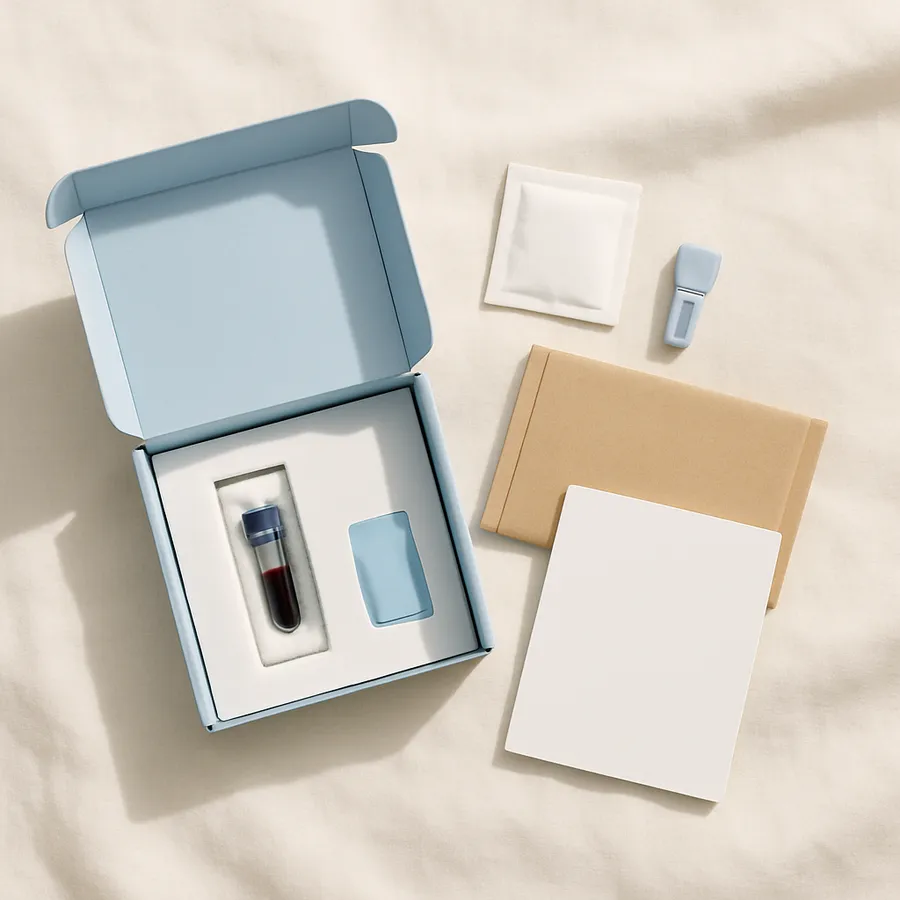
1. Get your kit from us. Free delivery of your test kit, dispatched by next-day delivery after your free 20-minute specialist midwife consultation and once your test choice is confirmed. Changed your mind? Return the kit unused within 30 days at no charge.
2. Easy returns. After sample collection, send your sample in the pre-paid bag to the nearest depot (details in your email). Turnaround is counted in working days from when your sample reaches the laboratory.
Sample / draw options
Sample / draw options
Maternal blood draw : A standard blood draw from the pregnant person - no risk to the pregnancy.
Test suitability
Test suitability
Suitable for singleton and twin pregnancies, including IVF pregnancies (both own-egg and egg-donor). Best performed between from 10 weeks and 16 weeks of pregnancy.
Not suitable for pregnancies beyond 16 weeks, triplet (or higher-order) pregnancies, or where the patient has a history of chromosomal abnormalities, parental mosaicism, fetal demise, an active malignancy, or a previous bone marrow / organ transplant.
Genetic testing with Jeen Health is only available to individuals aged 18 and over.
⚠ If your pregnancy has progressed beyond 16 weeks, please reach out before booking. Our genetic counsellors will discuss your circumstances and recommend the most suitable option.
Three steps. That's it.
Simple, clinician-supported steps to take your test with Jeen.
Talk to a clinician
Book your free 20-minute consultation with our specialist midwife. Confirm the test that's right for you.
Consent + collect
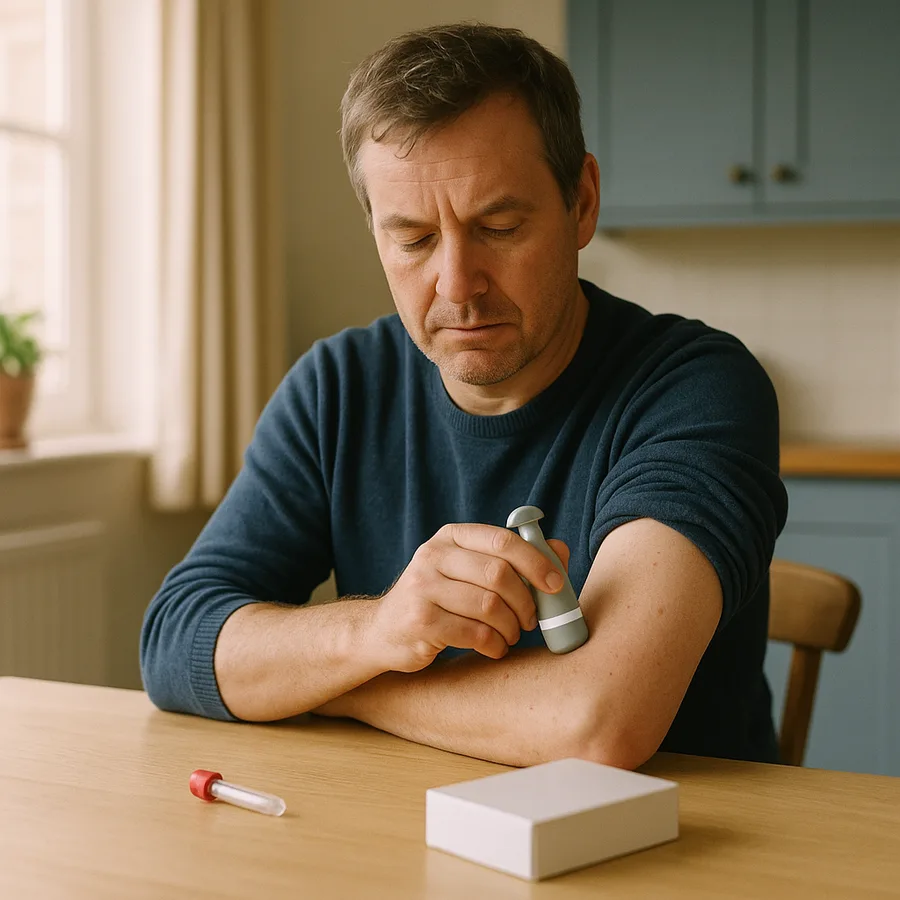
Complete your consent form online, receive your kit, and collect your sample at home or via a clinic of your choice.
Results + follow-up
Your results are reviewed by your midwife. We share them with you securely, and book a follow-up consultation with onward referrals if your result is high-risk.
Compare every NIPT we offer.
From the basic panel to our most advanced option.


200+ collection points across the UK
A simple, low-cost option with flexible scheduling. For many patients, this is the quickest and most practical way to complete the test.
Clinics available in Belfast, Birmingham, Bournemouth, Brighton, Bristol, Cambridge, Cardiff, Coventry, Derby, Edinburgh, Glasgow, Hull, Leeds, Leicester, Liverpool, London, Manchester, Newcastle, Nottingham, Oxford, Reading, Royal Tunbridge Wells, Southampton, Swindon, and York.
This map is served by Google Maps, which sets its own cookies on your device.
Partner clinics are also listed below. How we use cookies
Frequently asked questions.
How much does KNOVA cost?
When can I take KNOVA during pregnancy?
What conditions does KNOVA screen for?
How accurate is KNOVA?
Do I need a GP or hospital referral for KNOVA?
How we estimate "affects ~1 in N pregnancies"
The "1 in N" is an approximate UK total-birth prevalence - how often, across all births (live births plus stillbirths and terminations for fetal anomaly), a pregnancy is affected by one of the conditions this screen covers. We add the published birth prevalence of each condition (or condition class) and express the total as "1 in N". The three autosomal trisomies are anchored to NCARDRS England 2022.
This panel:
- Trisomy 21 / 18 / 13 - 42.3 per 10,000 combined (≈1 in 240)
- Trisomy 15 / 16 / 22 (almost always miscarry; residual at birth) - ~0.3 per 10,000
- Sex-chromosome aneuploidies (Turner, Klinefelter, Triple-X, XYY), combined - ~17 per 10,000 (≈1 in 580)
- 22q11.2 deletion plus eleven further microdeletions, combined - ~7 per 10,000
- ~20 de-novo dominant single-gene disorders (e.g. Noonan, achondroplasia, Rett, Cornelia de Lange), combined - ~17 per 10,000 (≈1 in 600)
Combined: ~84 per 10,000 births ≈ 1 in 110. The de-novo single-gene panel is what makes KNOVA the broadest - and commonest-detecting - screen in the range.
This is a population detection rate, not your personal risk - your own risk depends on maternal age, family history and other factors, and a screen result is not a diagnosis. Because each test covers a different set of conditions, the figures are not directly comparable between tests.
Sources: autosomal trisomies - NCARDRS England 2022 (NHS England Digital); sex-chromosome aneuploidies - newborn cytogenetic surveys (e.g. Nielsen & Wohlert 1991); microdeletions and de-novo single-gene disorders - GeneReviews / Orphanet.
Talk to a specialist.
Our team is here to help. Whether you're curious about testing, your results, or what's right for you - we're a message away.
Book a consultationQuick check before you order
Three short questions so the lab can run NIPT reliably - every NIPT panel needs a confirmed singleton or twin pregnancy of adequate gestational age before a sample is taken.
Book a scan with London Pregnancy Clinic or email my@jeen.health or WhatsApp us if you need help.