

When should my baby be tested for Sickle Cell Disease and how does it help?
Newborn screening for sickle cell disease is offered in the UK as part of the newborn blood spot test, usually within the first week of life. Early diagnosis allows doctors to start preventive treatment that can prevent serious infections and other complications.
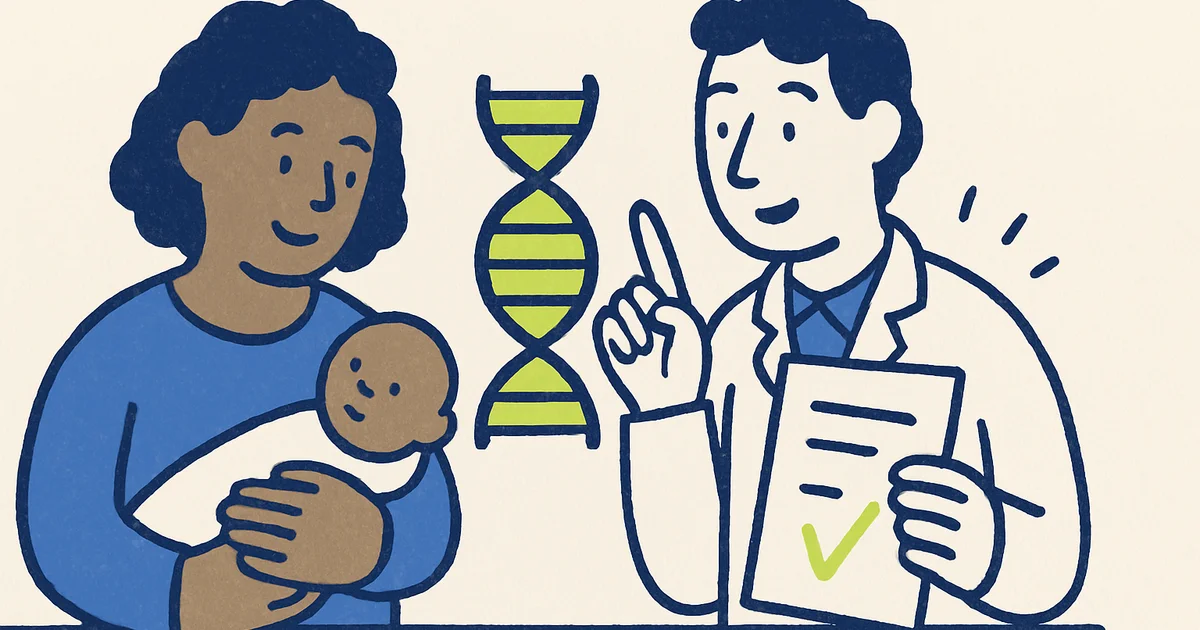
If you have a family history of sickle cell disease or you’re from an at-risk ethnic background, you may be wondering when and how your baby will be tested. In the UK, all babies are offered screening for sickle cell disease as part of the newborn blood spot test - often called the ‘heel prick test’ - which is usually done when your baby is 5 days old.
What is sickle cell disease and why does early testing matter?
Sickle cell disease is an inherited blood condition that affects the red blood cells, causing them to become crescent-shaped and less effective at carrying oxygen around the body. Babies with sickle cell disease are at higher risk of serious infections, particularly in the first few years of life, because the condition affects how their spleen works.
Early diagnosis through newborn screening allows doctors to start preventive treatment before symptoms appear. This typically includes:
- Daily antibiotics (usually penicillin) to prevent life-threatening bacterial infections
- Vaccinations against pneumococcal and other infections, which babies with sickle cell disease are particularly vulnerable to
- Regular health checks to monitor your child’s growth and development
- Parent education about warning signs and when to seek urgent medical help
Research shows that when sickle cell disease is identified at birth and appropriate care is started early, serious complications can be prevented and children have better health outcomes throughout their lives.
When and how is the test done?
The newborn blood spot test is offered to all babies in the UK, usually when they are 5 days old. A healthcare professional (typically a midwife) will prick your baby’s heel and collect a few drops of blood on a special card. The same blood sample is used to screen for several serious conditions, including sickle cell disease.
The test looks at the types of haemoglobin (the oxygen-carrying protein in red blood cells) in your baby’s blood. Babies with sickle cell disease have an abnormal type of haemoglobin called haemoglobin S.
The screening process works as follows:
- Initial test: A laboratory analyses the blood sample, which takes a few days
- Confirmatory test: If the first test suggests your baby might have sickle cell disease, you’ll be asked to bring your baby for a repeat blood test to confirm the diagnosis
- Results: Most parents receive results within 6 to 8 weeks, but you’ll be contacted sooner if any of the conditions are detected
If your baby’s test shows they have sickle cell disease, a specialist from your local sickle cell and thalassaemia centre will contact you. They will arrange to see you and your baby, usually within a few weeks, to discuss the diagnosis and start treatment.
What happens if my baby is diagnosed?
Receiving a diagnosis of sickle cell disease can feel overwhelming, but remember that with early treatment and ongoing care, most children with the condition can live full, active lives.
When sickle cell disease is confirmed, your baby will be referred to a specialist team who will:
- Start preventive antibiotics, typically by the time your baby is 3 months old
- Arrange additional vaccinations to protect against infections
- Teach you the warning signs of serious complications, such as fever, unusual pallor, or sudden swelling of hands and feet
- Provide regular monitoring throughout childhood
- Offer genetic counselling to explain the inheritance pattern and implications for future pregnancies
You’ll become an important partner in your child’s care. Parents of children with sickle cell disease need to know how to spot the early signs of complications, particularly infections and a serious condition called splenic sequestration (when blood pools in the spleen). Your specialist team will ensure you’re confident in recognising these signs.
Understanding carrier status and family implications
The newborn screening test can also show if your baby is a carrier of the sickle cell gene (called having ‘sickle cell trait’). Carriers don’t have the disease itself and are usually healthy, but they can pass the gene on to their own children.
If your baby is found to be a carrier:
- No treatment is needed - carriers are generally well and don’t develop sickle cell disease
- Your family will be informed so that other family members can be tested if they wish
- It’s important for future planning - when your child grows up and considers having children, they should know they’re a carrier so they can make informed reproductive choices
If both parents are carriers, there’s a 1 in 4 chance with each pregnancy that the baby will have sickle cell disease, a 1 in 2 chance the baby will be a carrier, and a 1 in 4 chance the baby will have neither the disease nor carrier status.
What you can do at Jeen
While the NHS newborn blood spot test screens for a small, fixed set of conditions including sickle cell disease, our Newborn Genetic Screening uses a simple oral swab to screen your newborn for a much wider range of inherited conditions where early intervention can improve outcomes.
Our screening panel includes:
- Treatable metabolic disorders that may not be part of routine NHS screening
- Conditions affecting the immune system
- Genetic causes of hearing impairment
- Other inherited conditions where knowing early makes a difference to treatment
The test uses a straightforward at-home cheek swab rather than a blood draw, and includes 30-minute genetic counselling to help you understand the results. If you’re concerned about inherited conditions beyond those covered by standard NHS screening, this extended screening may give you additional reassurance or help identify conditions early when treatment is most effective.
Sources & further reading
- Newborn screening of sickle cell disease and management of care Accessed 28 August 2026.
- Current sickle cell screening program for newborns in New York City, 1979-1980 DOI:
10.2105/ajph.73.3.249. Accessed 28 August 2026. - Regional experience with newborn screening for sickle cell disease, other hemoglobinopathies and G6PD deficiency DOI:
10.5144/0256-4947.2003.354. Accessed 28 August 2026. - NHS Newborn blood spot screening Accessed 28 August 2026.