

When should my baby be tested for Spinal Muscular Atrophy (SMA)?
SMA is a serious genetic condition affecting motor nerves, where early treatment can make a significant difference. Learn when testing is recommended and how early detection helps.
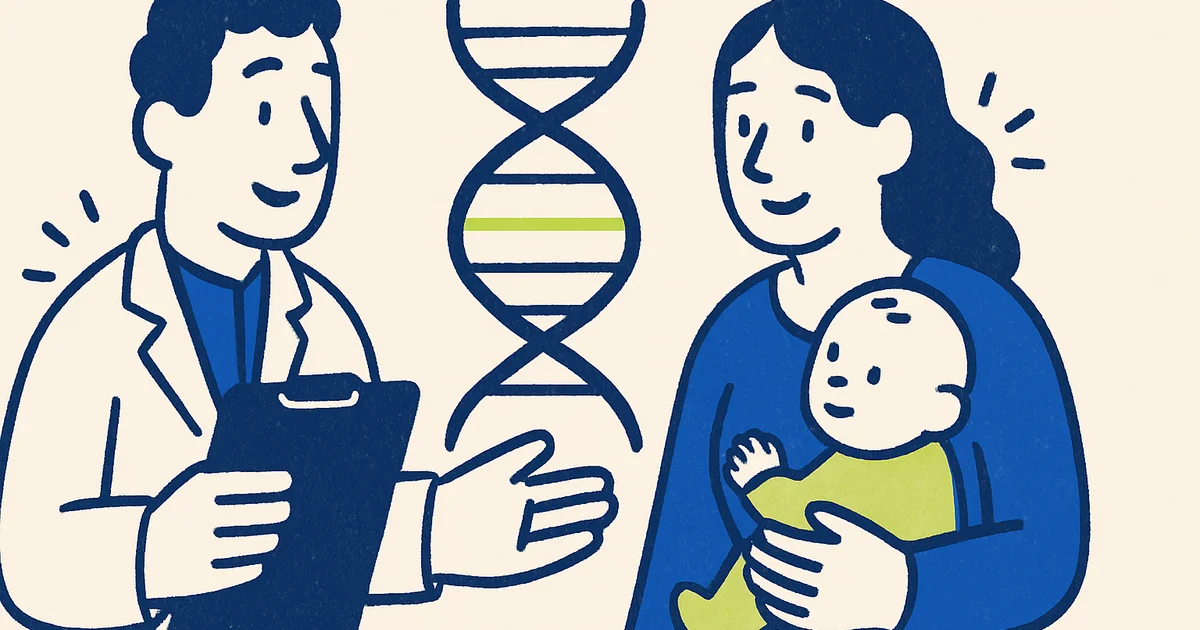
Spinal muscular atrophy (SMA) is a genetic condition that affects the motor nerves - the nerve cells that control muscle movement. It’s caused by changes (mutations) in a gene called SMN1 on chromosome 5. When this gene doesn’t work properly, motor neurones gradually break down, leading to muscle weakness and wasting. SMA is the leading genetic cause of infant death in the UK, but MHRA-approved treatments now exist that work best when started before symptoms appear.
What is SMA and why does early testing matter?
SMA is an autosomal recessive condition, which means a baby needs to inherit a faulty copy of the SMN1 gene from both parents to develop the disease. Most people with SMA have a complete deletion of the SMN1 gene - meaning the gene is entirely missing rather than just altered. A closely related gene called SMN2 can partially compensate, but not enough to prevent the condition.
The severity of SMA varies. Type I, the most severe form, typically appears in the first few months of life and affects a baby’s ability to breathe, swallow and move. Without treatment, most children with Type I SMA do not survive beyond early childhood. Types II, III and IV appear later and progress more slowly.
The critical reason for early testing is that treatments work best before motor neurones are lost. Once these nerve cells die, they cannot be replaced. Several disease-modifying therapies are now licensed in the UK, including nusinersen (Spinraza), onasemnogene abeparvovec (Zolgensma) and risdiplam (Evrysdi). Starting treatment in the presymptomatic period - before muscle weakness becomes apparent - can significantly improve outcomes and preserve motor function.
When should SMA testing happen?
The ideal time to test for SMA is in the first few weeks after birth, ideally before symptoms develop. This is why many countries have added SMA to their routine newborn screening programmes.
In England, SMA screening was added to the NHS newborn blood-spot screening programme in August 2021. Babies born in England since that date have SMA screening included in the heel-prick test offered in the first week of life. Scotland, Wales and Northern Ireland have also introduced or are introducing SMA to their newborn screening panels.
If your baby was born before SMA screening was introduced in your area, or if you’re concerned about a family history of SMA, you can request testing separately. Early testing is particularly important if:
- There’s a known family history of SMA - if a sibling, cousin or other relative has been diagnosed
- You and your partner are known carriers - if carrier screening during pregnancy identified both parents as having one faulty SMN1 gene copy
- Your baby shows early signs of muscle weakness - such as floppiness (hypotonia), difficulty feeding, or weak cry
For babies who weren’t screened at birth, testing can happen at any age if symptoms develop or if a family history comes to light. However, the earlier treatment can begin, the better the potential outcome.
How is SMA testing done?
SMA genetic testing looks for deletions or mutations in the SMN1 gene. In most cases, genetic testing determines the SMN1 copy number - how many working copies of the gene are present. A diagnosis is typically made when both copies are missing (zero SMN1 copies).
For newborn screening through the NHS, a few drops of blood from the heel-prick test are analysed in a laboratory. The test specifically looks for babies who have no working copies of SMN1.
Private testing may use either a blood sample or a buccal swab (cheek swab) collected at home. The genetic analysis is the same: counting SMN1 gene copies to identify babies at risk.
In some cases, further testing may be needed. When one copy of SMN1 is detected, the laboratory will examine that copy more closely to check for small changes (single-nucleotide variants) that might affect how the gene works. This deeper analysis helps identify cases where SMA might still be present even though one gene copy appears intact.
What happens if the test is positive?
If SMA is detected, your baby will be referred urgently to a specialist paediatric neurology team. Time is critical, so the NHS aims to start assessment and treatment as quickly as possible.
The specialist team will:
- Confirm the diagnosis with additional genetic testing if needed
- Assess your baby’s current motor function using standardised scales
- Discuss treatment options - the choice depends on the type of SMA, SMN2 copy number, and your baby’s age and condition
- Arrange regular monitoring to track your baby’s development and response to treatment
Treatment decisions are made jointly by the specialist team and your family. The treatments currently available in the UK have different administration methods: nusinersen is given by injection into the spinal fluid, onasemnogene abeparvovec is a one-time gene therapy given intravenously, and risdiplam is taken daily by mouth. Each has different eligibility criteria based on age, disease severity and other factors.
Understanding the results and next steps
A negative SMA test result (two or more working SMN1 copies detected) means your baby is extremely unlikely to have SMA. However, genetic testing can occasionally miss very rare mutations, so if your baby develops symptoms of muscle weakness, you should still speak to your GP.
It’s important to understand that SMA screening identifies babies who have the genetic change but may not yet show symptoms. In newborn screening programmes, babies are identified before any signs of the condition appear, which is precisely the point - starting treatment presymptomatically offers the best chance of preserving motor function.
Some babies detected through screening may have milder forms of SMA (types II or III) that develop more slowly. The specialist team will work with you to understand your baby’s specific situation, including their SMN2 copy number, which helps predict disease severity.
What you can do at Jeen
If your baby was born before SMA was added to the NHS newborn screening panel in your area, or if you want comprehensive genetic screening beyond the standard NHS programme, Jeen offers two relevant services:
SMA Newborn Testing is an at-home oral-swab DNA test that screens your baby specifically for spinal muscular atrophy. SMA was not on the NHS heel-prick panel for babies born before August 2021 in England (and remains absent in some parts of the UK). Early detection through this test allows your paediatric team to start MHRA-approved treatments before motor-neurone loss becomes irreversible. The test uses a simple cheek swab you collect at home, and genetic counselling is included to help you understand the results.
Newborn Genetic Screening goes beyond the NHS blood-spot screen to test for a wider range of inherited conditions where early intervention can change outcomes. This at-home oral-swab test covers treatable metabolic disorders, hearing impairment risk, immune deficiencies and other conditions not included in the standard NHS panel. It’s designed for parents who want the most comprehensive early screening available for their newborn, with genetic counselling included to discuss any findings.
Both tests are designed to complement NHS care. If either test identifies a condition, you’ll have specialist support to understand the result and coordinate with your NHS team for any necessary follow-up and treatment.
Sources & further reading
- Genomic analysis of the SMN1 gene region in patients with clinically diagnosed spinal muscular atrophy: a retrospective observational study DOI:
10.1186/s13023-025-03568-9. Accessed 15 September 2026. - Adherence and Persistence Among Risdiplam-Treated Individuals with Spinal Muscular Atrophy: A Retrospective Claims Analysis DOI:
10.1007/s12325-024-02850-9. Accessed 15 September 2026. - Exploratory evaluation of an eye-tracking system in patients with advanced spinal muscular atrophy type I receiving nusinersen DOI:
10.3389/fneur.2022.918255. Accessed 15 September 2026.