

When should my baby be screened for Spinal Muscular Atrophy (SMA)?
SMA is a severe neurological condition affecting motor neurones, and early detection can enable life-changing treatment. Learn when and why screening matters for your newborn.
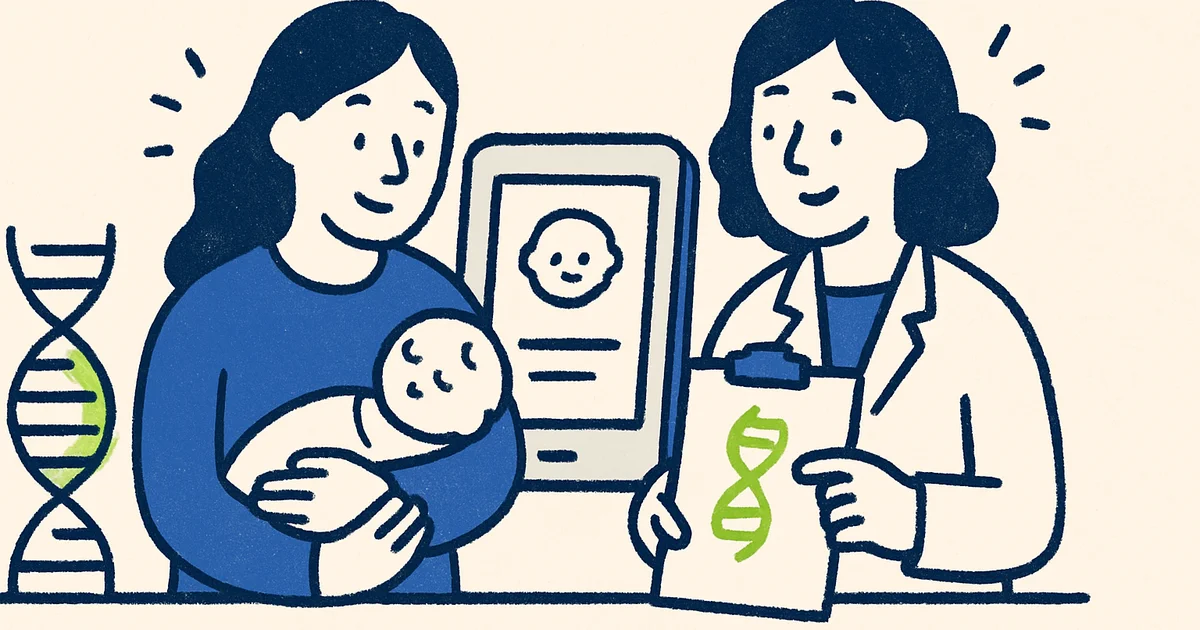
Spinal muscular atrophy (SMA) is a serious genetic condition that affects the nerve cells controlling muscle movement (called motor neurones). Without treatment, SMA can cause progressive muscle weakness and, in severe cases, difficulty breathing and swallowing. The condition is caused by changes in a gene called SMN1, and early diagnosis can make a substantial difference to outcomes because treatments are now available that work best when started before symptoms appear.
What is SMA and why does early screening matter?
SMA is an inherited condition passed down when both parents carry a change in the SMN1 gene. Most people with SMA have lost both working copies of this gene, meaning their bodies cannot produce enough of a protein needed to keep motor neurones healthy. The result is progressive muscle weakness that can affect movement, breathing and feeding.
The severity of SMA varies. Some babies develop symptoms in the first few months of life, while others remain well into childhood or adulthood. What matters most is that treatments approved by the Medicines and Healthcare products Regulatory Agency (MHRA) are most effective when given before motor neurone loss becomes irreversible. Real-world evidence from newborn screening programmes shows that early detection and treatment can improve outcomes for children with SMA.
SMA is not currently included in the NHS newborn blood-spot (heel-prick) screening programme, which tests for a fixed set of conditions. That means many babies with SMA are only diagnosed once symptoms appear, and by that time some motor neurone damage may already have occurred.
When should a baby be screened for SMA?
The ideal time to screen for SMA is in the first days or weeks after birth, before any symptoms develop. Newborn screening uses a small sample - either from the heel-prick blood spot or, in some programmes, a cheek swab - to check whether the baby has the genetic changes that cause SMA.
Screening in the newborn period allows:
- Early diagnosis before muscle weakness begins, giving families and doctors time to plan care.
- Timely access to treatment with MHRA-approved therapies that can slow or stop the progression of the condition.
- Better long-term outcomes for children who start treatment before motor neurone loss becomes significant.
Countries that have introduced SMA into their national newborn screening panels report that early detection and treatment lead to improved motor function and survival. In one five-year programme, newborn screening enabled early diagnosis and access to approved treatments, with measurable benefits for affected children.
How does SMA screening work?
SMA screening looks for deletions or mutations in the SMN1 gene. Most people with SMA have a complete absence of working SMN1 copies, which can be detected with high accuracy using genetic testing.
The test itself is straightforward:
- Sample collection: A small blood sample (from a heel prick) or an oral swab (a gentle cheek swab) is taken from the baby.
- Laboratory analysis: The sample is analysed to determine how many working copies of the SMN1 gene are present. Babies with zero working copies are at high risk of SMA.
- Confirmatory testing: If the screening suggests SMA, further tests are carried out to confirm the diagnosis and assess the likely severity.
Screening is highly accurate for the most common genetic cause of SMA, but it is important to know that a small number of cases are caused by rare mutations that standard screening may not detect. If your baby develops symptoms of muscle weakness even after a negative screen, speak to your GP.
What happens if SMA is detected?
If newborn screening identifies SMA, your baby will be referred to a specialist paediatric neurology team. They will confirm the diagnosis, assess which type of SMA your baby has, and discuss treatment options. Treatment may include:
- Gene therapy or medication that increases the production of the SMN protein, helping to preserve motor neurones.
- Supportive care such as physiotherapy, respiratory support and feeding support, tailored to your baby’s needs.
Treatments are most effective when started early, which is why newborn screening is so valuable. If SMA is caught before symptoms appear, your child’s medical team can begin therapy at the optimal time.
Should all babies be screened for SMA?
There is growing recognition that SMA screening should be offered to all newborns because:
- SMA is one of the leading genetic causes of infant mortality in the UK.
- Early treatment can prevent or reduce irreversible damage to motor neurones.
- The test is simple, accurate and can be done at the same time as other newborn checks.
Some countries, including the United States and several European nations, have already added SMA to their national newborn screening programmes. In the UK, the NHS newborn blood-spot screening programme does not currently include SMA, but families can access private screening if they wish.
What you can do at Jeen
At Jeen, we offer two ways to screen your newborn for SMA and other inherited conditions where early detection matters:
SMA Newborn Testing is an at-home oral-swab DNA test that screens your baby specifically for spinal muscular atrophy. SMA is not on the NHS heel-prick panel, so this test gives you peace of mind by checking for the leading genetic cause of infant mortality in the UK. Early detection lets your paediatric team start MHRA-approved treatments before motor-neurone loss becomes irreversible. The test uses a simple cheek swab you can do at home, and genetic counselling is included to help you understand the results.
Newborn Genetic Screening is a broader panel that includes SMA alongside other treatable inherited conditions such as metabolic disorders, immune deficiencies and hearing impairment risk. This test also uses an at-home oral swab and includes genetic counselling. It is designed for families who want a more comprehensive screen beyond what the NHS heel-prick currently covers.
Both tests are straightforward, non-invasive and can be arranged soon after your baby is born. Early screening gives you the information you need to make timely decisions about your child’s care.
Sources
The information in this article is based on peer-reviewed research and guidance from trusted medical authorities. All sources were accessed on 7 January 2025.
Sources & further reading
- Wang CH, Hsu TR, Liu MY, et al. Newborn screening facilitates early theranostics and improved spinal muscular atrophy outcome: five-year real-world evidence from Taiwan. Orphanet J Rare Dis. 2025;20(1):197. DOI:
10.1186/s13023-025-03697-1. Accessed 28 July 2026. - Kato T, Yokomura M, Osawa Y, et al. Genomic analysis of the SMN1 gene region in patients with clinically diagnosed spinal muscular atrophy: a retrospective observational study. Orphanet J Rare Dis. 2025;20(1):55. DOI:
10.1186/s13023-025-03568-9. Accessed 28 July 2026. - NHS. Spinal muscular atrophy (SMA). Accessed 28 July 2026.