

What is newborn screening and what conditions does it test for?
The NHS newborn bloodspot test (heel prick) screens babies for 9 rare but serious conditions. Early detection means treatment can start before symptoms appear, preventing long-term harm.
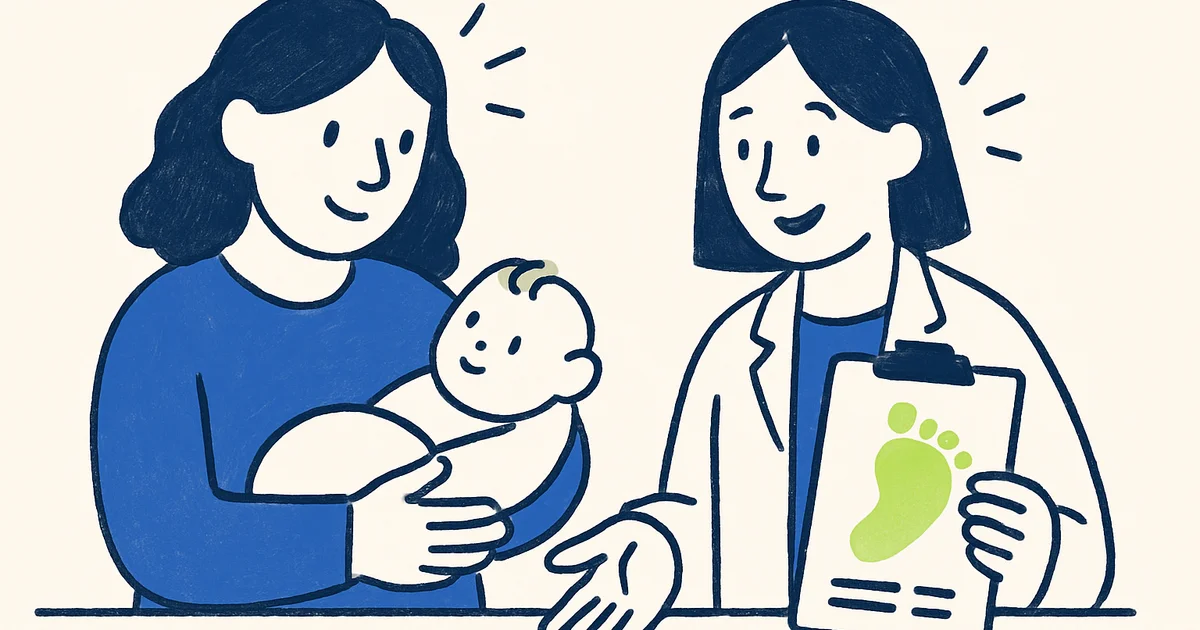
Every baby born in the UK is offered a newborn bloodspot test, often called the ‘heel prick test’, when they’re 5 days old. A few drops of blood are taken from your baby’s heel and tested for a group of rare but serious genetic and metabolic conditions. These conditions don’t usually cause obvious symptoms at birth but can lead to severe disability, organ damage, or death if left untreated. Early detection through screening means treatment can start early-often before any symptoms or lasting harm appear.
What conditions does the NHS newborn bloodspot test screen for?
In England, the NHS bloodspot programme screens for the conditions listed below - hereditary tyrosinaemia type 1 (HT1) being the most recent addition. (The exact list can vary slightly across the UK nations and is updated over time, so your midwife or the NHS website will have the most current list.)
The conditions screened for are:
-
Sickle cell disease: An inherited blood disorder where red blood cells become crescent-shaped and can block blood vessels, causing pain and organ damage. Early diagnosis allows preventive antibiotics and vaccinations to reduce infection risk.
-
Cystic fibrosis (CF): A genetic condition affecting the lungs and digestive system. Mucus builds up in the airways, making breathing difficult and increasing infection risk. Early physiotherapy and nutrition support improve long-term outcomes.
-
Congenital hypothyroidism (CHT): The thyroid gland doesn’t produce enough hormone, which is essential for brain development. Without treatment, babies can develop serious learning disabilities. Daily hormone tablets, started early, allow most children to develop normally.
-
Phenylketonuria (PKU): The body can’t break down an amino acid called phenylalanine, found in protein-rich foods. It builds up in the blood and damages the brain. A special low-protein diet started in the first weeks of life prevents the severe intellectual disability seen in untreated PKU, and most early-treated children develop within the normal range.
-
Medium-chain acyl-CoA dehydrogenase deficiency (MCADD): The body can’t convert certain fats into energy. During illness or fasting, blood sugar can drop dangerously low, causing seizures, coma, or sudden death. Frequent feeding and avoiding fasting help prevent life-threatening episodes.
-
Maple syrup urine disease (MSUD): The body can’t break down three specific amino acids. They accumulate and can poison the brain, causing seizures, coma, and severe disability. A specialised diet and close monitoring help prevent brain damage.
-
Isovaleric acidaemia (IVA): A build-up of toxic acids during illness or protein intake can cause vomiting, lethargy, and brain damage. A low-protein diet and emergency treatment plans help prevent metabolic crises.
-
Glutaric aciduria type 1 (GA1): Toxic acids can accumulate in the brain, causing movement disorders and intellectual disability, especially during infections. Early treatment with a low-protein/low-lysine diet and supplements substantially reduces this risk. In a meta-analysis, around three-quarters of babies picked up by newborn screening remained free of movement disorder - whereas roughly 9 in 10 of those diagnosed only after symptoms appeared went on to develop one.
-
Homocystinuria (HCU): An amino acid called homocysteine builds up, damaging blood vessels, eyes, bones, and the brain. Early treatment with vitamin B6, B12, or a special diet helps prevent most complications.
-
Hereditary tyrosinaemia type 1 (HT1): The body can’t fully break down the amino acid tyrosine, leading to a build-up of toxic substances that damage the liver, kidneys, and nerves. Early drug treatment and a special diet, started before symptoms appear, greatly reduce the risk of long-term damage.
These conditions are all rare. Individually, most affect somewhere between roughly 1 in 2,500 and 1 in 100,000 babies, depending on the condition. Across the whole panel, screening picks up well over a thousand babies needing follow-up in the UK each year. Most of these conditions are inherited in a recessive pattern, meaning both parents carry one copy of a gene change without knowing.
How the heel prick test works
A midwife or health visitor pricks your baby’s heel with a small needle and collects a few drops of blood on a special card. The card is sent to a laboratory where each dried blood spot is analysed for signs of the screened conditions. You should get the results by the time your baby is 6 weeks old, or sooner depending on the result. If a result suggests a possible problem, you’ll be contacted sooner-often by phone-and invited to bring your baby for further tests.
An abnormal screening result does not mean your baby definitely has the condition. It means the test found a marker that needs further investigation. Many babies who are recalled for further tests turn out not to have the condition, so try not to assume the worst before the follow-up tests are done.
What happens if the screening result is abnormal?
You’ll usually be contacted quickly and asked to take your baby to a specialist clinic. A paediatrician or metabolic specialist will arrange confirmatory blood or urine tests. If a diagnosis is confirmed, treatment starts promptly, often before your baby shows any symptoms.
For conditions like MCADD or PKU, you’ll receive detailed feeding plans, emergency advice, and regular monitoring. For sickle cell disease, your baby will start prophylactic antibiotics to help prevent serious infections. For congenital hypothyroidism, daily thyroxine tablets support normal development.
Starting treatment early helps prevent many of the severe complications of these conditions. Children diagnosed and treated from birth often develop normally and live healthy lives, although outcomes vary by condition and how closely treatment is followed.
Why early detection matters
Many of these conditions can cause irreversible damage before any symptoms appear. Phenylketonuria, for example, can cause brain damage in the first weeks of life if the baby eats normal amounts of protein. By the time a parent notices developmental delay-often months later-significant harm may already have occurred. The bloodspot test detects PKU around day 5, and a low-protein diet started immediately prevents the severe intellectual disability that untreated PKU causes. Even with good treatment, some children may have subtler effects on attention or processing, but early treatment makes a normal range of development the typical outcome.
Similarly, babies with MCADD can appear completely healthy until a routine illness or missed feed triggers a life-threatening metabolic crisis. Knowing your baby has MCADD means you can reduce the risk of crises with simple measures: never let your baby go more than a few hours without food, and seek medical help quickly if they’re unwell.
Screening also identifies babies with sickle cell disease before they develop overwhelming infections. Starting preventive penicillin in early infancy substantially reduces the risk of serious pneumococcal infection: in the landmark randomised trial that led to routine prophylaxis, oral penicillin cut these infections by around 84%.
Can you refuse newborn screening?
Yes. The test is offered to all babies but it’s not compulsory. However, health professionals strongly recommend it because the benefits-preventing disability and death-far outweigh the tiny risks of the test itself (slight discomfort and a rare risk of bruising). If you decline, you’ll be asked to confirm your decision, and your baby’s GP will be informed.
Some parents worry the test will be painful. The heel prick causes brief discomfort-similar to a vaccination-but babies usually settle within seconds, especially if fed or cuddled immediately afterward.
What the NHS test doesn’t cover
The NHS bloodspot screen tests for a defined panel of conditions chosen because they meet strict criteria: they’re serious, detectable at birth, treatable, and common enough to justify population screening. However, there are many other rare genetic conditions where early detection could change outcomes but that aren’t included in the NHS programme-often because they’re extremely rare or because the evidence for screening benefit is still emerging.
Conditions like biotinidase deficiency, for example, respond well to early biotin supplementation and are screened in many other countries, but aren’t currently part of the UK programme. Expanded newborn screening panels, available privately, can test for a much larger number of genetic conditions using the same dried blood spot or a simple oral swab.
What you can do at Jeen
The NHS newborn bloodspot test is an essential safety net, but it covers a limited panel of conditions. Our Newborn Genetic Screening service uses a simple oral swab to screen for a much wider range of inherited conditions where early detection and intervention can improve outcomes-including treatable metabolic disorders like biotinidase deficiency, hearing impairment risk, immune deficiencies, and many of the fatty acid oxidation disorders that can cause sudden collapse in infancy.
The test is done at home using a gentle cheek swab (no blood needed), and results include access to a genetic counsellor, included in the price, who can explain findings and next steps in plain English. If a result suggests your baby may be at risk for a treatable condition, we’ll guide you through NHS referral pathways or connect you with specialists. Expanded screening gives you an early window to protect your child’s health-before symptoms appear and while interventions are most effective.
Sources & further reading
- NHS: Newborn blood spot test Accessed 16 June 2026.
- GOV.UK: Newborn blood spot screening programme overview Accessed 16 June 2026.
- NHS England: NHS to screen all newborn babies for life-threatening metabolic disorder (hereditary tyrosinaemia type 1) Accessed 16 June 2026.
- MedlinePlus: Newborn Screening Accessed 16 June 2026.
- GeneReviews: Phenylalanine Hydroxylase Deficiency (includes PKU) Accessed 16 June 2026.
- GeneReviews: Glutaric Acidemia Type 1 Accessed 16 June 2026.
- Boy et al. Impact of newborn screening and quality of therapy on the neurological outcome in glutaric aciduria type 1: a meta-analysis. Genetics in Medicine. 2021 DOI:
10.1038/s41436-020-00971-4. Accessed 16 June 2026. - Gaston et al. Prophylaxis with oral penicillin in children with sickle cell anemia. A randomized trial. New England Journal of Medicine. 1986 DOI:
10.1056/NEJM198606193142501. Accessed 16 June 2026.