

Should I get genetic testing if my parent had breast cancer?
Having a parent with breast cancer doesn't automatically mean you need genetic testing. We explain the NHS criteria for testing, what BRCA results mean, and how testing can guide prevention.
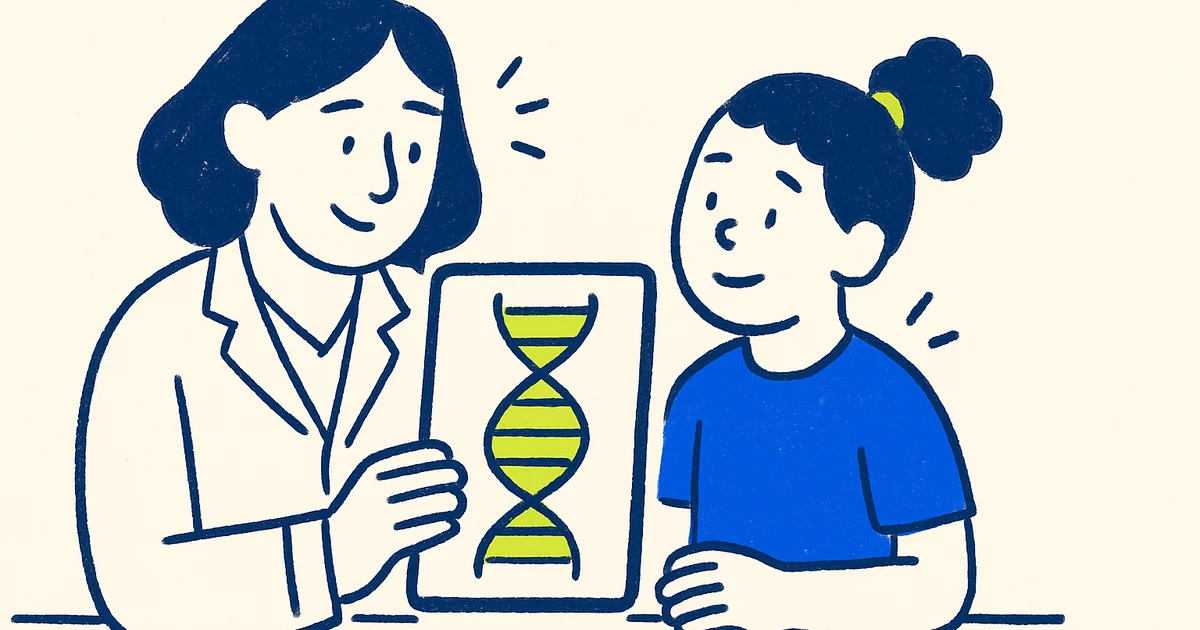
If your parent has had breast cancer, it’s natural to wonder whether you should get genetic testing. The short answer is: it depends on several factors, not just the fact that one parent was diagnosed.
Genetic testing looks for changes (called variants or mutations) in genes like BRCA1, BRCA2, PALB2, CHEK2, and ATM that significantly raise the chance of developing breast, ovarian, and some other cancers. Most people with breast cancer do not have a faulty gene that caused it - only around 5–10% of breast cancers are linked to inherited gene changes.
The NHS has clear criteria for who should be offered genetic testing. This article explains when family history matters, how testing works, and what you can do if you’re at higher risk.
When does family history suggest genetic testing?
Not everyone with a parent who had breast cancer needs testing. The NHS looks at patterns across your family - how many relatives had cancer, what type, and at what age.
In line with NICE guidance (CG164), you may be eligible for referral to a genetics clinic if your family history includes:
- Two close relatives (parent, sibling, child, grandparent, aunt, uncle) on the same side of the family with breast cancer, especially if one was diagnosed before age 50
- One relative with breast cancer diagnosed before age 40
- One relative with breast cancer in both breasts, especially if the first cancer was before age 50
- Male breast cancer in a close relative
- Breast and ovarian cancer in different relatives on the same side of the family
- A relative with triple-negative breast cancer (a type often linked to BRCA1) diagnosed before age 50
- Ashkenazi Jewish ancestry with one close relative diagnosed with breast or ovarian cancer at any age
Your GP can use a risk assessment tool to decide whether referral is appropriate. If you don’t meet the criteria, genetic testing is unlikely to find anything, and the NHS won’t usually offer it.
What happens if genetic testing finds a faulty gene?
If testing identifies a harmful change in BRCA1, BRCA2, or another high-risk gene, it means you have a much higher chance of developing breast and ovarian cancer than the general population.
For example:
- BRCA1 carriers have a high lifetime risk of breast cancer - one large prospective study estimated around a 72% chance by age 80 for BRCA1 carriers (and around 69% for BRCA2), although estimates vary between studies and depend on family history. For comparison, around 1 in 7 women in the general UK population (about 15%) develop breast cancer in their lifetime.
- BRCA2 carriers have a similarly raised breast cancer risk, plus a raised risk of male breast cancer, prostate cancer, and pancreatic cancer
- PALB2, CHEK2, and ATM variants also increase breast cancer risk, though typically less than BRCA1/2
Knowing you carry a faulty gene doesn’t mean cancer is certain - it means you can make informed choices about reducing your risk.
What can you do if you test positive?
The NHS offers several options for people with high-risk gene changes:
- Enhanced screening: Annual MRI scans (usually more sensitive than mammograms for younger women) from around age 30–40, plus mammograms from age 40. This is called surveillance.
- Risk-reducing medication: Tamoxifen, raloxifene, or anastrozole may be offered to some people at increased risk, in line with NICE guidance (CG164). A large overview of the prevention trials (Cuzick and colleagues, Lancet 2013) found that selective oestrogen receptor modulators such as tamoxifen and raloxifene reduced breast cancer cases by around 38% overall. Suitability depends on your age, menopausal status, and other health factors, so your doctor will discuss whether they’re right for you.
- Risk-reducing surgery: Risk-reducing mastectomy (removing breast tissue from both breasts) greatly lowers - though does not completely remove - the future risk of breast cancer. According to the US National Cancer Institute, bilateral risk-reducing mastectomy reduces breast cancer risk by at least 95% in women with a BRCA1 or BRCA2 variant, and by up to 90% in women with a strong family history. Removing the ovaries and fallopian tubes (called risk-reducing salpingo-oophorectomy) substantially lowers ovarian cancer risk and may also reduce breast cancer risk if done before menopause.
- Lifestyle changes: Maintaining a healthy weight, limiting alcohol, and staying active all help lower cancer risk, though not as much as the options above.
These are personal decisions. A clinical geneticist or genetic counsellor will walk you through the pros and cons. Surgery is major and permanent. Screening catches cancer earlier but doesn’t prevent it. Many people choose a combination - for example, enhanced screening while younger, then surgery later.
What if you test negative?
A negative result (no harmful gene change found) usually means your cancer risk is similar to the general population. You’d follow standard NHS breast screening, which is offered to women aged 50 up to their 71st birthday.
However, a negative result doesn’t rule out all genetic causes. Testing only looks at the genes we currently know about. If your family history remains strong, you may still be offered enhanced screening based on family history alone.
Does genetic testing affect your children?
If you carry a BRCA1 or BRCA2 variant, each of your children has a 50% chance of inheriting it - the gene change can pass to sons or daughters.
Sons who inherit BRCA2 have an increased risk of male breast cancer and prostate cancer. Daughters who inherit BRCA1 or BRCA2 have the same high breast and ovarian cancer risks as you.
Children can be tested from age 18 if they choose. Before that, testing isn’t usually offered unless there’s a specific medical reason, because there’s no action to take in childhood.
What you can do at Jeen
If you’re concerned about family history but don’t meet NHS criteria, or if you want to understand your broader cancer risks, Jeen offers comprehensive genetic testing you can access directly.
Our Cancer Screening Panel analyses BRCA1, BRCA2, PALB2, CHEK2, ATM, and over 40 other genes linked to hereditary cancers. You receive a detailed report explaining your results and what they mean for screening and prevention. We also offer a Cancer Carrier Combined Panel that looks at both cancer genes and carrier status for inherited conditions you could pass to children.
All Jeen reports come with genetic counselling included, so you can discuss your results with a qualified professional. Testing is done in a UK-accredited laboratory, and results are typically ready in 3–4 weeks.
Knowing your genetic risk can guide decisions about screening timing, lifestyle choices, and family planning. If you do test positive, you can take your Jeen report to your GP to access NHS prevention programmes.
Sources & further reading
- NICE Clinical Guideline CG164: Familial breast cancer (published 2013, last updated November 2023) Accessed 16 June 2026.
- Kuchenbaecker KB, et al. Risks of Breast, Ovarian, and Contralateral Breast Cancer for BRCA1 and BRCA2 Mutation Carriers. JAMA. 2017;317(23):2402-2416 DOI:
10.1001/jama.2017.7112. Accessed 16 June 2026. - Cancer Research UK: Breast cancer risk factors and lifetime risk statistics Accessed 16 June 2026.
- Cuzick J, et al. Selective oestrogen receptor modulators in prevention of breast cancer: an updated meta-analysis of individual participant data. Lancet. 2013;381(9880):1827-1834 DOI:
10.1016/S0140-6736(13)60140-3. Accessed 16 June 2026. - National Cancer Institute: Surgery to Reduce the Risk of Breast Cancer Accessed 16 June 2026.
- NHS: Predictive genetic tests for cancer risk genes (BRCA and cancer risk) Accessed 16 June 2026.
- NHS: Breast cancer screening Accessed 16 June 2026.
- Breast Cancer Now: Family history of breast cancer and inherited genes Accessed 16 June 2026.