

On this page
Pancreatic cancer (polygenic risk)
Also known as Pancreatic cancer
Most pancreatic cancers are not caused by a single faulty gene. Instead, risk reflects the additive effect of hundreds of common DNA variants, each with a tiny influence, interacting with age and lifestyle factors such as smoking, weight and diabetes. A polygenic risk score sums these many small contributions to estimate where a person sits on the population risk spectrum.
Available at Jeen Health
Clinical tests that include this
Overview
Pancreatic cancer, almost always pancreatic ductal adenocarcinoma (PDAC), is a malignancy of the cells lining the pancreatic ducts. It is uncommon but serious: in the UK it accounts for roughly 10,500 new cases each year and is the fifth most common cause of cancer death, with around 10,200 deaths annually. Lifetime risk is approximately 1 in 55 for men and 1 in 59 for women. It typically affects older adults, with most diagnoses after age 65. Survival is the lowest of any common cancer, with five-year survival around 7%, largely because the disease is hard to detect early and often presents late. Around three in ten UK cases are thought to be preventable, chiefly through not smoking and maintaining a healthy weight. The great majority of cases are sporadic; only a small minority are linked to a single inherited high-risk gene fault, while the rest reflect a mix of common genetic variation, age and environmental exposures.
Symptoms & clinical features
Pancreatic cancer is notoriously difficult to detect early because symptoms are often vague or absent until the disease is advanced. When they appear, common features include painless jaundice (yellowing of the skin and eyes, with dark urine and pale stools), unexplained weight loss, loss of appetite, and pain in the upper abdomen or back. New-onset or suddenly worsening diabetes, persistent indigestion, nausea, and changes in bowel habit can also occur. These symptoms overlap with many benign conditions, which contributes to late diagnosis. Importantly, a person's polygenic risk score does not change how the disease presents. The score reflects underlying predisposition only; it neither produces symptoms nor alters the clinical picture, severity or speed of progression should cancer develop.
Video: Is cancer in your genes?
Affected organs
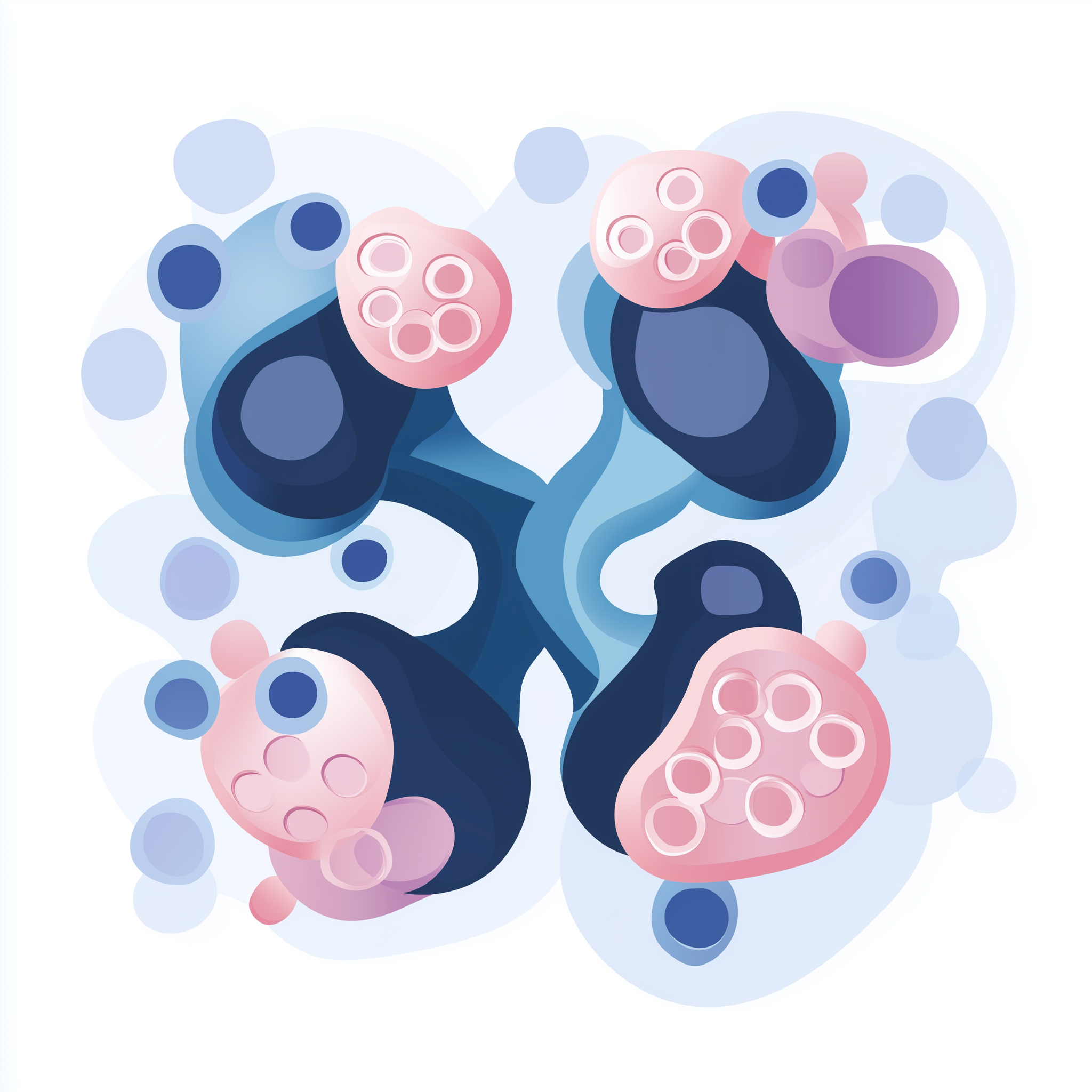
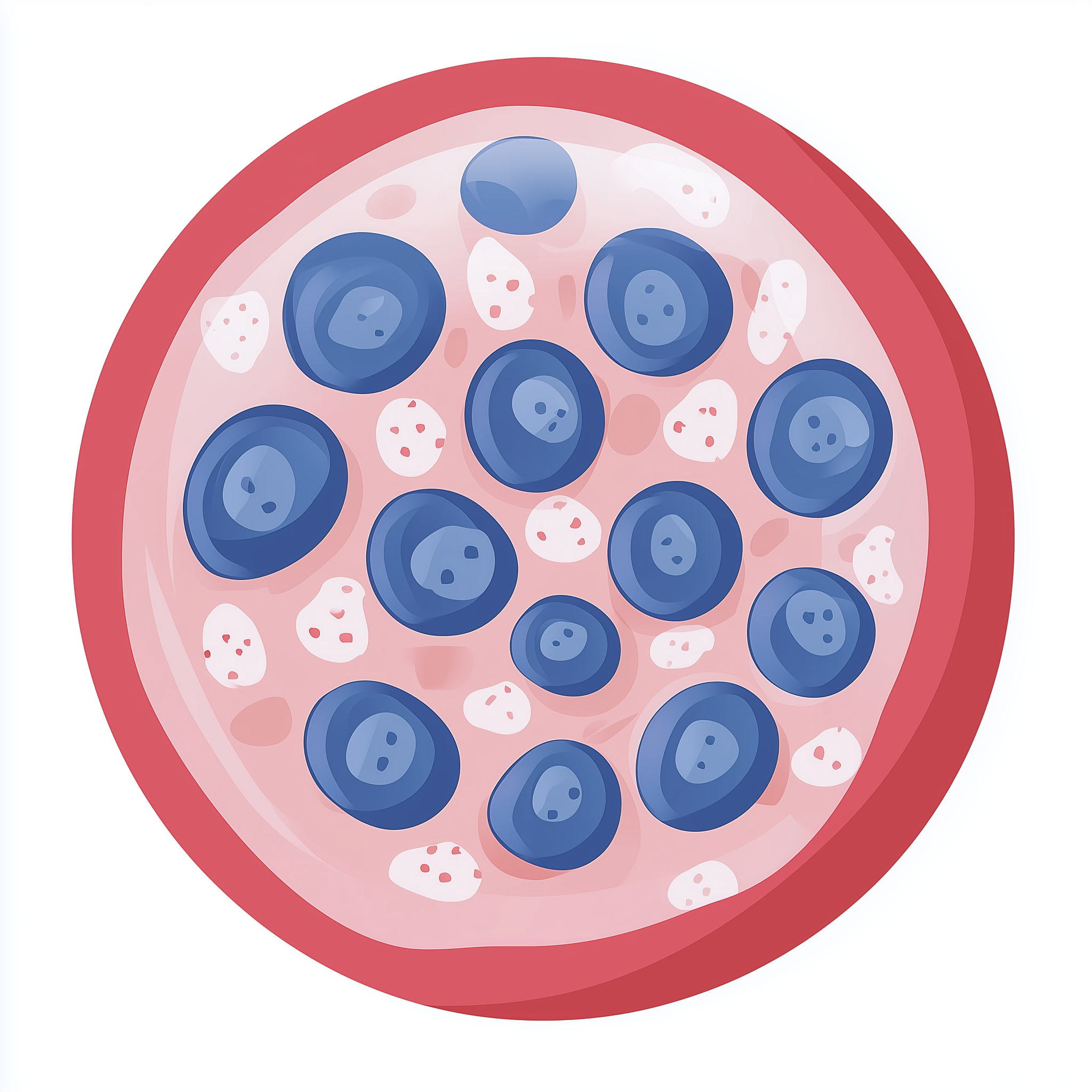
Pancreatic cancer arises in the pancreas, a gland in the upper abdomen behind the stomach that produces digestive enzymes and hormones such as insulin. Most tumours, the ductal adenocarcinomas, begin in the cells lining the pancreatic ducts. Because the pancreas sits close to the bile duct, duodenum, blood vessels and other organs, disease can affect digestion, blood-sugar control and, through bile-duct obstruction, the liver, producing jaundice.
Risks & severity
A polygenic risk score is usually reported as a percentile (for example, top 10% of the population) or as a relative risk compared with average. It describes the probability of developing disease over time, not certainty: many people with high scores never develop pancreatic cancer, and some with low scores do. The predictive performance of polygenic scores varies considerably between conditions and, critically, by genetic ancestry, because most GWAS data come from European-ancestry populations; scores tend to be less accurate in under-represented groups. For pancreatic cancer specifically, polygenic scores add only modestly to risk prediction at present. A score should therefore be read as a probabilistic estimate that refines, but does not determine, an individual's risk.
Genetic causes
Genome-wide association studies (GWAS) by consortia such as PanScan and PanC4 have identified a growing number of common variants associated with pancreatic cancer, each individually conferring only a small change in risk. Well-replicated loci include the ABO blood-group gene on 9q34.2 (non-O blood groups carry slightly higher risk), NR5A2 on 1q32.1, the TERT-CLPTM1L region on 5p15.33 (relevant to telomere maintenance), and a non-genic region on 13q22.1 flanked by KLF5 and KLF12. Later meta-analyses added loci near HNF1A, HNF1B (17q12), HNF4G (8q21.11) and LINC00673, among others. A polygenic risk score aggregates the effects of these and many further variants genome-wide. No single variant is sufficient or necessary to cause disease; risk emerges from the cumulative, additive contribution of many common alleles, often in combination with lifestyle and metabolic factors.
Inheritance pattern
Polygenic risk does not follow the clear-cut, single-gene (Mendelian) inheritance seen in conditions caused by one high-impact fault. Instead, each person inherits a random mixture of common variants from both parents, and their combined effect places the individual somewhere along a continuous bell-shaped distribution of risk across the population. Most people sit near the middle; a minority fall at the higher or lower tails. Because risk is spread across the whole genome, it does not pass down in a predictable pattern and two siblings can inherit quite different scores. Family clustering can still occur, partly through shared variants and partly through shared environment and lifestyle, but a high polygenic score is a matter of degree rather than an inherited diagnosis.
Diagnosis & testing
A polygenic risk score is a statistical risk estimate, not a diagnosis. It is calculated from a person's genotype, usually generated by a DNA array or sequencing, by summing the effects of many risk-associated variants weighted by their measured contribution from GWAS data. The result is typically expressed as a percentile or relative risk compared with the general population. It says nothing about whether cancer is present. Pancreatic cancer itself is diagnosed clinically and radiologically, not genetically: through imaging such as CT, MRI with MRCP or endoscopic ultrasound (EUS), supported by blood tests and tissue biopsy. A polygenic score may help contextualise risk and inform conversations about lifestyle and vigilance, but it cannot confirm or exclude disease and should never be interpreted as a result indicating cancer.
Management & lifestyle
For people with an elevated polygenic risk score, the most useful actions focus on modifiable risk factors and awareness, because pancreatic cancer has no routine screening programme. Stopping smoking is the single most important step, as smoking roughly doubles risk; maintaining a healthy weight, limiting alcohol, and managing diabetes also help. Around a third of UK cases are considered preventable through such measures. Being alert to persistent new symptoms, particularly painless jaundice, unexplained weight loss or new-onset diabetes, and seeking prompt GP review supports earlier presentation. Polygenic risk alone does not currently qualify someone for imaging surveillance on the NHS; structured surveillance with MRI/MRCP and/or EUS is reserved for people at high risk due to a strong family history or an inherited high-risk gene fault, usually via specialist pathways such as EUROPAC. A high score is best used as a prompt for risk-reduction and informed discussion with a clinician.
UK care pathway
There is no national NHS screening programme for pancreatic cancer in the general population, and a polygenic risk score does not by itself trigger NHS surveillance. Most people present through their GP with symptoms and are referred on an urgent suspected-cancer pathway for imaging. Structured surveillance, typically annual MRI/MRCP and/or endoscopic ultrasound, is offered only to defined high-risk groups, such as those with a strong familial history or specific inherited high-risk gene variants, usually through specialist services and registries like EUROPAC, in line with NICE guidance (NG85).
Frequently asked questions
How is polygenic pancreatic cancer risk different from a single faulty gene like BRCA2?
A single-gene (monogenic) cause such as a BRCA2, PALB2 or CDKN2A fault is one high-impact change that markedly raises risk on its own and is inherited in a clear pattern. Polygenic risk is the opposite: it is the combined effect of hundreds of common variants, each with a tiny influence, that together place you somewhere on a continuous risk spectrum. A high polygenic score is a matter of degree, not a single diagnosable fault, and most people who carry such variants never develop pancreatic cancer.
Can I get a pancreatic cancer polygenic risk score or screening on the NHS?
The NHS does not currently offer polygenic risk scoring or population screening for pancreatic cancer. There is no national screening programme. Imaging surveillance (MRI/MRCP or endoscopic ultrasound) is reserved for people at high risk because of a strong family history or an inherited high-risk gene fault, usually through specialist pathways such as EUROPAC and in line with NICE guidance. A polygenic score is a private test and does not by itself qualify you for NHS surveillance.
Does a high polygenic score mean I will get pancreatic cancer?
No. A polygenic risk score is a probability estimate, not a prediction or a diagnosis. It tells you roughly where you sit relative to the population, often as a percentile. Many people with high scores never develop the disease, and some with low scores do. Pancreatic cancer also depends heavily on age and modifiable factors such as smoking, weight and diabetes, so a high score is best used as a prompt to reduce risk and stay alert to symptoms.
What can I actually do if my polygenic risk for pancreatic cancer is elevated?
Focus on the things that genuinely lower risk. Not smoking is the most important, as smoking roughly doubles risk; keeping a healthy weight, limiting alcohol and managing diabetes also help, and around a third of UK cases are considered preventable. Be aware of persistent new symptoms such as painless jaundice, unexplained weight loss or new-onset diabetes, and see your GP promptly. Discuss your family history with a clinician, as a strong inherited pattern may warrant a different pathway.
References
- Morrison AH, Byrne KT, Vonderheide RH. Immunotherapy and Prevention of Pancreatic Cancer. Trends in cancer. 2018. PMID: 29860986
- Domagała-Haduch M, Gorzelak-Magiera A, Michalecki Ł. Radiochemotherapy in Pancreatic Cancer. Current oncology (Toronto, Ont.). 2024. PMID: 38920733
- Conroy T, Pfeiffer P, Vilgrain V. Pancreatic cancer: ESMO Clinical Practice Guideline for diagnosis, treatment and follow-up. Annals of oncology : official journal of the European Society for Medical Oncology. 2023. PMID: 37678671
- Tonini V, Zanni M. Pancreatic cancer in 2025: Have we found a solution? World journal of gastroenterology. 2025. PMID: 41358172
- Josselsohn RH, Tuveson DA. Pancreatic cancer SLUGged. The Journal of experimental medicine. 2020. PMID: 32813872
- Biankin AV, Maitra A. Subtyping Pancreatic Cancer. Cancer cell. 2015. PMID: 26461089
- Goggins M. The role of biomarkers in the early detection of pancreatic cancer. Familial cancer. 2024. PMID: 38662265
- Del Nero L, Dabizzi E, Ceglie A. Familial pancreatic cancer. Clinics and research in hepatology and gastroenterology. 2023. PMID: 36681116