

What's Polycystic Kidney Disease (PKD) and what are the genetic causes?
Polycystic kidney disease is an inherited condition where fluid-filled cysts grow in the kidneys. We explain the genetic causes, symptoms, and when to consider genetic testing.
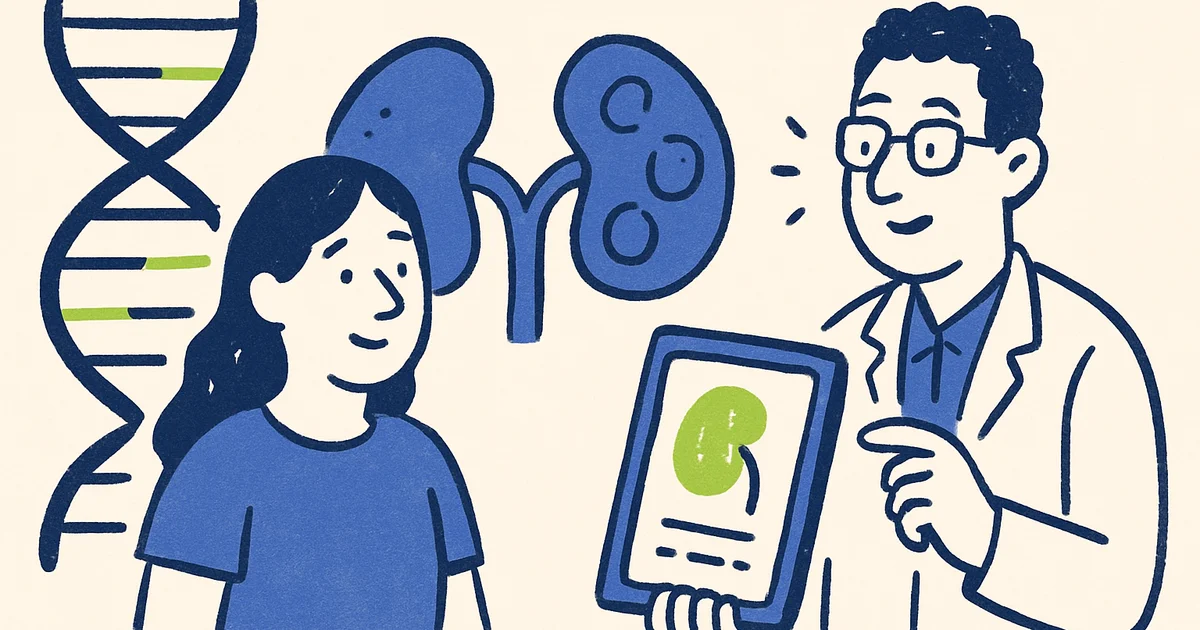
Polycystic kidney disease (PKD) is an inherited condition where clusters of fluid-filled sacs called cysts develop in the kidneys. Over time, these cysts can grow and multiply, enlarging the kidneys and interfering with how they filter waste from the blood. PKD is one of the most common life-threatening genetic diseases, affecting roughly 1 in 1,000 people in the UK.
Understanding the genetic causes of PKD can help you make informed decisions about testing, monitoring, and family planning - particularly if you have a family history of kidney disease.
Types of polycystic kidney disease
There are two main forms of PKD, each caused by changes (variants) in different genes:
Autosomal dominant PKD (ADPKD) is the most common type, affecting about 9 in 10 people with PKD. Symptoms usually appear between ages 30 and 40, though some people develop signs earlier or later. If one parent has ADPKD, each child has a 50% chance of inheriting the condition. ADPKD is caused by variants in two genes:
- PKD1 (chromosome 16) - accounts for roughly 85% of ADPKD cases and tends to cause more severe disease with earlier kidney failure
- PKD2 (chromosome 4) - accounts for about 15% of cases and usually progresses more slowly, with kidney failure occurring around 20 years later than PKD1-related disease
Autosomal recessive PKD (ARPKD) is much rarer, affecting about 1 in 20,000 births. Symptoms often appear in infancy or childhood, and the condition can be life-threatening in newborns. To inherit ARPKD, a child must receive a faulty copy of the PKHD1 gene from both parents. Parents are usually unaffected carriers - they each have one working copy and one non-working copy of the gene.
A small number of people have PKD caused by variants in other genes, but PKD1, PKD2, and PKHD1 account for the vast majority of cases.
What are the symptoms?
Many people with ADPKD have no symptoms for years. The kidneys can function normally even when cysts are growing. When symptoms do appear, they may include:
- Pain in the back, side, or abdomen - often dull and persistent, sometimes sharp if a cyst bursts or bleeds
- Blood in the urine (haematuria) - may be visible or only detected on a urine test
- Frequent kidney infections or urinary tract infections
- High blood pressure - often the first noticeable sign, appearing before kidney function declines
- Kidney stones
- Headaches - particularly if you develop high blood pressure
Symptoms of ARPKD in babies and children can include:
- Enlarged kidneys that can be felt through the abdomen
- Poor growth and feeding difficulties
- High blood pressure
- Breathing problems (because enlarged kidneys press on the lungs in the womb)
- Liver problems, including enlarged liver and scarring (fibrosis)
PKD can also cause cysts in other organs, most commonly the liver. Liver cysts rarely affect liver function but can cause discomfort if they grow large.
How is PKD usually diagnosed?
If your doctor suspects PKD - for example, because of a family history or unexplained kidney enlargement - they’ll usually arrange imaging scans:
- Ultrasound is the most common first test and can detect cysts as small as a few millimetres
- CT or MRI scans give more detailed images and are sometimes used to count and measure cysts
Imaging can confirm the presence of cysts, but it can’t always tell you which gene is involved or predict how quickly the disease will progress. That’s where genetic testing becomes useful.
Why genetic testing matters
Genetic testing looks for variants in the PKD1, PKD2, and PKHD1 genes. Knowing which gene is affected can:
- Confirm a diagnosis when imaging results are unclear or when someone is young and has few cysts
- Predict disease progression - PKD1 variants generally cause faster progression than PKD2 variants, which can help with monitoring and treatment planning
- Help with family planning - if you’re considering having children and know you carry a PKD variant, you can discuss options like preimplantation genetic testing or prenatal diagnosis with a genetic counsellor
- Identify at-risk relatives - if a variant is found in one family member, other relatives can be tested to see if they’ve inherited it, even before symptoms appear
- Rule out PKD in family members who haven’t inherited the variant - this can provide reassurance and mean they don’t need lifelong kidney monitoring
On the NHS, genetic testing for PKD is available through clinical genetics services, but waiting times can be several months or longer depending on your area. Testing is usually offered if:
- You have a family history of PKD and want to know if you’ve inherited the condition
- You have kidney cysts but imaging findings are unclear
- You’re considering having children and want to know your carrier status
- You have ADPKD and are being assessed for kidney donation
What you can do at Jeen
If waiting times for NHS genetic testing are long, or if you want to arrange testing privately, Jeen’s Polycystic Kidney Disease (PKD) Panel screens for pathogenic variants in PKD1, PKD2, and PKHD1 - the genes responsible for autosomal dominant and autosomal recessive polycystic kidney disease.
This test can be useful for:
- Confirming a clinical diagnosis when imaging shows kidney cysts but you want to know which gene is involved
- Pre-symptomatic risk assessment if you have a family history of PKD and want to know whether you’ve inherited a variant before symptoms appear
- Family planning decisions - understanding your genetic status can help you and a genetic counsellor discuss reproductive options
The test uses an at-home oral swab (no blood draw needed) and includes access to specialist genetic counselling to help you understand your results. Results are typically available within 3–4 weeks.
Genetic testing won’t change the fact that you have PKD if cysts are already present, but it can provide clarity about prognosis, help guide monitoring, and give family members information they need to make their own health decisions.
Sources & further reading
- MedlinePlus: Polycystic Kidney Disease Accessed 16 June 2026.
- OMIM: Polycystic Kidney Disease, Autosomal Dominant 1 Accessed 16 June 2026.
- OMIM: Polycystic Kidney Disease, Autosomal Recessive Accessed 16 June 2026.
- NHS: Autosomal dominant polycystic kidney disease Accessed 16 June 2026.