

How can genetic testing be used for predicting Diabetes?
Genetic testing can identify rare gene changes that cause diabetes in infants and children, and polygenic risk scores estimate inherited risk for type 2 diabetes by reading hundreds of common variants. Neither replaces lifestyle factors or routine screening.
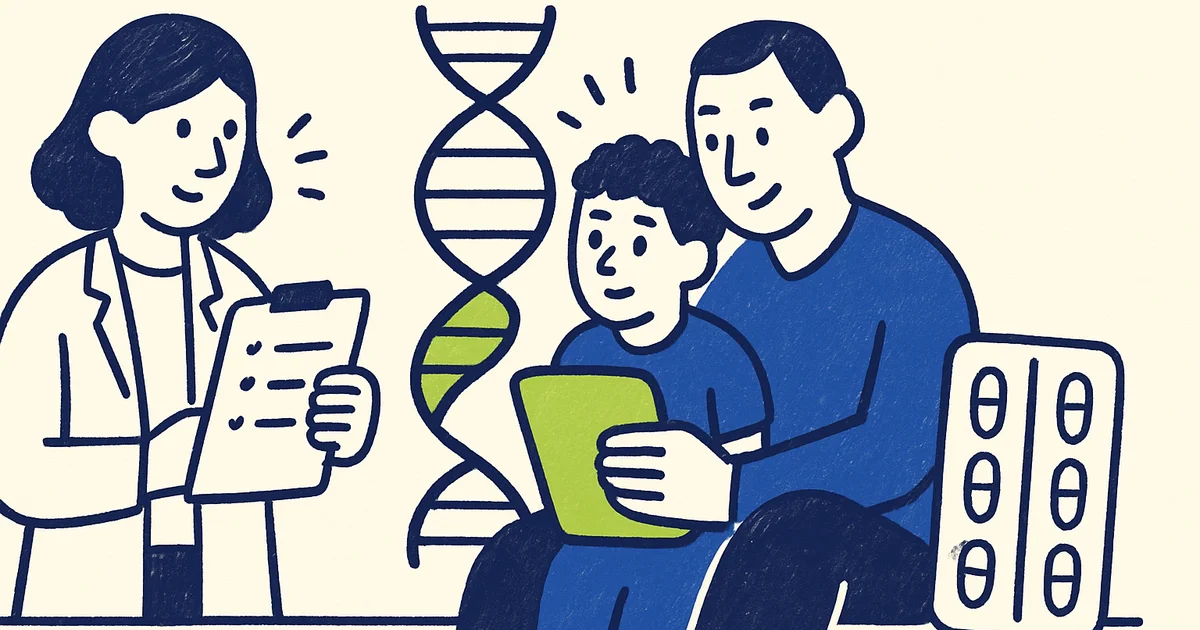
Diabetes isn’t a single condition - it’s a group of disorders that all cause high blood sugar. While most people develop type 2 diabetes later in life because of lifestyle and age-related factors, genes play different roles depending on which type of diabetes you’re looking at. Genetic testing can identify rare gene changes that cause diabetes in babies and young children, and newer polygenic risk scores can estimate your inherited risk for type 2 diabetes by reading hundreds of common DNA variants at once.
Monogenic diabetes: rare gene changes that directly cause the condition
A small proportion of diabetes cases are caused by a single faulty gene. When diabetes appears in the first six months of life - called neonatal diabetes - it’s very likely to be due to an underlying monogenic defect. This is different from the more common type 1 diabetes, which usually starts later and is caused by the immune system attacking insulin-producing cells.
Early genetic testing is important when neonatal diabetes is suspected because:
- It predicts the clinical course. Some gene changes cause temporary diabetes that resolves in infancy, while others cause lifelong diabetes or bring additional features like developmental delay or kidney problems.
- It can change treatment. Certain types of neonatal diabetes respond very well to sulfonylurea tablets instead of insulin injections, and early treatment with the right medication may improve neurological outcomes.
- It distinguishes true neonatal diabetes from other causes of high blood sugar in newborns, such as infection, stress, or the immature insulin production seen in premature babies.
Monogenic diabetes can also appear later in childhood or young adulthood. One example is WFS1-related diabetes, caused by variants in the WFS1 gene. This form is often misdiagnosed as type 2 diabetes in young adults. In one study of Chinese patients diagnosed with type 2 diabetes before age 40, rare variants in WFS1 were identified in a subset of cases, suggesting that some early-onset diabetes labelled as “type 2” may actually have a single-gene cause.
If your child develops diabetes unusually early, or if you were diagnosed with diabetes before age 25 and don’t fit the typical type 1 or type 2 pattern, your doctor may refer you for genetic testing to check for a monogenic cause.
Polygenic risk scores: estimating inherited risk for type 2 diabetes
Type 2 diabetes - the most common form - is not caused by a single gene. Instead, it’s influenced by hundreds of common DNA variants scattered across the genome, each making a tiny contribution to risk. A polygenic risk score (PRS) reads these variants and combines them into a single number that estimates your inherited risk compared to others of similar ancestry.
Polygenic risk scores for cardiovascular and metabolic conditions, including type 2 diabetes, have been studied extensively. Twin and family studies show that type 2 diabetes runs in families, and systematic cataloguing of risk alleles has enabled the development of polygenic scores. However, their predictive performance varies depending on the condition and the ancestry group - scores built on predominantly European genetic data perform less well in other populations.
What a polygenic risk score can tell you:
- How your inherited risk compares to the general population. A higher score means you’ve inherited more of the common variants associated with type 2 diabetes, but it doesn’t mean you will definitely develop the condition.
- Whether you might benefit from earlier or more intensive lifestyle measures, such as weight management, physical activity, and dietary changes, which remain the cornerstone of type 2 diabetes prevention.
What a polygenic risk score cannot do:
- Diagnose diabetes. Only blood tests (glucose or HbA1c) can diagnose diabetes.
- Predict with certainty. Lifestyle, weight, age, and other environmental factors still account for much of your actual risk. Someone with a low genetic risk can still develop type 2 diabetes if they’re inactive and overweight, and someone with a high genetic risk can avoid it through sustained lifestyle changes.
- Replace NHS screening. The NHS offers regular diabetes checks based on age and risk factors; a polygenic risk score is additional information, not a substitute.
Polygenic risk scores are most useful when combined with traditional risk factors - family history, BMI, blood pressure, and cholesterol - rather than used in isolation.
When genetic testing might be recommended
Your GP or a specialist may suggest genetic testing for diabetes if:
- Your baby develops diabetes in the first six months of life. Urgent genetic testing can guide treatment and identify syndromes that need additional monitoring.
- You were diagnosed with diabetes before age 25 and the picture doesn’t fit typical type 1 diabetes (for example, you still make some insulin, or you have a strong family history of early diabetes across multiple generations).
- You have a family history of unusual or early-onset diabetes and want to understand your own risk or plan ahead for children.
Polygenic risk score testing is not currently part of routine NHS care. It’s available privately and may be helpful if you want a clearer picture of your inherited type 2 diabetes risk to inform lifestyle choices, but it’s not a clinical necessity.
What you can do at Jeen
If you’re interested in understanding your inherited risk for type 2 diabetes and other common conditions, Jeen offers a Polygenic Risk Score Test. This test provides ancestry-specific polygenic risk scores across 20+ conditions - including type 2 diabetes, common cancers, heart disease and stroke, cholesterol, and Alzheimer’s. The analysis is powered by Allelica’s ancestry-specific models and includes a genetic-counselling consultation to help you interpret your results. You provide a simple at-home saliva sample - no clinic visit, no blood draw.
It’s important to understand that polygenic risk scores estimate inherited risk only. They are not a diagnosis, not a prediction of whether you will definitely develop a condition, and not a replacement for NHS screening. Predictive performance varies by condition and by ancestry, and your counselling session will explain how much weight to give each score in your particular situation.
The NHS does not currently offer polygenic risk score testing as part of routine care. This test provides additional information about your inherited risk that you can use to inform lifestyle and screening decisions, always in discussion with your GP.
If you’re already taking medication for diabetes or other conditions and want to know how your genes might affect which drugs work best for you, Jeen also offers a Pharmacogenomic Test. This screens 112+ medications across 14 therapy areas - including some diabetes medications - to identify which drugs are likely to work for you, which might cause side effects, and which need a different dose. The test uses an at-home saliva sample, and a complimentary 30-minute GP video appointment is included after results if you need one.
Sources & further reading
- Lemelman MB, Letourneau L, Greeley SAW. Neonatal Diabetes Mellitus: An Update on Diagnosis and Management. Clin Perinatol. 2018 Mar;45(1):41-59. DOI:
10.1016/j.clp.2017.10.006. Accessed 14 July 2026. - O'Sullivan JW, Raghavan S, Marquez-Luna C, et al. Polygenic Risk Scores for Cardiovascular Disease: A Scientific Statement From the American Heart Association. Circulation. 2022 Aug 23;146(8):e93-e118. DOI:
10.1161/CIR.0000000000001077. Accessed 14 July 2026. - Li Y, Gong S, Li M, et al. The genetic and clinical characteristics of WFS1 related diabetes in Chinese early onset type 2 diabetes. Sci Rep. 2023 Jun 5;13(1):9127. DOI:
10.1038/s41598-023-36334-7. Accessed 14 July 2026.