

On this page
Stroke (polygenic risk)
Also known as Stroke · Ischaemic stroke
Most strokes are not caused by a single faulty gene. Instead, hundreds of common DNA variants, each with a tiny effect, add together with blood pressure, lipids, atrial fibrillation, diabetes, smoking and age to shape a person's underlying risk. A polygenic risk score sums these many small effects into one estimate of inherited susceptibility, placing you somewhere on a continuous spectrum rather than in a single high-risk gene category.
Available at Jeen Health
Clinical tests that include this
Overview
Stroke happens when the blood supply to part of the brain is interrupted, either by a clot blocking an artery (ischaemic stroke, around 85% of cases) or by a bleed (haemorrhagic stroke). It is one of the UK's leading causes of death and a major cause of complex adult disability. There are roughly 100,000 strokes in the UK each year, and the estimated lifetime risk worldwide is in the region of one in four from the age of 25. Around 1.3 million stroke survivors are living in the UK, a number projected to rise as the population ages. Risk climbs steeply with age but stroke is not confined to older people; around one in four strokes occurs in people of working age. This page focuses on mainly ischaemic stroke and the inherited component of risk, which overlaps heavily with the genetics of atrial fibrillation, high blood pressure and abnormal blood lipids.
Symptoms & clinical features
Stroke is a medical emergency. The classic warning signs are captured by the FAST test: Face drooping on one side, Arm weakness, Speech that is slurred or muddled, and Time to call 999. Other features include sudden numbness, confusion, trouble seeing, severe dizziness or loss of balance, and a sudden severe headache. A transient ischaemic attack (TIA, or 'mini-stroke') causes similar symptoms that resolve within minutes to hours but is a serious warning that a full stroke may follow. Importantly, polygenic risk does not change how a stroke presents or how urgent it is. A high genetic score means a greater background probability of stroke over time; it does not alter the symptoms, the speed of onset, or the need for emergency treatment when a stroke occurs.
Video: Genetics 101
Affected organs
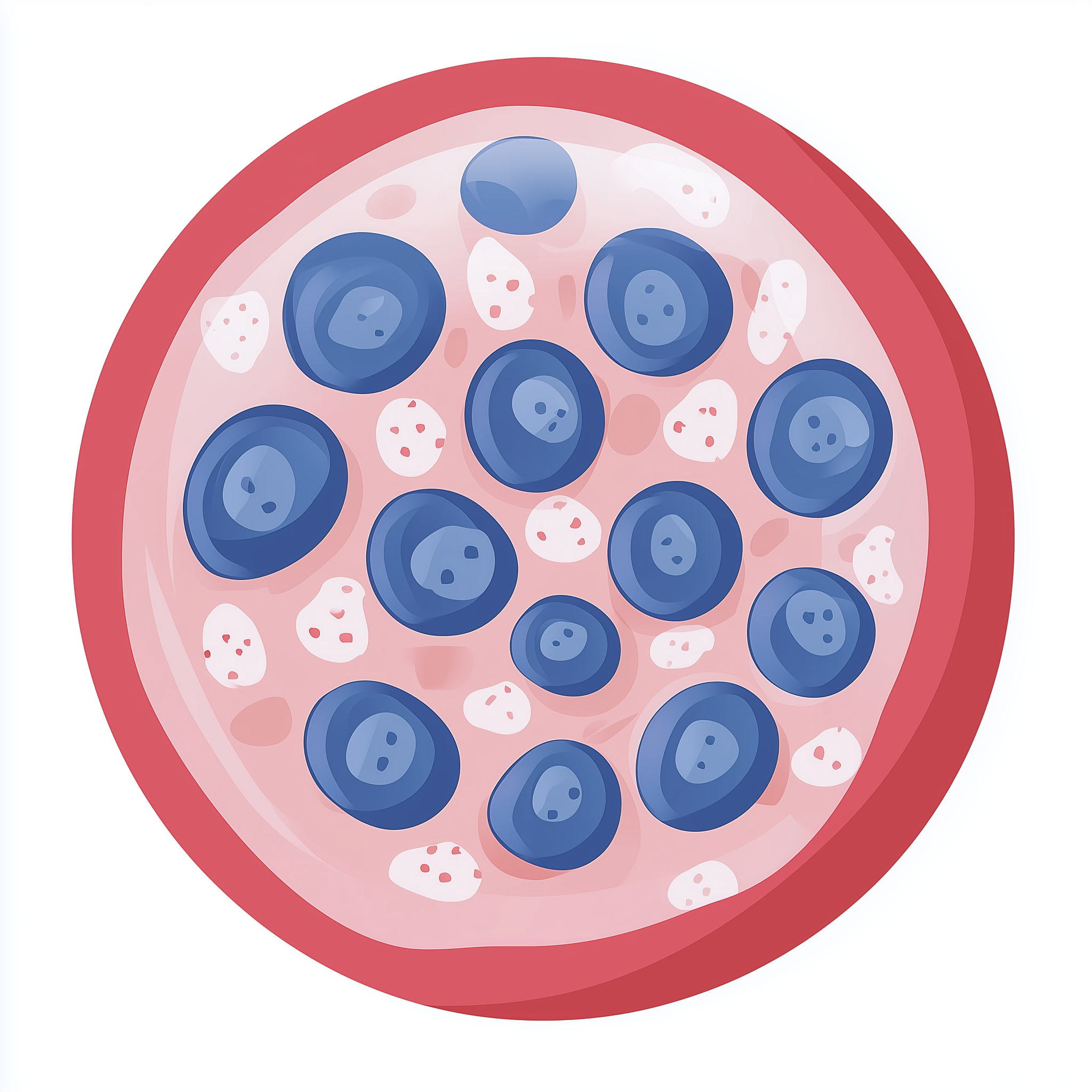
Stroke primarily affects the brain, where interrupted blood flow damages nerve tissue and can impair movement, speech, vision, swallowing, cognition and mood. Because the underlying problem is vascular, it is fundamentally a disease of the blood vessels and the wider cardiovascular system. The heart is closely involved, particularly through atrial fibrillation and other rhythm or structural problems that can throw clots to the brain, and the carotid and cerebral arteries are common sites of disease.

Risks & severity
A polygenic risk score is typically expressed as a percentile, for example 'top 10% of the population', or as a relative risk compared with average. Being in a high percentile indicates a greater inherited tendency to stroke, but the absolute increase over a lifetime is modest for most individuals and is heavily modified by blood pressure, lifestyle and other conditions. The score does not predict stroke severity or which subtype might occur. Crucially, predictive performance varies by condition and by ancestry: most large stroke datasets are of European ancestry, so scores tend to be less accurate for people of African, South Asian, East Asian and other backgrounds. A polygenic score is therefore a probabilistic guide to be interpreted alongside conventional risk factors, not a precise forecast.
Genetic causes
Ischaemic stroke is substantially heritable, with twin and family studies estimating that genetics accounts for roughly a third of overall risk, and more for some subtypes - heritability is highest for large-artery disease (around 40%), intermediate for cardioembolic stroke (about a third) and lowest for small-vessel disease. This inherited component is largely polygenic: very many common variants, each shifting risk slightly, rather than one decisive mutation. Genome-wide association studies have mapped dozens of robust loci. Well-established examples include HDAC9 (linked to large-artery atherosclerotic stroke), and PITX2 and ZFHX3 (linked to cardioembolic stroke through their connection with atrial fibrillation). Further implicated loci include FOXF2, SH2B3, ABO, the 9p21 region and TSPAN2. The large multi-ancestry GIGASTROKE study (Nature, 2022) identified association signals at around 89 independent loci, most of them newly discovered, across people of European, East Asian, African, South Asian and Hispanic ancestry. Many of these variants overlap with the genetics of blood pressure, lipids and clotting, which is why polygenic stroke risk is closely intertwined with those traits.
Inheritance pattern
Polygenic stroke risk does not follow the clear-cut Mendelian pattern of single-gene disorders, where one inherited fault can pass dominantly or recessively through a family. Instead, you inherit a large mixture of common variants from both parents, and it is the cumulative tally that matters. Because so many variants combine, the resulting risk is spread across the population as a smooth, continuous bell-shaped distribution: most people sit near the middle, with smaller numbers at the lower and higher ends. Two siblings can inherit quite different combinations and therefore different scores. A family history of stroke does raise your odds, reflecting both shared genetics and shared lifestyle, but it is not deterministic. Having a high polygenic score does not mean you will have a stroke, and a low score does not guarantee protection.
Diagnosis & testing
A polygenic risk score is a risk estimate, not a diagnosis. It is calculated from a DNA sample (saliva or blood) by measuring many thousands of common variants and weighting each by its known effect, then summing them into a single number that is usually reported as a percentile against a reference population. It tells you about inherited susceptibility before any stroke has occurred; it cannot tell you whether a stroke is happening or will definitely happen. Stroke itself is diagnosed clinically and confirmed with brain imaging, typically a CT or MRI scan, alongside tests to find the cause such as an ECG or heart-rhythm monitoring for atrial fibrillation, carotid ultrasound and blood tests. A polygenic score is best used as one input alongside these clinical assessments and conventional risk tools, never as a replacement for them.
Management & lifestyle
For someone with an elevated polygenic stroke score, the response is earlier and more attentive use of the same proven measures that lower everyone's risk; the genetics simply strengthens the case for acting sooner. The priorities are keeping blood pressure well controlled, managing cholesterol (statins are offered through the NHS when overall cardiovascular risk is raised), not smoking, limiting alcohol, staying physically active, maintaining a healthy weight and managing diabetes. Detecting and treating atrial fibrillation is especially important, as it is a major and treatable cause of ischaemic stroke; this may involve pulse checks, an ECG or, where appropriate, anticoagulation. People with a higher score may reasonably discuss starting these conversations earlier with their GP. Knowing TIA warning signs and acting on them promptly is also part of prevention. None of this requires a high genetic score, but a high score can be a useful nudge towards sustained risk reduction.
UK care pathway
The NHS does not screen the general population specifically for stroke. Instead, prevention runs largely through the NHS Health Check, offered to adults aged 40 to 74 in England without existing cardiovascular disease, which estimates ten-year risk of heart attack and stroke using the QRISK tool and prompts action such as statins, blood-pressure treatment and lifestyle support where risk is raised. Detecting atrial fibrillation through pulse and ECG checks is an important strand. Polygenic risk scores are not currently part of routine NHS stroke pathways and would supplement, not replace, these established assessments.
Frequently asked questions
How is polygenic stroke risk different from a single-gene fault?
A single-gene (monogenic) cause, such as a NOTCH3 variant in CADASIL, is one rare, high-impact fault that can drive stroke largely on its own and often runs clearly through a family. Polygenic risk is the opposite: hundreds of common variants, each with a tiny effect, adding together. No single one of these matters much, and you can carry many without ever having a stroke. A polygenic score sums these small effects into a percentile, giving an estimate of background susceptibility rather than identifying a decisive mutation.
Is a polygenic stroke risk score available on the NHS?
No. Polygenic risk scores for stroke are not currently part of routine NHS care. The NHS assesses stroke risk through conventional means, chiefly the NHS Health Check for adults aged 40 to 74, which uses the QRISK tool to estimate ten-year cardiovascular risk, alongside blood-pressure and atrial-fibrillation checks. A polygenic score is a private add-on that can complement these assessments but does not replace them, and any result should be discussed with your GP.
If I have a high polygenic score, will I definitely have a stroke?
No. A high score means your inherited susceptibility is above average, not that a stroke is certain. Risk is strongly shaped by factors you can influence, such as blood pressure, cholesterol, smoking, weight, physical activity, diabetes and atrial fibrillation. Many people with high scores never have a stroke, and people with low scores still can. The score is best treated as a prompt to manage these modifiable factors earlier and more consistently.
Does my ancestry affect how accurate the score is?
Yes. Most of the large genetic studies behind stroke risk scores were carried out in people of European ancestry, so the scores generally perform better in that group and less reliably for people of African, South Asian, East Asian and other backgrounds. This is a recognised limitation of polygenic scores across many conditions. It does not make the score useless, but it does mean results should be interpreted cautiously and always alongside conventional risk factors rather than on their own.
References
- Ischaemic stroke. Nature reviews. Disease primers. 2019. PMID: 31601807
- Hiraga A. Central hand syndrome. Neurological sciences : official journal of the Italian Neurological Society and of the Italian Society of Clinical Neurophysiology. 2025. PMID: 39627627
- Minhas JS, Quinn TJ, Evans NR. Frailty in Stroke. Cerebrovascular diseases (Basel, Switzerland). 2025. PMID: 40031883
- Sandset EC, Tsivgoulis G. Tenecteplase for acute ischaemic stroke. Lancet (London, England). 2022. PMID: 35779556
- Dippel D, Roozenbeek B. Late thrombectomy for ischaemic stroke. Lancet (London, England). 2022. PMID: 34774195
- Walker AP. Ischaemic stroke and liver fibrosis. Atherosclerosis. 2017. PMID: 28359541
- Zhang S. Microglial activation after ischaemic stroke. Stroke and vascular neurology. 2019. PMID: 31338213
- Sun D, Huo X, Miao Z. Progress in ischaemic stroke research in 2025. The Lancet. Neurology. 2026. PMID: 41389833