

Should I have genetic testing for pancreatic cancer if it runs in my family?
Pancreatic cancer can run in families. Genetic testing helps identify inherited gene changes that increase risk, enabling earlier monitoring and prevention strategies.
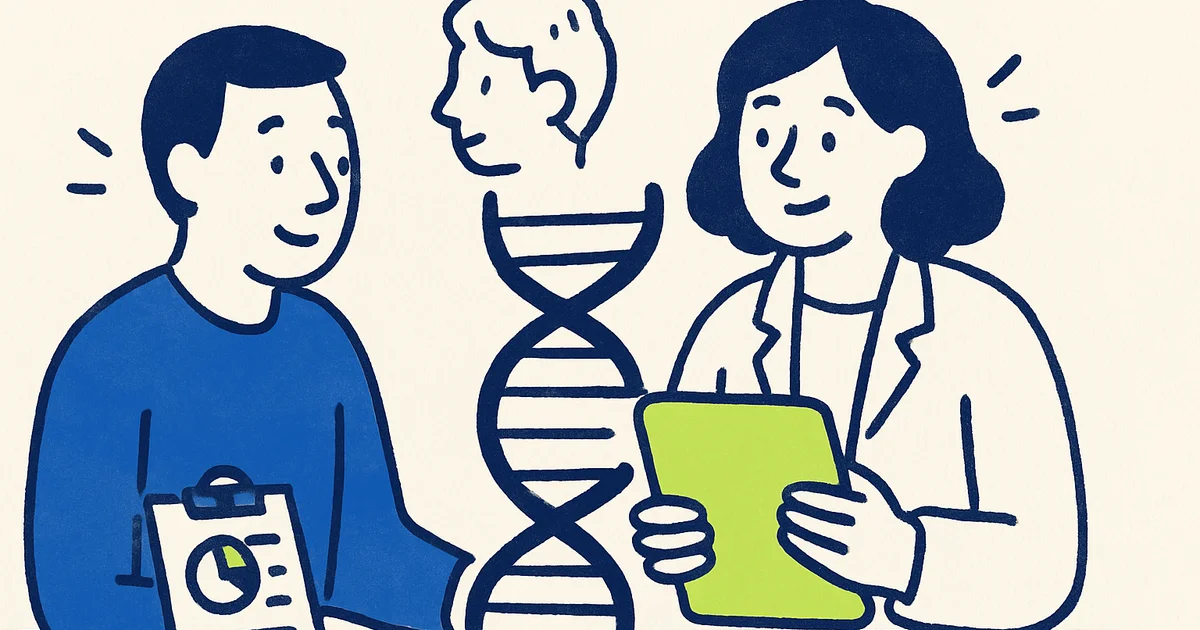
Pancreatic cancer is one of the most serious forms of cancer. Most people are diagnosed when the disease has already spread, which is why survival rates remain low. Research shows that screening family members of people with pancreatic cancer can identify early changes before cancer develops. If pancreatic cancer runs in your family, genetic testing may help you understand your risk and take steps to protect your health.
Why family history matters
Most pancreatic cancers occur without a clear family link. However, a small but significant proportion of cases are connected to inherited gene changes (also called pathogenic variants). These gene changes can be passed from parent to child and increase the risk of developing pancreatic cancer.
Research indicates that a family history of pancreatic cancer—especially when multiple close relatives are affected—raises your own risk. Evidence is emerging that screening first-degree relatives (parents, siblings, children) of individuals with several family members affected by pancreatic cancer can identify non-invasive precursors of this disease.
Approximately 15% to 30% of early-onset gastrointestinal cancers, including pancreatic cancer, have pathogenic germline variants in genes such as DNA mismatch repair genes and BRCA1/2. This means that if you have a family history of pancreatic cancer, particularly if diagnosed at a younger age, there may be an inherited genetic component.
Which genes are linked to pancreatic cancer?
Several genes are known to increase pancreatic cancer risk when they carry certain changes. Genetic testing looks for pathogenic variants in these genes. The most commonly tested genes include:
-
BRCA1 and BRCA2: Best known for increasing breast and ovarian cancer risk, these genes also raise pancreatic cancer risk. If you carry a BRCA2 variant, your lifetime risk of pancreatic cancer is higher than the general population.
-
PALB2: Works closely with BRCA2 to repair DNA. Changes in PALB2 are linked to breast and pancreatic cancer.
-
ATM: Involved in DNA damage response. Pathogenic variants increase risk of several cancers, including pancreatic cancer.
-
CDKN2A: Associated with familial melanoma and pancreatic cancer. Families with CDKN2A variants often have multiple cases of melanoma and pancreatic cancer.
-
STK11: Causes Peutz-Jeghers syndrome, which includes polyps in the digestive tract and increased risk of multiple cancers, including pancreatic cancer.
-
PRSS1: Linked to hereditary pancreatitis (long-term inflammation of the pancreas), which increases pancreatic cancer risk.
-
Lynch syndrome genes (MLH1, MSH2, MSH6, PMS2): Primarily associated with colorectal cancer, Lynch syndrome also increases risk of pancreatic cancer and other gastrointestinal cancers.
Not everyone with a family history of pancreatic cancer will have one of these gene changes. However, testing can provide clarity and guide your healthcare decisions.
When should you consider genetic testing?
Genetic testing for pancreatic cancer risk is not recommended for everyone. Clinical guidelines suggest considering testing if you have:
-
Two or more close relatives with pancreatic cancer, especially if they are first-degree relatives (parents, siblings, children).
-
One close relative with pancreatic cancer diagnosed before age 50.
-
A personal or family history of pancreatic cancer plus other cancers linked to hereditary syndromes, such as breast, ovarian, or colorectal cancer.
-
A known gene change in your family that increases cancer risk (for example, a BRCA2 variant identified in a relative).
-
Ashkenazi Jewish ancestry with a family history of pancreatic or breast cancer, as certain BRCA variants are more common in this population.
-
A diagnosis of pancreatic cancer yourself, as all patients with gastrointestinal cancers should undergo germline genetic testing to guide treatment, screen for other cancers, and assess familial risk.
The initial assessment is the collection of a family history of cancers. Age at diagnosis and lineage (maternal and paternal) should be documented for all diagnoses. This information helps determine whether genetic testing is appropriate.
What happens if a gene change is found?
If genetic testing identifies a pathogenic variant, you have several options to reduce your risk or detect cancer early:
-
Enhanced surveillance: Regular imaging (such as MRI or endoscopic ultrasound) can detect early pancreatic changes. Surveillance programmes are typically offered to individuals with a strong family history and/or a known gene change.
-
Risk-reducing strategies: For some hereditary cancer syndromes, risk-reducing surgery may be discussed, although this is less common for pancreatic cancer than for breast or ovarian cancer.
-
Lifestyle changes: While you cannot change your genes, you can modify other risk factors. Stopping smoking, maintaining a healthy weight, limiting alcohol, and managing diabetes all help reduce risk.
-
Family testing: If you carry a pathogenic variant, your close relatives (siblings, children, parents) can be tested for the same change. This is called cascade testing and helps identify others at risk.
-
Treatment decisions: If you develop pancreatic cancer, knowing your genetic status can guide treatment. For example, pancreatic cancers with BRCA1, BRCA2, or PALB2 variants may respond to certain targeted therapies called PARP inhibitors.
A negative test result (no pathogenic variant found) does not mean you have no risk of pancreatic cancer. It means that testing did not identify a known high-risk gene change. You may still have a higher risk than the general population if pancreatic cancer runs in your family, and your doctor may still recommend surveillance.
What you can do at Jeen
If you’re concerned about your family history of pancreatic cancer, Jeen offers two genetic testing options:
Pancreatic Cancer Risk Screening is a focused 10-gene panel that tests for the most common inherited causes of pancreatic cancer predisposition, including BRCA1, BRCA2, PALB2, ATM, CDKN2A, STK11, PRSS1, and the Lynch syndrome genes. This test includes genetic counselling with every test, uses NHS Genomic Medicine Service-aligned variant interpretation, and includes an at-home buccal swab (cheek swab). Results are typically available within 17-21 working days of the laboratory receiving your sample. An in-clinic blood draw is available for an additional £40 if preferred.
For broader cancer-risk assessment, Cancer Risk Screening is a comprehensive 50-gene hereditary cancer-risk panel covering pancreatic, breast, ovarian, colorectal, and other cancers. This test includes 45-minute specialist genetic counselling, NHS Genomic Medicine Service-aligned variant interpretation, and an at-home buccal swab. Results are typically available within 17-21 working days of the laboratory receiving your sample. An in-clinic blood draw is available for an additional £40.
Both tests provide detailed reports explaining your results and their implications. The genetic counselling included with every test helps you understand what your results mean for you and your family, and what steps you can take next. These panels cover many more genes than are typically tested on the NHS for familial pancreatic cancer risk, providing a more comprehensive assessment of your inherited cancer risk.
Sources & further reading
- Vincent A, Herman J, Schulick R, et al. Pancreatic cancer. Lancet. 2011 DOI:
10.1016/S0140-6736(10)62307-0. Accessed 4 August 2026. - Syngal S, Brand RE, Church JM, et al. ACG clinical guideline: Genetic testing and management of hereditary gastrointestinal cancer syndromes. Am J Gastroenterol. 2015 DOI:
10.1038/ajg.2014.435. Accessed 4 August 2026. - Jayakrishnan T, Ng K. Early-Onset Gastrointestinal Cancers: A Review. JAMA. 2025 DOI:
10.1001/jama.2025.10218. Accessed 4 August 2026.