

On this page
Microvillus inclusion disease
This inherited condition primarily affects infants from birth, causing chronic, life-threatening diarrhoea and difficulty absorbing nutrients, often requiring long-term nutritional support.
Overview
Microvillus inclusion disease (MVID) is a very rare genetic disorder that impacts the ability of the small intestine to absorb nutrients from food. It is present from birth (congenital) and typically manifests in the first days or weeks of life with severe, watery diarrhoea. This persistent diarrhoea can lead to dehydration, malnutrition, and a failure to thrive in affected infants.
The condition results from a defect in the intestinal cells (enterocytes) responsible for nutrient absorption. These cells normally have tiny finger-like projections called microvilli, which greatly increase the surface area for absorption. In MVID, the formation and structure of these microvilli are abnormal, significantly impairing the digestive system's function. Because of its rarity, exact prevalence is not well established.
Symptoms & clinical features
The primary symptom of Microvillus inclusion disease is severe, watery diarrhoea that begins very early in infancy, often within the first few days or weeks after birth. This diarrhoea is typically persistent and does not improve with standard dietary changes, even when food intake is stopped for short periods. Affected infants often experience significant fluid loss, leading to dehydration.
Due to the malabsorption of nutrients, infants with MVID struggle to gain weight and grow at a normal rate, a condition known as failure to thrive. They may also develop electrolyte imbalances because of the continuous loss of fluids and salts. While severe gastrointestinal issues are the hallmark of MVID, other organ systems are generally not directly affected by the disease itself.
Video: Genetics 101
Affected organs
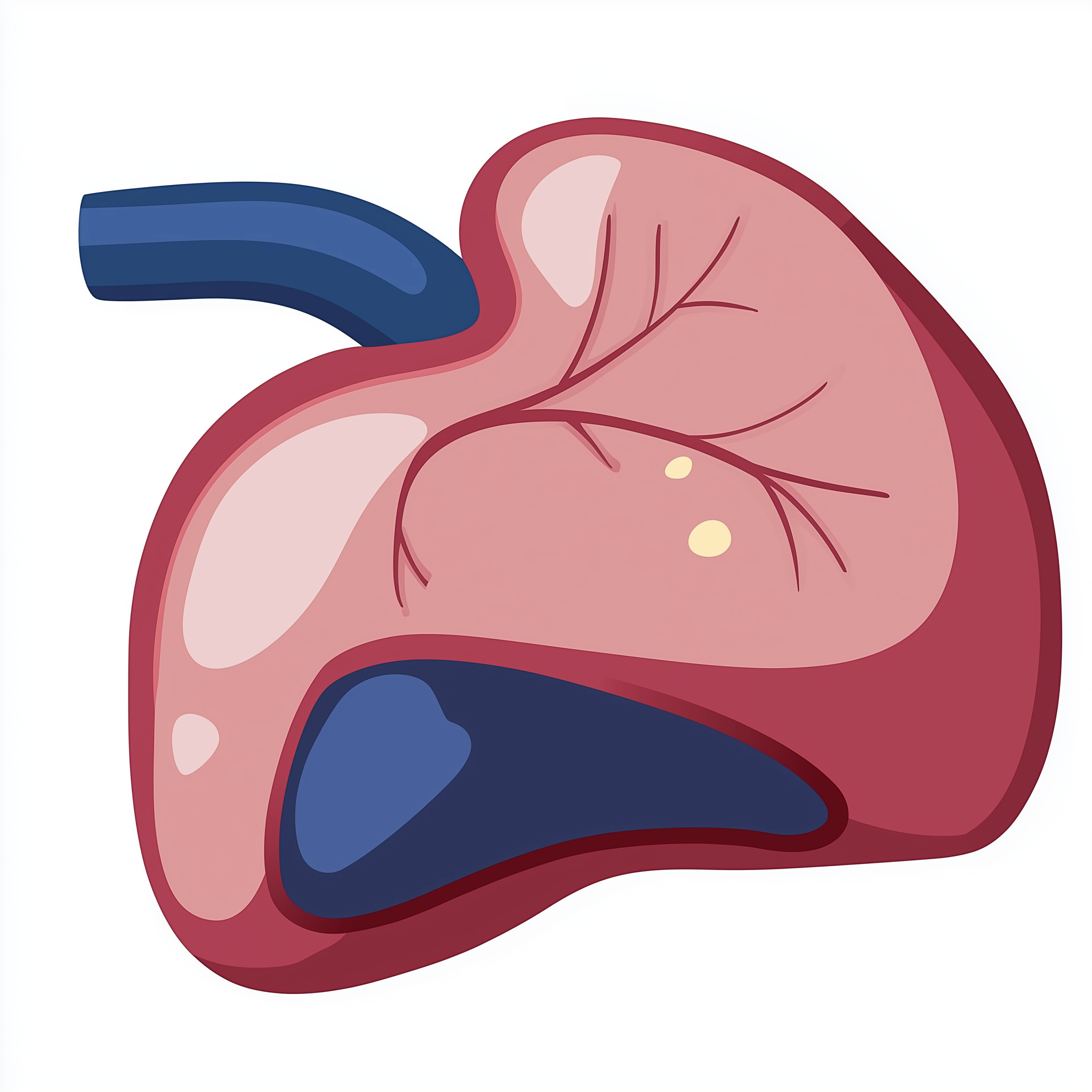
The primary organ affected in Microvillus inclusion disease is the small intestine. Specifically, the enterocytes - the cells lining the small intestine responsible for nutrient absorption - are abnormal. These cells fail to properly form and maintain their microvilli, which are crucial for the efficient uptake of digested food components.
Because the small intestine cannot absorb sufficient nutrients, the body as a whole is impacted by malnutrition and dehydration. While the liver, kidneys, and other organs are not directly diseased by MVID, their function can be secondarily affected by the severe malabsorption and resulting metabolic imbalances.

Risks & severity
Microvillus inclusion disease is a severe condition that presents from birth. Without appropriate medical intervention, the constant diarrhoea and resulting malabsorption can be life-threatening due to dehydration, malnutrition, and severe metabolic disturbances. The severity of symptoms can vary somewhat between individuals, but MVID is generally considered a profound form of congenital diarrhoeal disorder.
Long-term management typically involves parenteral nutrition - providing nutrients directly into the bloodstream - often for life. The need for this intensive support carries its own risks, including infections and liver complications associated with long-term intravenous feeding [PMID:33671077]. Some individuals may eventually be considered for intestinal transplantation, which is a major surgical procedure with significant associated risks.
Genetic causes
Microvillus inclusion disease is caused by pathogenic variants in the MYO5B (myosin VB) gene. The MYO5B gene provides instructions for making a protein called myosin VB. This protein is essential for the proper formation and function of the brush border, which is the surface of the intestinal cells that contains the microvilli [PMID:24855021].
Myosin VB plays a crucial role in transporting proteins and other molecules within cells, particularly to the cell surface where microvilli are formed. When pathogenic variants occur in the MYO5B gene, the myosin VB protein either is not produced correctly or does not function properly. This leads to the characteristic abnormalities in the microvilli and the presence of inclusion bodies (small pockets) within the intestinal cells, impairing their ability to absorb nutrients [PMID:18497255].
- MYO5B myosin VB
Inheritance pattern
Microvillus inclusion disease follows an autosomal recessive inheritance pattern. This means that an individual must inherit two altered copies of the MYO5B gene - one from each parent - to develop the condition.
If both parents are carriers of a pathogenic variant in the MYO5B gene, they each carry one altered copy and one typical copy. Carriers typically do not show symptoms of the condition. For each pregnancy, there is a 25% chance (1 in 4) that the child will inherit two altered copies and be affected by MVID, a 50% chance (2 in 4) that the child will be a carrier like their parents, and a 25% chance (1 in 4) that the child will inherit two typical copies and neither have the condition nor be a carrier.
When both parents are carriers, each child has a 25% chance of being affected, 50% of being a carrier, and 25% of being unaffected.
Diagnosis & testing
The diagnosis of Microvillus inclusion disease is typically suspected based on the characteristic symptoms of severe, intractable diarrhoea starting very early in life. Initial investigations may include examining the stool and blood tests to assess dehydration and electrolyte imbalances. However, a definitive diagnosis requires specialised investigations.
Historically, diagnosis relied on a small intestinal biopsy, where a tissue sample from the intestine is examined under a microscope for the characteristic abnormalities of microvilli and inclusion bodies. Currently, genetic testing for pathogenic variants in the MYO5B gene is the preferred method for confirming the diagnosis. In the UK, genetic testing for conditions like MVID is typically accessed through the NHS Genomic Medicine Service, often following referral from a paediatrician or gastroenterologist, and may be covered by an R-code such as R14 (Rare and inherited diseases of the gastrointestinal tract).
Management & lifestyle
Management of Microvillus inclusion disease focuses on providing adequate nutrition and managing the severe diarrhoea. From early infancy, affected individuals typically require parenteral nutrition (PN), where a specialised liquid food mixture is delivered directly into the bloodstream via a catheter. This provides all necessary nutrients and fluids, bypassing the dysfunctional intestine.
Long-term PN requires careful monitoring to prevent complications such as infections related to the catheter and liver problems. Regular medical follow-up with a specialist team, including paediatric gastroenterologists, dietitians, and nurses, is essential. Some individuals may be considered for intestinal transplantation, though this is a complex procedure with significant risks and is only pursued in specific circumstances. Research continues into potential new treatments, but currently, PN remains the cornerstone of management.
UK care pathway
In the UK, individuals with suspected or diagnosed Microvillus inclusion disease typically enter a care pathway within the NHS. This often begins with specialist paediatric assessment for severe early-onset diarrhoea. Genetic testing, covered by specific NHS R-codes such as R14 for rare gastrointestinal diseases, is accessed through the NHS Genomic Medicine Service (GMS) after a referral from a clinical specialist.
Following diagnosis, care is managed by highly specialised paediatric centres. Families are supported by multidisciplinary teams, including clinical geneticists and genetic counsellors who provide information about the condition, inheritance patterns, and support for family planning. The long-term management involves close collaboration with specialist dietetic and gastroenterology teams for ongoing nutritional support.
Frequently asked questions
Is Microvillus inclusion disease curable?
Currently, there is no cure for Microvillus inclusion disease. Management focuses on providing nutritional support, typically through parenteral nutrition, and managing complications. In some severe cases, intestinal transplantation may be considered.
How is Microvillus inclusion disease inherited?
Microvillus inclusion disease is inherited in an autosomal recessive pattern. This means a child must inherit two altered copies of the MYO5B gene, one from each parent, to develop the condition. Parents who each carry one altered copy are typically unaffected.
What kind of medical team will care for someone with MVID?
Individuals with MVID are cared for by a multidisciplinary team. This usually includes paediatric gastroenterologists, dietitians, nurses specialising in parenteral nutrition, and clinical geneticists or genetic counsellors.
Can MVID be detected before birth?
Prenatal diagnosis for MVID is possible if the specific pathogenic variants in the MYO5B gene have been identified in a family. This typically involves chorionic villus sampling or amniocentesis during pregnancy.
Are there any long-term complications of MVID?
Yes, long-term complications are common due to the reliance on parenteral nutrition (PN). These can include infections related to the PN catheter, liver problems (PN-associated liver disease), and bone density issues. Careful monitoring helps manage these risks.
References
- Zimmer KP, de Laffolie J, Barone MV. Endocytosis in enterocytes. Wiener medizinische Wochenschrift (1946). 2016. PMID: 26993488
- Sun M, Pylypenko O, Zhou Z. Uncovering the Relationship Between Genes and Phenotypes Beyond the Gut in Microvillus Inclusion Disease. Cellular and molecular gastroenterology and hepatology. 2024. PMID: 38307491
- Duclaux-Loras R, Lebreton C, Berthelet J. UNC45A deficiency causes microvillus inclusion disease-like phenotype by impairing myosin VB-dependent apical trafficking. The Journal of clinical investigation. 2022. PMID: 35575086
- Leng C, Rings EHHM, de Wildt SN. Pharmacological and Parenteral Nutrition-Based Interventions in Microvillus Inclusion Disease. Journal of clinical medicine. 2020. PMID: 33374831
- Kovilveettil AN. Microvillus inclusion disease: a short review of literature. Gastroenterology and hepatology from bed to bench. 2025. PMID: 40734809
- Goulet O, Ruemmele F, Lacaille F. Irreversible intestinal failure. Journal of pediatric gastroenterology and nutrition. 2004. PMID: 15076623
- Tang BL. SNAREs and developmental disorders. Journal of cellular physiology. 2021. PMID: 32959907
- Jayawardena D, Alrefai WA, Dudeja PK. Recent advances in understanding and managing malabsorption: focus on microvillus inclusion disease. F1000Research. 2019. PMID: 31824659