

On this page
Gray platelet syndrome
This syndrome affects the production and function of platelets, which are crucial for blood clotting. It typically presents from birth with symptoms like easy bruising and nosebleeds, affecting individuals across all ethnic backgrounds due to genetic changes.
Available at Jeen Health
Clinical tests that include this
Overview
Gray platelet syndrome (GPS) is a rare inherited bleeding disorder. It is named for the distinctive grey appearance of platelets when viewed under a microscope, which is caused by a lack of alpha-granules within these cells [PMID:24769062]. Platelets are tiny blood cells essential for normal blood clotting; alpha-granules store proteins vital for platelet function. Without these granules, platelets cannot properly stop bleeding, leading to a lifelong tendency to bruise easily and experience prolonged bleeding.
GPS is present from birth, although the severity of symptoms can vary significantly between individuals. It affects males and females equally. Because it is a rare condition, the exact number of people affected in the UK is not well established.
Symptoms & clinical features
The primary symptoms of Gray platelet syndrome are related to impaired blood clotting. Individuals often experience easy bruising, frequent or prolonged nosebleeds (epistaxis), and prolonged bleeding after minor cuts or dental procedures. Women may have heavy or prolonged menstrual bleeding (menorrhagia) and excessive bleeding after childbirth [PMID:24769062].
Less commonly, some individuals may experience internal bleeding, such as gastrointestinal bleeds or bleeding into joints, though these are typically not as severe as in other bleeding disorders. The spleen may also be enlarged (splenomegaly) in some cases, which can sometimes contribute to a lower platelet count. While bleeding is the main concern, the overall health and life expectancy of individuals with GPS are generally good, particularly with appropriate management.
Video: Genetics 101
Affected organs
Gray platelet syndrome primarily affects the blood and the blood-forming (haematopoietic) system. Specifically, it impacts platelets, which are produced in the bone marrow. The spleen may also be affected, sometimes becoming enlarged (splenomegaly) [PMID:24769062]. An enlarged spleen can sometimes lead to a reduced number of platelets circulating in the blood.
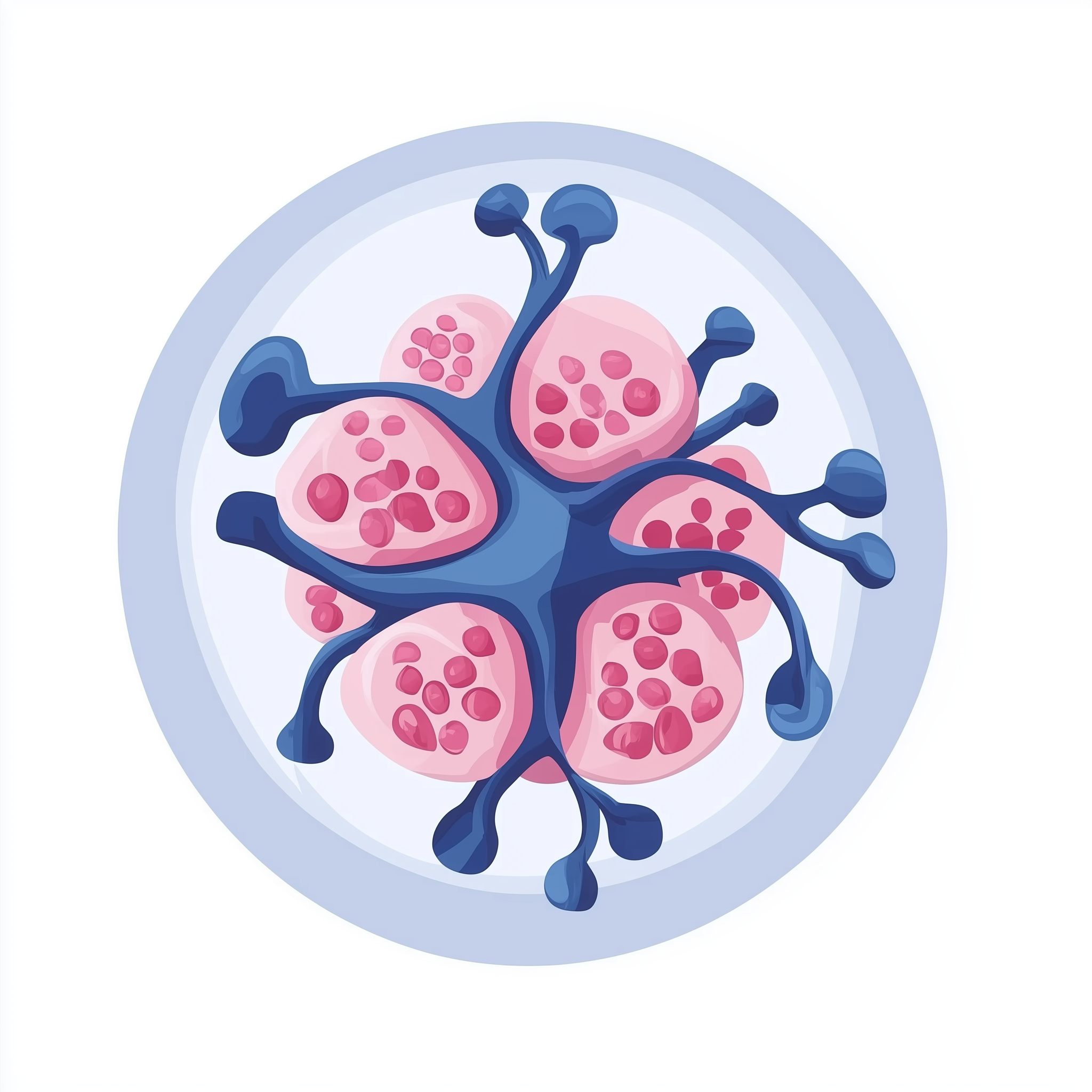

Risks & severity
The severity of bleeding symptoms in Gray platelet syndrome can range from mild to moderate, but it is typically a lifelong condition. The main risk is uncontrolled bleeding, particularly after trauma or surgery. While serious life-threatening haemorrhages are uncommon, they can occur, especially if the condition is undiagnosed or inadequately managed. Some individuals may experience anaemia due to chronic blood loss from frequent bleeding episodes.
Bleeding tendencies are present from birth, though they may become more apparent during childhood as children become more active. The condition does not typically worsen with age, but awareness and appropriate precautions are important throughout an individual's life.
Genetic causes
Gray platelet syndrome is caused by genetic changes (pathogenic variants) in the NBEAL2 gene. The NBEAL2 gene provides instructions for making a protein called neurobeachin-like 2. This protein is essential for the proper development and maturation of alpha-granules within megakaryocytes, which are the large cells in the bone marrow that produce platelets [PMID:22094627].
When there are pathogenic variants in NBEAL2, the protein cannot function correctly, leading to a severe deficiency or complete absence of alpha-granules in platelets. This defect means that platelets cannot store or release the necessary proteins for effective blood clotting, resulting in the characteristic bleeding problems seen in GPS.
- NBEAL2 neurobeachin like 2The NBEAL2 gene provides instructions for a protein crucial in the normal development and function of platelets, which are essential for blood clotting and wound healing.
Inheritance pattern
Gray platelet syndrome is inherited in an autosomal recessive pattern. This means that an individual must inherit two copies of the altered NBEAL2 gene - one from each parent - to develop the condition. If a person inherits only one copy of the altered gene, they are considered a carrier. Carriers typically do not show symptoms of the syndrome because their other working copy of the gene can compensate.
For each child born to two carrier parents, there is a 25% chance of inheriting both altered genes and developing GPS, a 50% chance of being a carrier (like the parents), and a 25% chance of inheriting two normal copies of the gene. Family members, especially siblings of an affected individual, may be offered genetic counselling to discuss their own carrier status and reproductive risks.
When both parents are carriers, each child has a 25% chance of being affected, 50% of being a carrier, and 25% of being unaffected.
Diagnosis & testing
Diagnosis of Gray platelet syndrome often begins with a medical history noting bleeding tendencies and a physical examination. Initial blood tests will typically include a full blood count, which may show a low platelet count and unusually large platelets. A specialised blood film examination under a microscope can reveal the characteristic 'grey' appearance of platelets due to the absence of alpha-granules [PMID:24769062].
Confirmation of the diagnosis is made through genetic testing, which identifies pathogenic variants in the NBEAL2 gene. In the UK, genetic testing for suspected inherited bleeding disorders, including GPS, can be requested by a specialist clinician, often a haematologist or clinical geneticist. This testing falls under the NHS Genomic Medicine Service, typically using R-codes for rare inherited disorders, and may be coordinated through a regional Genomic Laboratory Consortium.
Management & lifestyle
Management of Gray platelet syndrome focuses on preventing and treating bleeding episodes. There is currently no cure for GPS, but effective strategies exist to minimise its impact. Individuals with GPS should generally avoid medications that interfere with platelet function, such as aspirin or non-steroidal anti-inflammatory drugs (NSAIDs).
During bleeding episodes or before surgical procedures, treatments such as tranexamic acid to help stabilise clots, or platelet transfusions may be considered. Regular follow-up with a haematologist is important to monitor platelet function and manage symptoms. Genetic counselling is often recommended for affected individuals and their families to understand the inheritance pattern and implications for family planning. Lifestyle modifications, such as avoiding contact sports that carry a high risk of injury, may also be advised.
UK care pathway
In the UK, individuals suspected of having Gray platelet syndrome would typically be referred by their GP to a specialist, such as a haematologist or a clinical geneticist. These specialists can then request genetic testing through the NHS Genomic Medicine Service, following established R-codes for rare inherited bleeding disorders. Following diagnosis, care is usually coordinated by a haematology team, often in collaboration with clinical genetics services. Access to genetic counsellors is a key part of this pathway, providing essential support and information to patients and their families.
Frequently asked questions
What does it mean to have 'grey platelets'?
The 'grey' appearance of platelets in Gray platelet syndrome refers to how they look under a microscope. This is because these platelets lack special compartments called alpha-granules, which store important proteins needed for blood clotting. Without these granules, the platelets appear less dense and have a greyish tint.
Is Gray platelet syndrome a type of cancer?
No, Gray platelet syndrome is not a type of cancer. It is an inherited bleeding disorder that affects how platelets are formed and function. It does not involve uncontrolled cell growth or tumours like cancer does.
Can Gray platelet syndrome be cured?
Currently, there is no cure for Gray platelet syndrome. However, symptoms can be effectively managed with treatments designed to prevent and control bleeding. This often involves avoiding certain medications and, when necessary, using specific treatments like tranexamic acid or platelet transfusions.
What precautions should someone with Gray platelet syndrome take before surgery?
Before any surgery or invasive procedure, individuals with Gray platelet syndrome must inform their medical team about their condition. This allows healthcare professionals to take necessary precautions, such as administering medications to support clotting or having platelet transfusions ready, to minimise the risk of excessive bleeding.
Will my children inherit Gray platelet syndrome?
Gray platelet syndrome is inherited in an autosomal recessive pattern. This means if you have the condition, you will pass one altered NBEAL2 gene to each of your children. Whether your children develop the condition depends on the genes they inherit from your partner. If your partner is not a carrier, your children will be carriers but not have the syndrome. If your partner is also a carrier, there is a chance your children could inherit two altered genes and develop GPS. Genetic counselling can provide specific risk information for your family.
References
- Pluthero FG, Di Paola J, Carcao MD. NBEAL2 mutations and bleeding in patients with gray platelet syndrome. Platelets. 2018. PMID: 29869935
- Collins JH, Mayer L, Guerrero Lopez JA. Immune dysregulation, autoimmunity, and granule defects in gray platelet syndrome. Journal of thrombosis and haemostasis : JTH. 2023. PMID: 37028650
- Michelson AD. Gray platelet syndrome. Blood. 2013. PMID: 23427340
- Bain BJ, Bhavnani M. Gray platelet syndrome. American journal of hematology. 2011. PMID: 21800352
- Rao AK, Rao DA. Gray platelet syndrome: immunity goes awry. Blood. 2020. PMID: 33091137
- Khatib-Massalha E, Di Buduo CA, Chédeville AL. Defective neutrophil clearance in JAK2V617F myeloproliferative neoplasms drives myelofibrosis via immune checkpoint CD24. Blood. 2025. PMID: 40373279
- Kim B. Diagnostic workup of inherited platelet disorders. Blood research. 2022. PMID: 35483920
- Yao HHY, Kahr WHA. Molecular basis of platelet granule defects. Journal of thrombosis and haemostasis : JTH. 2025. PMID: 39617187