

On this page
Fucosidosis
This condition results from a deficiency of the alpha-L-fucosidase enzyme, leading to a build-up of specific sugar-containing molecules in cells. It can affect various body systems, often leading to progressive neurological and physical symptoms, typically becoming apparent in early childhood.
Available at Jeen Health
Clinical tests that include this
Overview
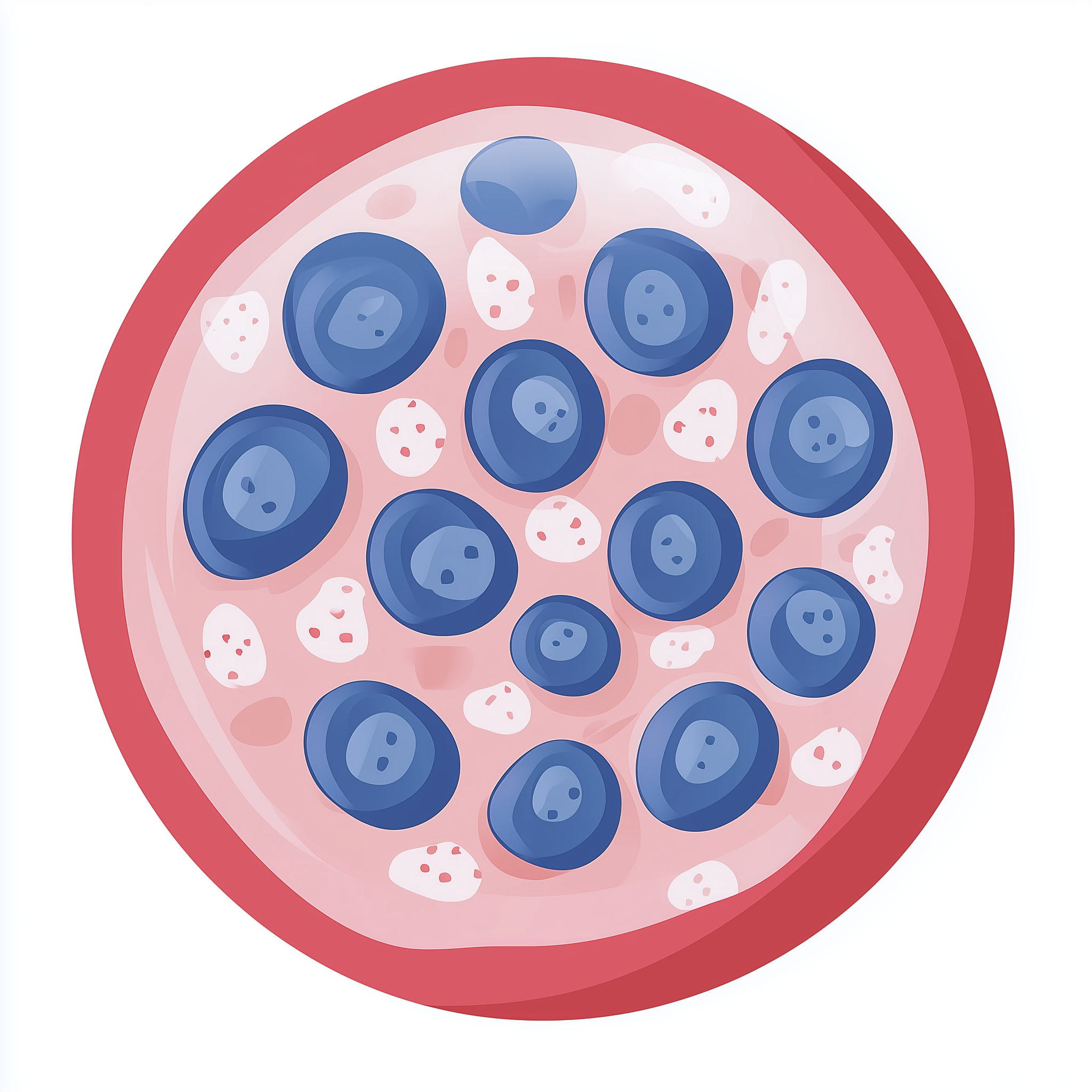
Fucosidosis is a very rare genetic disorder that belongs to a group of conditions known as lysosomal storage disorders. These disorders occur when specialised structures within cells, called lysosomes, cannot perform their normal function of breaking down and recycling waste products. In fucosidosis, the body cannot effectively break down complex sugar-containing molecules called fucose-containing glycoconjugates [PMID:33678086]. This leads to these substances accumulating in various tissues and organs throughout the body, causing damage and affecting their normal function.
The condition is progressive, meaning symptoms tend to worsen over time. The severity and presentation of fucosidosis can vary significantly between individuals, with some experiencing more severe and earlier-onset symptoms than others. It is an inherited condition, meaning it is passed down through families.
Symptoms & clinical features
The symptoms of fucosidosis are diverse and can affect many parts of the body, generally becoming noticeable in infancy or early childhood. Common features often include developmental delay, affecting milestones such as walking and talking, and intellectual disability [PMID:17165039]. Neurological problems are frequently observed, which may include seizures, difficulty with coordination and balance (ataxia), and muscle stiffness or weakness.
Physical signs can include coarse facial features, thickened skin, and skeletal abnormalities. Some individuals may develop an enlarged liver or spleen, and changes in the bones are sometimes noted. Recurrent respiratory infections are also a common concern. The age at which symptoms first appear and their rate of progression vary, leading to different forms of the condition.
Video: Genetics 101
Affected organs
Fucosidosis primarily affects the central nervous system, leading to the neurological symptoms described previously. The build-up of waste products damages brain cells, impairing cognitive and motor functions. The skeletal system can also be impacted, potentially leading to distinctive bone changes and joint stiffness.
Other organs frequently affected include the liver and spleen, which may become enlarged due to the accumulation of these glycoconjugates. The skin can show changes, such as thickening, and certain facial characteristics are often noted. The eyes may also be affected, with some individuals experiencing corneal clouding (a hazy appearance of the clear front part of the eye).
Risks & severity
Fucosidosis is a progressive disorder, and its severity can range from a more severe form with early onset during infancy to a milder type that becomes apparent later in childhood. The severe form (Type 1) typically involves rapid neurological deterioration, with significant developmental delay and a shorter life expectancy. The milder form (Type 2) generally has a later onset, slower progression, and often a longer life expectancy, though individuals still experience ongoing health challenges [PMID:17165039].
Due to its rarity, the exact prevalence of fucosidosis is not well established. As symptoms are often progressive and can lead to significant organ damage, careful medical management and supportive care are essential to improve the quality of life for affected individuals. The specific course the condition takes can differ greatly from person to person.
Genetic causes
Fucosidosis is caused by genetic changes (pathogenic variants) in the FUCA1 gene. This gene provides instructions for making an enzyme called alpha-L-fucosidase 1. This enzyme is crucial for the normal function of lysosomes, which are small compartments within cells responsible for breaking down and recycling various waste materials.
Specifically, alpha-L-fucosidase 1 is responsible for breaking down a particular type of sugar molecule, fucose, which is found in complex sugar-containing molecules called fucose-containing glycoconjugates. When the FUCA1 gene has a pathogenic variant, the enzyme is either missing or does not function correctly. This leads to the accumulation of these glycoconjugates in the lysosomes of cells throughout the body [PMID:33678086]. This build-up disrupts normal cellular processes and causes the wide range of symptoms seen in fucosidosis.
- FUCA1 alpha-L-fucosidase 1The FUCA1 gene provides instructions for producing alpha-L-fucosidase, an enzyme crucial for breaking down specific sugar molecules within cellular lysosomes.
Inheritance pattern
Fucosidosis has an autosomal recessive inheritance pattern. This means that an individual must inherit two altered copies of the FUCA1 gene - one from each parent - to develop the condition. People who have only one altered copy of the FUCA1 gene are called carriers. Carriers typically do not show symptoms of fucosidosis because their one working copy of the gene is sufficient to produce enough functional enzyme.
If both parents are carriers of a pathogenic variant in the FUCA1 gene, for each pregnancy, there is a 25% chance of their child inheriting two altered copies and developing fucosidosis. There is a 50% chance their child will be a carrier like them, and a 25% chance their child will inherit two working copies of the gene and not be a carrier or affected.
When both parents are carriers, each child has a 25% chance of being affected, 50% of being a carrier, and 25% of being unaffected.
Diagnosis & testing
Diagnosing fucosidosis typically involves a combination of clinical assessment and specialised laboratory tests. Physical examination and evaluation of a child's developmental progress and symptoms will often prompt suspicion. Biochemical tests can measure the activity of the alpha-L-fucosidase enzyme, usually in white blood cells or cultured skin fibroblasts, which will be significantly reduced or absent in individuals with fucosidosis [PMID:17165039].
Confirmation of the diagnosis is made through genetic testing, which looks for pathogenic variants in the FUCA1 gene. This testing is crucial for confirming the diagnosis, distinguishing fucosidosis from other lysosomal storage disorders, and for family planning. Referrals for genetic testing in the UK typically go through an NHS clinical genetics service, often via the NHS Genomic Medicine Service (GMS) pathways, which may use R-codes like R89 (Lysosomal disorders) or R14 (Severe intellectual disability) for testing requests.
Management & lifestyle
Currently, there is no cure for fucosidosis, and management focuses on providing supportive care to address the symptoms and improve quality of life. This involves a multidisciplinary team approach, often including paediatricians, neurologists, physiotherapists, occupational therapists, speech therapists, and dietitians.
Treatments may include medications to manage seizures, physical therapy to maintain mobility and muscle strength, and nutritional support. Regular monitoring of organ function, such as liver and spleen size, and skeletal changes, is also important. Genetic counselling is a vital part of management for families, providing information about the condition, inheritance patterns, and reproductive options. Research into potential new therapies, such as enzyme replacement therapy or gene therapy, is ongoing for many lysosomal storage disorders, including fucosidosis.
UK care pathway
In the UK, suspected cases of fucosidosis would typically be referred by a general practitioner or specialist paediatrician to an NHS clinical genetics service. These services form part of the NHS Genomic Medicine Service (GMS) and can facilitate genetic testing to confirm a diagnosis. Genetic counsellors within these services provide essential support and information to families, explaining the inheritance patterns and what a diagnosis means for the individual and their relatives.
Genetic testing for rare conditions like fucosidosis may be requested under relevant NHS R-codes, such as those for lysosomal storage disorders (e.g., R89) or for severe neurodevelopmental disorders (e.g., R14). Once a diagnosis is confirmed, individuals are usually supported by a multidisciplinary team within the NHS, focusing on managing symptoms and providing supportive care.
Frequently asked questions
What does 'autosomal recessive' inheritance mean?
Autosomal recessive means that a person needs to inherit two altered copies of the gene, one from each parent, to develop the condition. If someone only inherits one altered copy, they are a carrier and usually don't show symptoms, but they can pass the altered gene on to their children.
How rare is fucosidosis?
Fucosidosis is considered a very rare condition. Because of its rarity, precise figures on how many people are affected are not widely available, but it is known to occur in only a very small number of individuals worldwide.
Is there a cure for fucosidosis?
Currently, there is no cure for fucosidosis. Management focuses on treating the symptoms and providing supportive care to improve the quality of life for individuals with the condition. This often involves a team of healthcare professionals.
Can carriers of fucosidosis develop symptoms?
Typically, carriers of fucosidosis, who have one working copy and one altered copy of the FUCA1 gene, do not develop symptoms of the condition. Their single working copy of the gene is usually sufficient to produce enough of the necessary enzyme for normal bodily function.
What are the early signs of fucosidosis?
Early signs of fucosidosis often appear in infancy or early childhood and can include developmental delay, affecting things like reaching milestones such as walking or talking. Other early indicators may include coarse facial features or recurrent infections.
References
- Burlina AP, Manara R, Gueraldi D. Lysosomal storage diseases. Handbook of clinical neurology. 2024. PMID: 39322377
- Adam MP, Bick S, Mirzaa GM. Fucosidosis. 1993. PMID: 41926607
- Matsuda I, Arashima S, Anakura M. Fucosidosis. The Tohoku journal of experimental medicine. 1973. PMID: 4268654
- Pinsky L, Callahan JW, Wolfe LS. Fucosidosis? Lancet (London, England). 1968. PMID: 4176886
- Durand P, Borrone C, Della Cella G. Fucosidosis. The Journal of pediatrics. 1969. PMID: 4241464
- Herrtage ME, Palmer AC, Blakemore WF. Canine fucosidosis. The Veterinary record. 1985. PMID: 4071939
- Muthusamy K, Thomas MM, George RE. Siblings with fucosidosis. Journal of pediatric neurosciences. 2014. PMID: 25250075
- Miguel-Garcés M, Gonçalves R, Quintana R. Magnetic resonance imaging pattern recognition of metabolic and neurodegenerative encephalopathies in dogs and cats. Frontiers in veterinary science. 2024. PMID: 39139602