

On this page
Farber disease
This lysosomal storage disorder results from genetic changes in the ASAH1 gene. It can affect various parts of the body, including joints, skin, and the nervous system, typically presenting in infancy or early childhood.
Available at Jeen Health
Clinical tests that include this
Overview
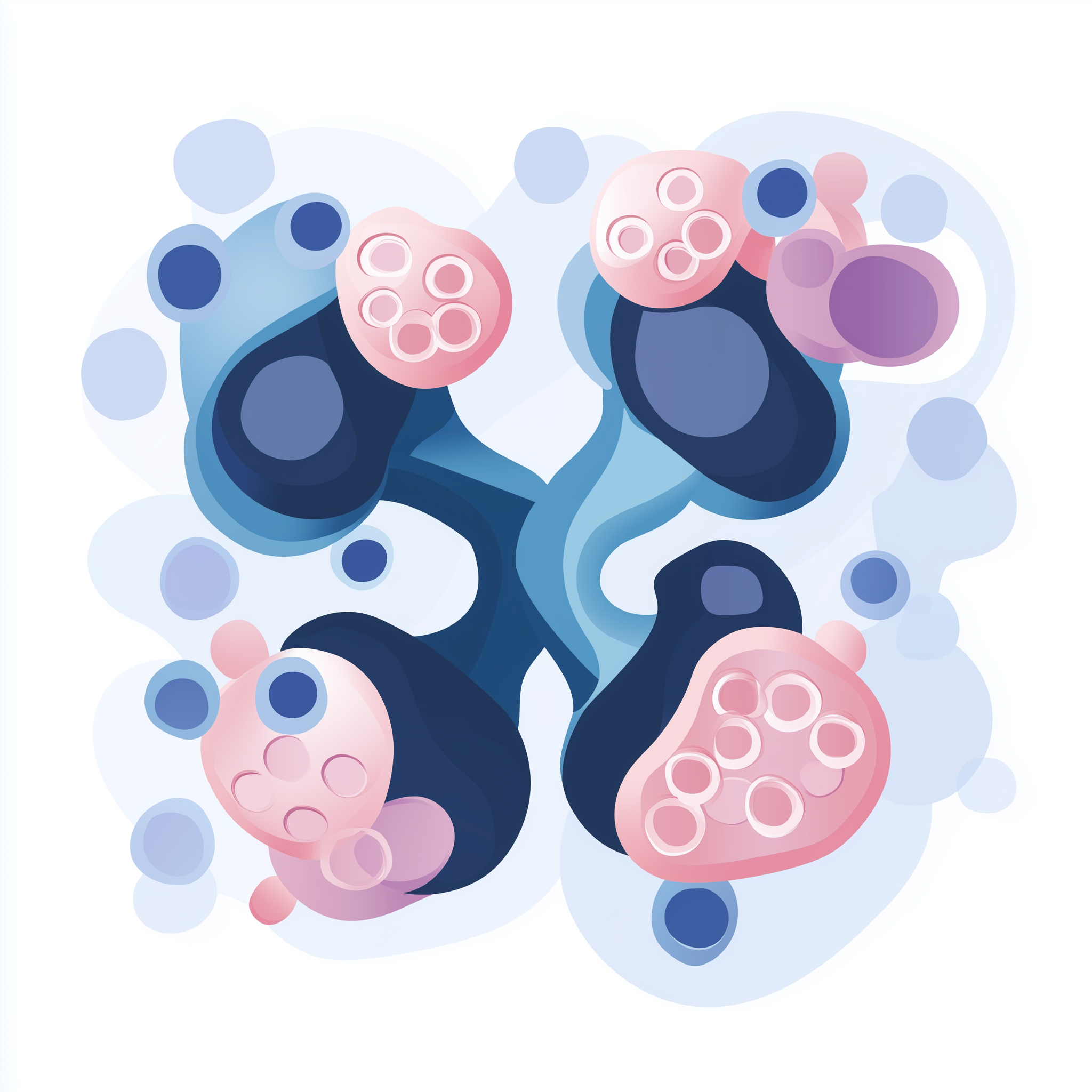
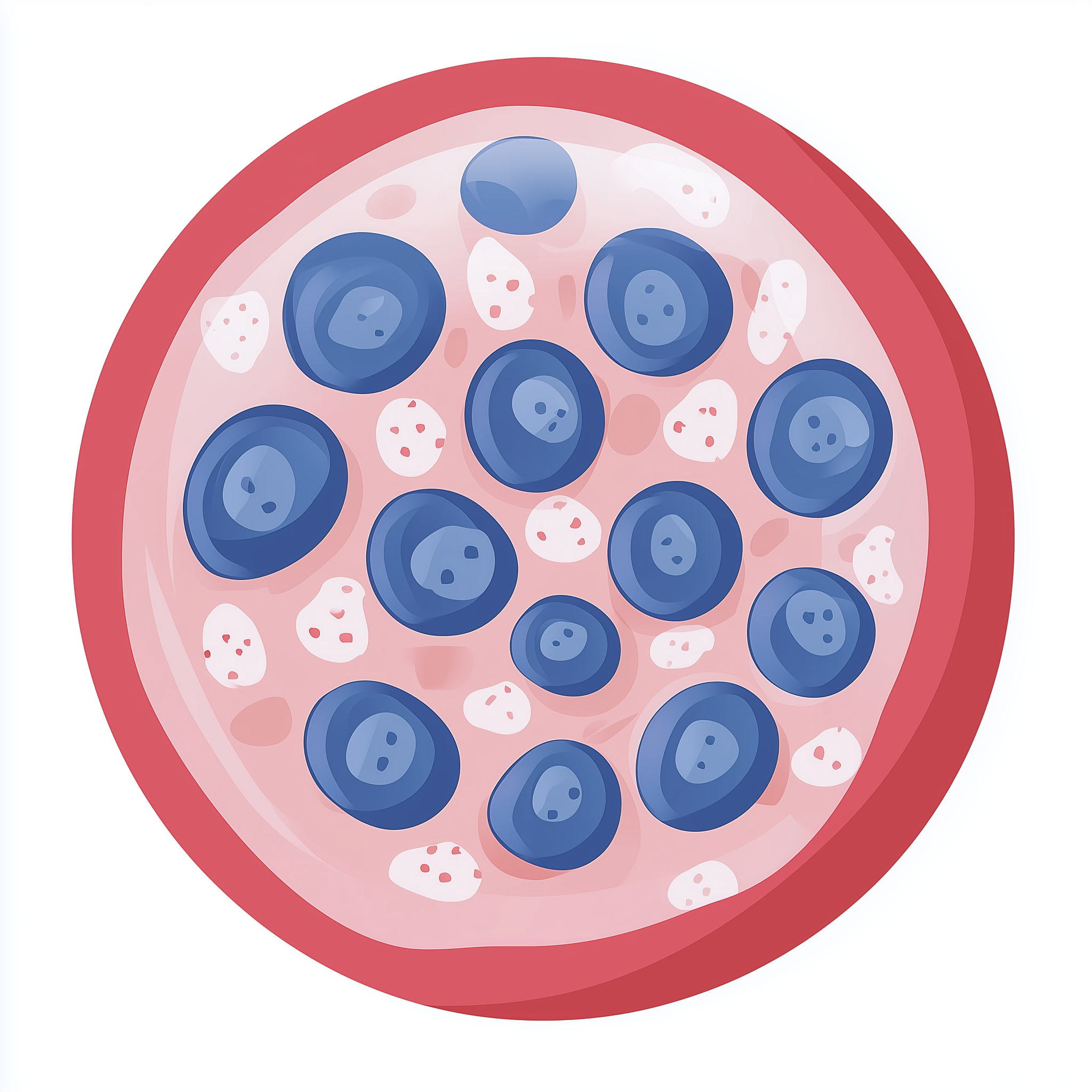
Farber disease is a very rare genetic condition classified as a lysosomal storage disorder. It is caused by a deficiency of an enzyme called acid ceramidase, which plays a crucial role in breaking down certain fats (lipids) called ceramides within the lysosomes. Lysosomes are compartments within cells responsible for recycling waste products. When acid ceramidase is deficient, ceramides build up to toxic levels within cells and tissues, leading to a range of health problems [PMID:33678567].
The condition is inherited in an autosomal recessive pattern. While generally severe, the age of onset and severity of symptoms can vary, with the most severe forms appearing shortly after birth and milder forms potentially developing later in childhood. The exact prevalence of Farber disease is not well established due to its rarity.
Symptoms & clinical features
The symptoms of Farber disease can be diverse and typically appear in infancy or early childhood, though milder forms may present later [PMID:17918716]. Classic symptoms often include painful and progressively swollen joints, especially in the hands and feet, which can lead to limited movement. Subcutaneous nodules (small lumps under the skin) are also a common feature, often appearing on pressure points like joints.
Hoarseness is another characteristic symptom, caused by ceramide accumulation in the larynx (voice box). Neurological problems can vary widely; severe forms may involve developmental delay, loss of motor skills, and difficulty processing information. Some individuals may experience challenges with breathing and feeding. Liver and lung involvement can also occur, contributing to the overall severity of the condition [PMID:17918716].
Video: Genetics 101
Affected organs
Farber disease can affect multiple organ systems throughout the body. The joints are frequently involved, leading to pain, swelling, and reduced mobility. The skin can develop characteristic nodules, particularly around joints and pressure points. The larynx (voice box) is often affected, causing hoarseness. The nervous system can also be significantly impacted, leading to a range of neurological issues from developmental delays to more severe neurodegeneration.
Other organs such as the liver, lungs, and heart may also show signs of ceramide accumulation, though the extent of involvement can vary between individuals. This multi-system involvement contributes to the complex nature of the disease and its varied presentation.
Risks & severity
Farber disease exhibits a spectrum of severity, with different clinical types recognised. The most severe forms, often referred to as Type 1, present very early in life, sometimes shortly after birth, and can be rapidly progressive, leading to significant neurological impairment and organ dysfunction. These severe forms are associated with a shorter life expectancy.
Milder forms (Types 4 and 5) may have a later onset in childhood and a slower progression of symptoms, potentially with less severe neurological involvement. Respiratory complications and chronic infections are common risks, particularly in more severe cases. The long-term outlook depends heavily on the specific type and severity of symptoms, as well as the organs affected.
Genetic causes
Farber disease is caused by pathogenic variants in the ASAH1 gene. This gene provides instructions for making an enzyme known as acid ceramidase. Acid ceramidase is located within cellular compartments called lysosomes, where its primary role is to break down a type of fat called ceramide into its components, sphingosine and fatty acid [PMID:33678567].
When there are disease-causing changes in the ASAH1 gene, the acid ceramidase enzyme may be faulty, reduced in quantity, or completely absent. This leads to a build-up of ceramide within the lysosomes of cells throughout the body, as it cannot be properly metabolised. This accumulation of ceramide is toxic to cells and disrupts their normal function, causing the wide range of symptoms seen in Farber disease.
- ASAH1 N-acylsphingosine amidohydrolase 1The ASAH1 gene provides instructions for producing acid ceramidase, an enzyme vital for breaking down lipids called ceramides within cellular lysosomes.
Inheritance pattern
Farber disease is inherited in an autosomal recessive pattern. This means that an individual must inherit two altered copies of the ASAH1 gene - one from each parent - to develop the condition. People who have only one altered copy of the gene are called carriers. Carriers typically do not show symptoms of Farber disease because their one working copy of the gene produces enough functional acid ceramidase enzyme.
If both parents are carriers, there is a 25% chance with each pregnancy that their child will inherit two altered gene copies and develop Farber disease. There is a 50% chance the child will be a carrier like their parents, and a 25% chance the child will inherit two working copies of the gene and not be affected or a carrier.
When both parents are carriers, each child has a 25% chance of being affected, 50% of being a carrier, and 25% of being unaffected.
Diagnosis & testing
Diagnosing Farber disease typically begins with a clinical evaluation based on the characteristic symptoms, such as joint swelling, skin nodules, and hoarseness. Further investigations often involve laboratory tests to measure acid ceramidase activity in various cell types, such as white blood cells or cultured skin cells (fibroblasts). Reduced enzyme activity supports a diagnosis.
Confirmation of Farber disease is achieved through genetic testing, which looks for pathogenic variants in the ASAH1 gene. This is usually carried out by a clinical genetics service within the NHS. Genetic testing is available through the NHS Genomic Medicine Service, often requested by consultants specialising in paediatrics, neurology, or metabolic medicine. The relevant R-codes for genetic testing may be discussed during referral.
Management & lifestyle
Management of Farber disease is primarily supportive and aims to alleviate symptoms, as there is currently no cure. A multidisciplinary team, potentially including paediatricians, neurologists, orthopaedic specialists, and physiotherapists, is often involved. Pain management for joint issues, physical therapy to maintain mobility, and respiratory support for breathing difficulties are common approaches.
While still largely experimental, approaches such as enzyme replacement therapy or bone marrow transplantation have been explored in some cases, often with varied success. Genetic counselling is an important part of the care pathway to help families understand the condition and its inheritance pattern, and to discuss options for future family planning. Regular monitoring of organ function is also a key part of ongoing care within the NHS.
UK care pathway
In the UK, if Farber disease is suspected, individuals are typically referred to a clinical genetics service within the NHS Genomic Medicine Service. A clinical geneticist, paediatrician, or other specialist can initiate the diagnostic process, which may involve specialised biochemical tests and genetic testing through the NHS genomic laboratory network. The relevant R-codes for specific genetic tests will be determined by the referring clinician. Genetic counsellors are available to provide support, information, and discuss the implications of a genetic diagnosis for the individual and their family.
Frequently asked questions
How common is Farber disease?
Farber disease is considered to be very rare. The exact number of people affected is not precisely known, but it is one of the less common genetic conditions.
Can Farber disease be cured?
Currently, there is no cure for Farber disease. Treatment focuses on managing symptoms and providing supportive care to improve quality of life. Research into new therapeutic approaches is ongoing.
If I have Farber disease, will my children have it?
Farber disease is inherited in an autosomal recessive pattern. If you have the condition, it means you have two altered copies of the ASAH1 gene. For your children to also have the disease, they would need to inherit an altered copy from both you and your partner. If your partner is not a carrier, your children would be carriers but typically would not develop the disease. Genetic counselling can provide personalised risk assessment.
What kind of specialist doctors treat Farber disease?
Due to its complex nature, individuals with Farber disease are often cared for by a team of specialists. This may include paediatricians, neurologists, orthopaedic surgeons, physiotherapists, and geneticists, all working together to manage the various symptoms and support the patient.
How is Farber disease diagnosed in the UK?
In the UK, suspicion of Farber disease usually leads to a referral to a clinical genetics service. Diagnosis often involves enzyme activity tests and is confirmed by genetic testing to identify changes in the ASAH1 gene, provided through the NHS Genomic Medicine Service.
References
- Adam MP, Bick S, Mirzaa GM. ASAH1-Related Disorders. 1993. PMID: 29595935
- Ferreira CR, Gahl WA. Lysosomal storage diseases. Translational science of rare diseases. 2017. PMID: 29152458
- Zhou H, Wu Z, Wang Y. Rare Diseases in Glycosphingolipid Metabolism. Advances in experimental medicine and biology. 2022. PMID: 35503182
- Shaimardanova AA, Solovyeva VV, Issa SS. Gene Therapy of Sphingolipid Metabolic Disorders. International journal of molecular sciences. 2023. PMID: 36835039
- Park JH, Schuchman EH. Acid ceramidase and human disease. Biochimica et biophysica acta. 2006. PMID: 17064658
- Yu FPS, Amintas S, Levade T. Acid ceramidase deficiency: Farber disease and SMA-PME. Orphanet journal of rare diseases. 2018. PMID: 30029679
- Topaloglu H, Melki J. Spinal muscular atrophy associated with progressive myoclonus epilepsy. Epileptic disorders : international epilepsy journal with videotape. 2016. PMID: 27647482
- Paciotti S, Albi E, Parnetti L. Lysosomal Ceramide Metabolism Disorders: Implications in Parkinson's Disease. Journal of clinical medicine. 2020. PMID: 32098196