

On this page
Early menopause
Also known as Premature ovarian insufficiency · Early menopause
The age at which a woman reaches menopause is strongly influenced by genetics, but for most women that influence is not down to a single faulty gene. Instead, hundreds of common variants scattered across the genome each shift ovarian ageing by a few weeks to a few years. Added together, they form a continuous spectrum of risk, with a minority of women carrying enough early-shifting variants to reach menopause unusually young.
Available at Jeen Health
Clinical tests that include this
Overview
Menopause is the point at which the ovaries stop releasing eggs and menstrual periods permanently cease, marking the end of natural fertility. In the UK the average age at menopause is 51, with most women reaching it between 45 and 55. When it happens before 45 it is termed early menopause, and before 40 it is called premature ovarian insufficiency (POI). Early menopause affects roughly 5% of women, while around 1% experience POI before the age of 40 and about 0.1% before 30. Beyond the impact on fertility, an earlier menopause shortens the years of oestrogen exposure, which carries longer-term consequences for bone strength and cardiovascular and possibly cognitive health. Age at menopause is one of the more heritable reproductive traits, and most of that heritability reflects the combined action of many common genetic variants rather than rare single-gene faults.
Symptoms & clinical features
Early menopause presents in the same way as menopause at the usual age: periods become irregular and then stop, often alongside hot flushes, night sweats, disturbed sleep, vaginal dryness, reduced libido, mood changes, brain fog and joint aches. Because oestrogen falls at a younger age, the longer-term effects on bone density and heart health become relevant earlier in life. In premature ovarian insufficiency, periods may stop suddenly or become erratic, sometimes with intermittent return of ovarian activity. Difficulty conceiving is frequently the first sign. Importantly, carrying a high polygenic risk does not change how early menopause looks or feels - it only reflects an increased background likelihood of it occurring earlier. The diagnosis is made on symptoms, age and blood tests, never on genetics alone.
Video: Genetics 101
Affected organs
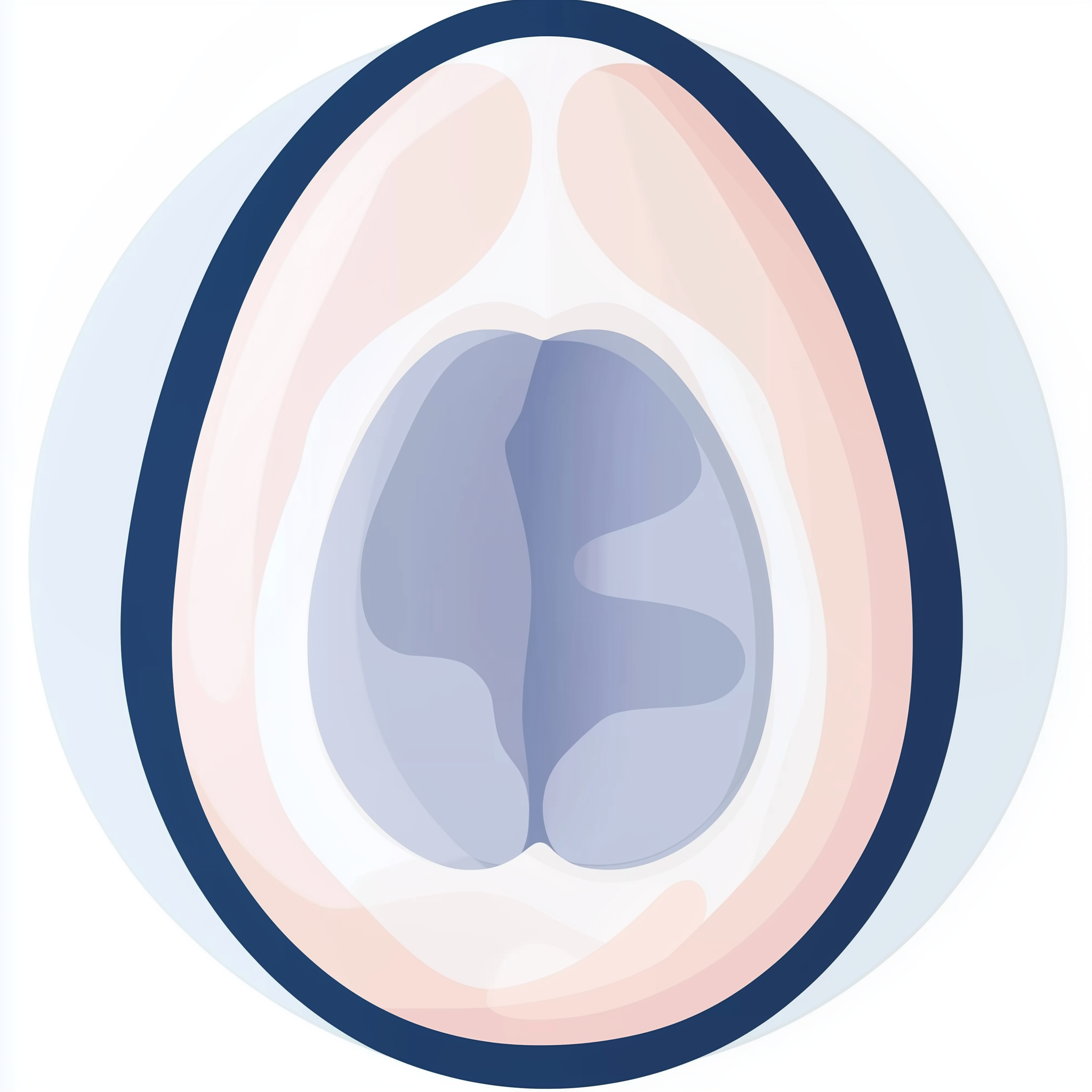
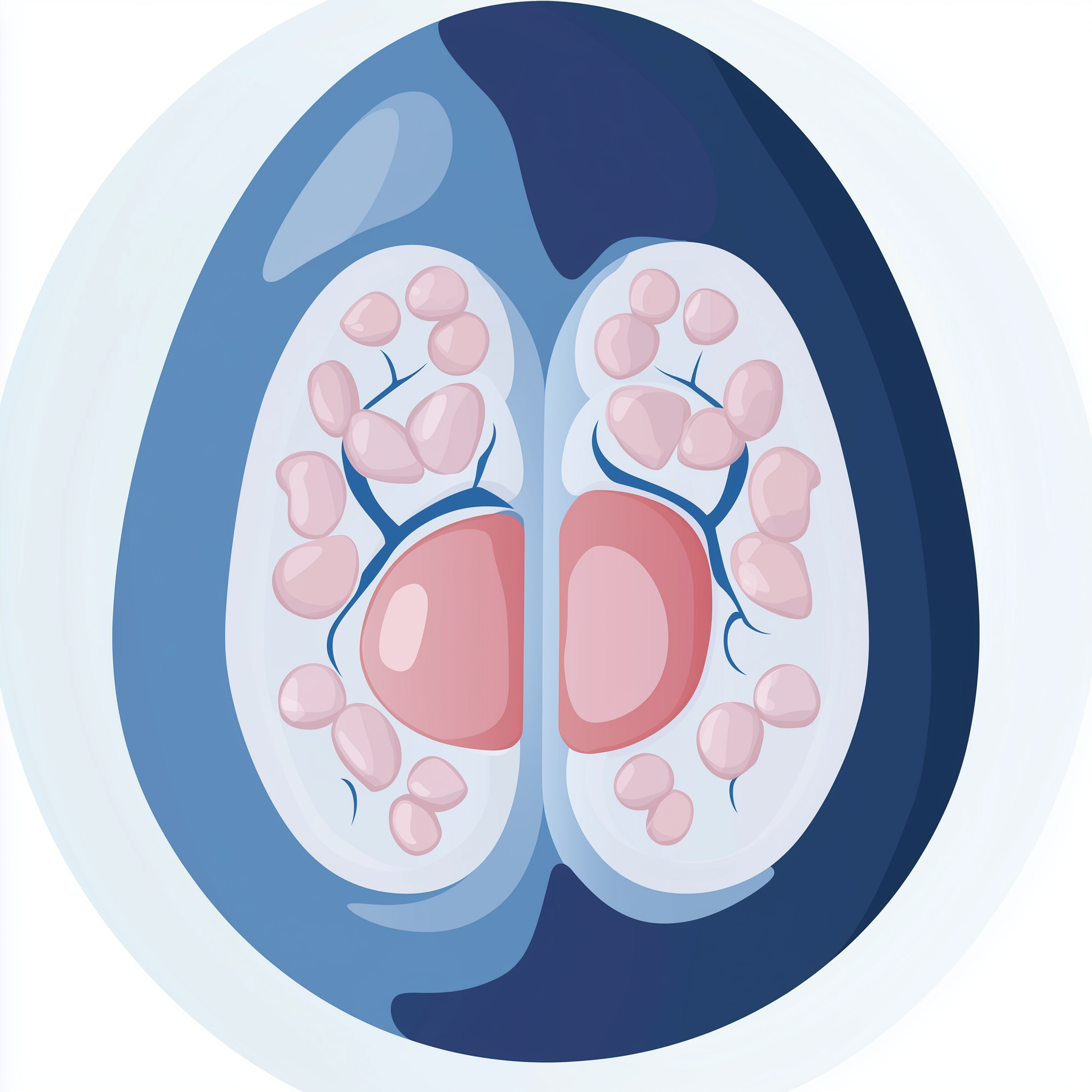
The condition centres on the ovaries, whose pool of eggs and hormone-producing follicles becomes depleted, ending fertility and oestrogen production. Because oestrogen acts throughout the body, the effects of its earlier loss extend to the bones (raised osteoporosis risk), the cardiovascular system (heart and blood vessels), the genitourinary tract, and the brain, influencing temperature regulation, mood, sleep and cognition.
Risks & severity
A polygenic risk score is typically reported as a percentile - where a woman falls relative to others - or as a relative risk compared with the population average. Those in the highest centiles carry an increased chance of earlier menopause, and studies show scores can help identify the small group at meaningfully higher risk of menopause before 40. However, the score describes a shifted probability, not a fixed outcome: many women with high scores still reach menopause at a typical age, and the influence of lifestyle, smoking, surgery, chemotherapy and chance remains substantial. Predictive performance also varies. Most scores were built largely in women of European ancestry and tend to be less accurate in other populations, an important limitation when interpreting any individual result.
Genetic causes
Twin and family studies show age at menopause is substantially heritable. Large genome-wide association studies (GWAS), most notably the analysis of around 200,000 women of European ancestry by Ruth and colleagues (2021), have resolved this into roughly 290 independent common-variant signals that together explain around 10-12% of the variation in menopausal timing. A striking feature is the concentration of these signals in genes governing DNA damage repair and the replication checkpoint - including CHEK2, BRCA1, MCM8, HELB, TLK1 and DCLRE1A - reflecting how efficiently ageing oocytes manage DNA damage. Rare damaging variants in some DNA-repair genes shift timing more strongly than the common variants: in UK Biobank, rare variants in CHEK2, HELB and DCLRE1A were linked to later menopause, while those in TOP3A and CLPB were linked to earlier menopause. Common variants individually have very small effects; it is their cumulative load, captured by a polygenic score, that pushes overall risk earlier or later.
Inheritance pattern
Polygenic conditions do not follow the clear-cut patterns of single-gene (Mendelian) disorders. Rather than inheriting one decisive faulty gene, a woman inherits a near-random mixture of common variants from both parents, each contributing a tiny early- or late-shifting effect. The sum of these effects spreads across the population as a smooth, bell-shaped distribution: most women sit near the middle and reach menopause around the average age, while those at the tails are predisposed to unusually early or late timing. Because the effect is shared out across hundreds of locations in the genome, daughters of women with early menopause are at somewhat higher risk, but inheritance is a matter of probability rather than certainty - there is no single variant that is simply passed on or not.
Diagnosis & testing
A polygenic risk score is not a diagnosis. It combines the small effects of many common variants into a single number that estimates how a woman's inherited likelihood of early menopause compares with others, usually expressed as a percentile. It cannot tell anyone whether or precisely when they will reach menopause, and it does not detect rare high-risk genetic causes. Early menopause itself is diagnosed clinically: by reviewing symptoms and menstrual history, confirming periods have stopped or become irregular before the expected age, and measuring hormones - typically a raised follicle-stimulating hormone (FSH) on two occasions several weeks apart, often alongside oestradiol and anti-Müllerian hormone. A polygenic score may flag higher-than-average risk in advance, but only these clinical assessments confirm what is actually happening.
Management & lifestyle
There is no treatment to delay menopause, so management for women at elevated polygenic risk centres on awareness and protecting longer-term health. Knowing about a higher inherited likelihood can prompt earlier conversations about family planning and, where wanted, timely consideration of fertility preservation such as egg freezing. For anyone who does enter menopause early, UK guidance (NICE and the British Menopause Society) recommends hormone replacement therapy (HRT) - or the combined oral contraceptive - at least until the average age of 51, to relieve symptoms and counter the accelerated bone loss and raised cardiovascular risk that early oestrogen withdrawal brings. A baseline bone density scan, attention to calcium, vitamin D, weight-bearing exercise, not smoking and cardiovascular risk management are all relevant. A polygenic score is a prompt for these discussions, not a substitute for clinical care.
UK care pathway
The NHS does not screen the general population for menopausal timing, and polygenic scores are not part of routine NHS care. Assessment usually begins when a woman notices symptoms or irregular periods and sees her GP. In women under 45, and especially under 40, GPs are guided by NICE to investigate with FSH blood tests and to consider referral to gynaecology or a specialist menopause service. Confirmed early menopause or POI is managed with HRT and longer-term bone and cardiovascular monitoring. Fertility concerns may prompt referral to NHS reproductive medicine, subject to local eligibility criteria.
Frequently asked questions
How is polygenic risk for early menopause different from a single-gene fault?
A single-gene fault - such as an FMR1 premutation or a Turner syndrome chromosome change - is one rare, high-impact variant that on its own can drive premature ovarian insufficiency. Polygenic risk is the opposite: hundreds of common variants, each shifting your menopausal age by only weeks or a few years, that add up across the genome. No single one is decisive. The result is a continuous spread of risk across the population rather than a clear inherited diagnosis, which is why a polygenic score gives a percentile, not a yes-or-no answer.
Is a polygenic risk score for early menopause available on the NHS?
No. The NHS does not currently offer polygenic risk scoring for menopausal timing, and it is not part of routine care. The NHS investigates early menopause once symptoms appear - typically through your GP using FSH blood tests and, where appropriate, referral to a gynaecology or menopause service. Polygenic scores are available privately and can flag higher-than-average risk in advance, but they do not replace NHS clinical assessment, and any result should be discussed with a clinician.
If I have a high score, does it mean I will definitely have an early menopause?
No. A high polygenic score means your inherited likelihood of earlier menopause is above average, not that it is certain. Many women with high scores still reach menopause at the typical age of around 51. Lifestyle factors such as smoking, as well as surgery, chemotherapy and chance, all play a major part, and the genetic variants captured explain only a portion of the overall variation in timing. The score is best used as a prompt to plan ahead, not as a prediction of a fixed date.
Does a high polygenic score affect the symptoms or treatment of menopause?
No. Polygenic risk influences the likelihood of when menopause may occur, not how it presents or how it is treated. The symptoms - hot flushes, irregular then absent periods, sleep and mood changes - and the treatment, principally HRT until at least the average menopausal age to protect bone and heart health, are the same regardless of your score. What a higher score can usefully do is encourage earlier conversations about fertility planning and long-term health, so any early menopause is recognised and managed promptly.
References
- Hamoda H, Sharma A. Premature ovarian insufficiency, early menopause, and induced menopause. Best practice & research. Clinical endocrinology & metabolism. 2024. PMID: 37802711
- Chon SJ, Umair Z, Yoon MS. Premature Ovarian Insufficiency: Past, Present, and Future. Frontiers in cell and developmental biology. 2021. PMID: 34041247
- Hickey M, Basu P, Sassarini J. Managing menopause after cancer. Lancet (London, England). 2024. PMID: 38458217
- Sullivan SD, Sarrel PM, Nelson LM. Hormone replacement therapy in young women with primary ovarian insufficiency and early menopause. Fertility and sterility. 2016. PMID: 27912889
- Yong EL, Logan S. Menopausal osteoporosis: screening, prevention and treatment. Singapore medical journal. 2021. PMID: 33948669
- Lumsden MA, Dekkers OM, Faubion SS. European society of endocrinology clinical practice guideline for evaluation and management of menopause and the perimenopause. European journal of endocrinology. 2025. PMID: 41082911
- De Vos M, Devroey P, Fauser BC. Primary ovarian insufficiency. Lancet (London, England). 2010. PMID: 20708256
- Mishra GD, Davies MC, Hillman S. Optimising health after early menopause. Lancet (London, England). 2024. PMID: 38458215