

On this page
Coffin-Lowry syndrome
This rare neurodevelopmental disorder primarily affects males, leading to significant delays in development and often affecting various body systems. It is caused by pathogenic changes in the RPS6KA3 gene.
Available at Jeen Health
Clinical tests that include this
Overview
Coffin-Lowry syndrome is a rare genetic condition that primarily affects neurological development, leading to intellectual disability. It often presents with distinctive facial features, changes in bone structure (skeletal abnormalities), and other health issues. This condition is more commonly observed and typically more severely expressed in males [PMID:33678089].
The syndrome's estimated prevalence ranges from approximately 1 in 50,000 to 1 in 100,000 individuals. Clinical features can vary significantly among affected individuals, even within the same family, though certain core characteristics are commonly seen [PMID:17950794].
Symptoms & clinical features
Individuals with Coffin-Lowry syndrome typically experience moderate to severe intellectual disability and developmental delay. Delays are often noticeable in motor skills, such as sitting and walking, and in speech development. There may also be hypotonia (low muscle tone) in infancy.
Distinctive facial features often include a prominent forehead, widely spaced eyes (hypertelorism), thick lips, and a small, upturned nose. Progressive changes can occur, making facial features more pronounced with age. Other common signs include short, tapered fingers and skeletal issues such as kyphoscoliosis (a curvature of the spine) [PMID:17950794]. Some individuals may experience sudden collapses or 'drop attacks' in response to unexpected stimuli.
Video: Genetics 101
Affected organs
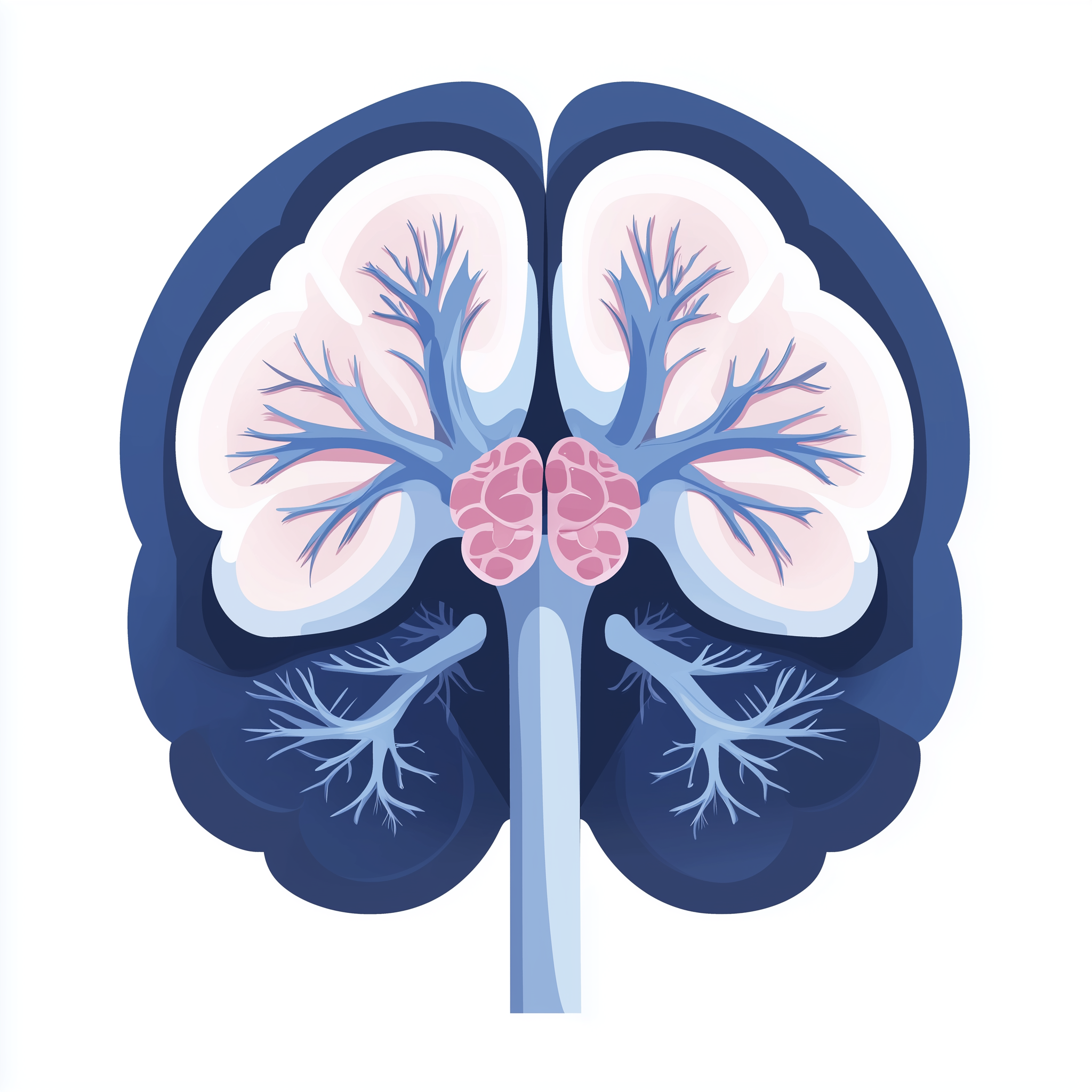
The primary organ system affected in Coffin-Lowry syndrome is the brain, leading to intellectual disability and developmental delays. The skeletal system is also commonly involved, with abnormalities such as changes to the spine (e.g. kyphoscoliosis) and hands (e.g., short, soft, tapered fingers).
Other body systems can also be affected. Some individuals may have issues with hearing or vision. Cardiac abnormalities have been reported in a small number of cases. Individuals may also experience growth delays, often resulting in shorter stature.
Risks & severity
The severity of Coffin-Lowry syndrome can vary. Males typically experience more severe symptoms, including profound intellectual disability, while females who are carriers of a pathogenic variant may have milder learning difficulties or, in some cases, no apparent symptoms at all. However, some females can be severely affected due to a process called skewed X-inactivation.
Life expectancy can be reduced for individuals with severe forms of the syndrome, particularly if they experience significant medical complications such as severe respiratory or cardiac issues [PMID:33678089]. The age of onset for developmental delays is typically in infancy or early childhood, with some features becoming more prominent as a child grows.
Genetic causes
Coffin-Lowry syndrome is caused by pathogenic variants in the RPS6KA3 gene, which is located on the X chromosome. The RPS6KA3 gene provides instructions for making a protein called p90 ribosomal S6 kinase 3, also known as RSK2.
This RSK2 protein is active in many areas of the body, particularly in the brain, where it plays a crucial role in cell signalling pathways important for learning, memory, and nerve cell survival [PMID:17950794]. Pathogenic variants in RPS6KA3 lead to a non-functional or abnormally functioning RSK2 protein, disrupting these vital processes and resulting in the characteristic features of Coffin-Lowry syndrome.
- RPS6KA3 ribosomal protein S6 kinase A3
Inheritance pattern
Coffin-Lowry syndrome has an X-linked recessive (XLR) inheritance pattern. This means the gene responsible, RPS6KA3, is located on the X chromosome. As males have one X and one Y chromosome, a single pathogenic variant on their X chromosome is sufficient to cause the condition.
Females have two X chromosomes. If a female carries one X chromosome with a pathogenic variant and one normal X chromosome, she is often unaffected or experiences milder symptoms due to the presence of a healthy copy of the gene. However, the severity in females can vary based on X-inactivation patterns. For affected families, genetic counselling is important to understand the inheritance risks for future pregnancies.
X-linked recessive: sons of a carrier mother have a 50% chance of being affected. Daughters have a 50% chance of being carriers.
Diagnosis & testing
A diagnosis of Coffin-Lowry syndrome is generally suspected based on clinical signs and symptoms, particularly in individuals presenting with intellectual disability, distinctive facial features, and skeletal abnormalities. This clinical suspicion can then be confirmed through genetic testing to identify a pathogenic variant in the RPS6KA3 gene.
In the UK, genetic testing for suspected Coffin-Lowry syndrome can be requested by a specialist clinician, such as a paediatrician, neurologist, or clinical geneticist. This testing would typically be undertaken through the NHS Genomic Medicine Service, often utilising a R-code such as R18 (Intellectual disability) or R33 (Skeletal dysplasia) if indicated, for diagnostic sequencing of relevant genes.
Management & lifestyle
Management for individuals with Coffin-Lowry syndrome is supportive and multidisciplinary, addressing the specific symptoms and needs of each person. This often involves a team of healthcare professionals, including paediatricians, neurologists, orthopaedic specialists, and physiotherapists.
Physiotherapy, occupational therapy, and speech and language therapy are crucial for addressing developmental delays. Regular monitoring for scoliosis is important due to the skeletal involvement. Medications may be used to manage seizures or drop attacks if they occur. Genetic counsellors can provide information and support to families regarding the condition and its inheritance patterns. Care within the NHS is guided by national recommendations and tailored to individual patient needs.
UK care pathway
In the UK, individuals suspected of having a rare genetic condition like Coffin-Lowry syndrome would typically be referred to a Clinical Genetics service. This service can coordinate diagnostic testing through the NHS Genomic Medicine Service, usually following specific R-codes from the National Genomic Test Directory. Genetic counsellors play a key role in providing information, support, and guidance to patients and their families throughout the diagnostic process and beyond.
Frequently asked questions
Is Coffin-Lowry syndrome more common in boys or girls?
Coffin-Lowry syndrome is an X-linked condition, meaning it is typically more common and often more severe in males. Females can be carriers and may have milder symptoms or occasionally be severely affected.
What kind of support is available for developmental delays?
Support for developmental delays generally involves a range of therapies, including physiotherapy, occupational therapy, and speech and language therapy. These therapies aim to help individuals achieve their potential and manage specific challenges.
Can Coffin-Lowry syndrome be inherited if no one else in the family has it?
Yes, Coffin-Lowry syndrome can sometimes occur due to a new (de novo) pathogenic variant in the RPS6KA3 gene that was not inherited from either parent. Genetic counselling can help families understand the chance of recurrence for future pregnancies.
Are there specific tests to diagnose Coffin-Lowry syndrome?
Diagnosis is initially suspected based on a person's clinical features. It is then confirmed through genetic testing that specifically looks for pathogenic variants in the RPS6KA3 gene. This can be arranged by specialist doctors.
What is the long-term outlook for someone with Coffin-Lowry syndrome?
The long-term outlook varies depending on the severity of the condition. While there is no cure, supportive care and therapies can help manage symptoms and improve quality of life. Regular medical follow-ups are important.