

On this page
Alagille syndrome
This syndrome is typically identified in childhood and arises from changes in specific genes. It can lead to a range of health issues, predominantly concerning bile duct development and other organ systems, and its severity can vary significantly among individuals.
Available at Jeen Health
Clinical tests that include this
Overview
Alagille syndrome is a genetic disorder characterised by a combination of liver problems and features affecting other parts of the body. The liver issues are often due to a reduced number of bile ducts within the liver, which are responsible for carrying bile away from the liver [PMID:33678086]. Bile is a digestive fluid that helps break down fats. When bile cannot flow properly, it builds up in the liver, leading to liver damage. While liver involvement is a key feature, Alagille syndrome is considered a multi-system disorder because it can also affect the heart, skeleton, eyes, and kidneys.
The condition is present from birth, though symptoms may become apparent at different ages, often during infancy or early childhood. The severity of Alagille syndrome varies widely, even within the same family, with some individuals experiencing mild symptoms while others face more significant health challenges. It affects approximately 1 in 30,000 to 50,000 live births, making it a relatively rare condition.
Symptoms & clinical features
The symptoms of Alagille syndrome can be diverse, reflecting the multiple organ systems that may be involved. Liver-related symptoms often include persistent yellowing of the skin and whites of the eyes (jaundice), pale stools, dark urine, and itchy skin (pruritus) due to bile build-up [PMID:31613146]. Over time, poor bile flow can lead to a build-up of fat-soluble vitamins and nutrients, resulting in growth problems and a failure to thrive in children.
Beyond the liver, individuals with Alagille syndrome frequently have heart abnormalities, such as narrowing of the pulmonary artery (pulmonary stenosis), which affects blood flow to the lungs. Skeletal features may include distinctive butterfly-shaped vertebrae (bones of the spine) that can be seen on X-rays, and shortened bones in the forearms. Eye involvement often manifests as posterior embryotoxon, a prominent white ring on the surface of the eye, which usually does not affect vision. Kidney problems, such as structural abnormalities or impaired function, can also occur, though they are generally less common than liver or heart issues [PMID:33678086].
Video: Genetics 101
Affected organs
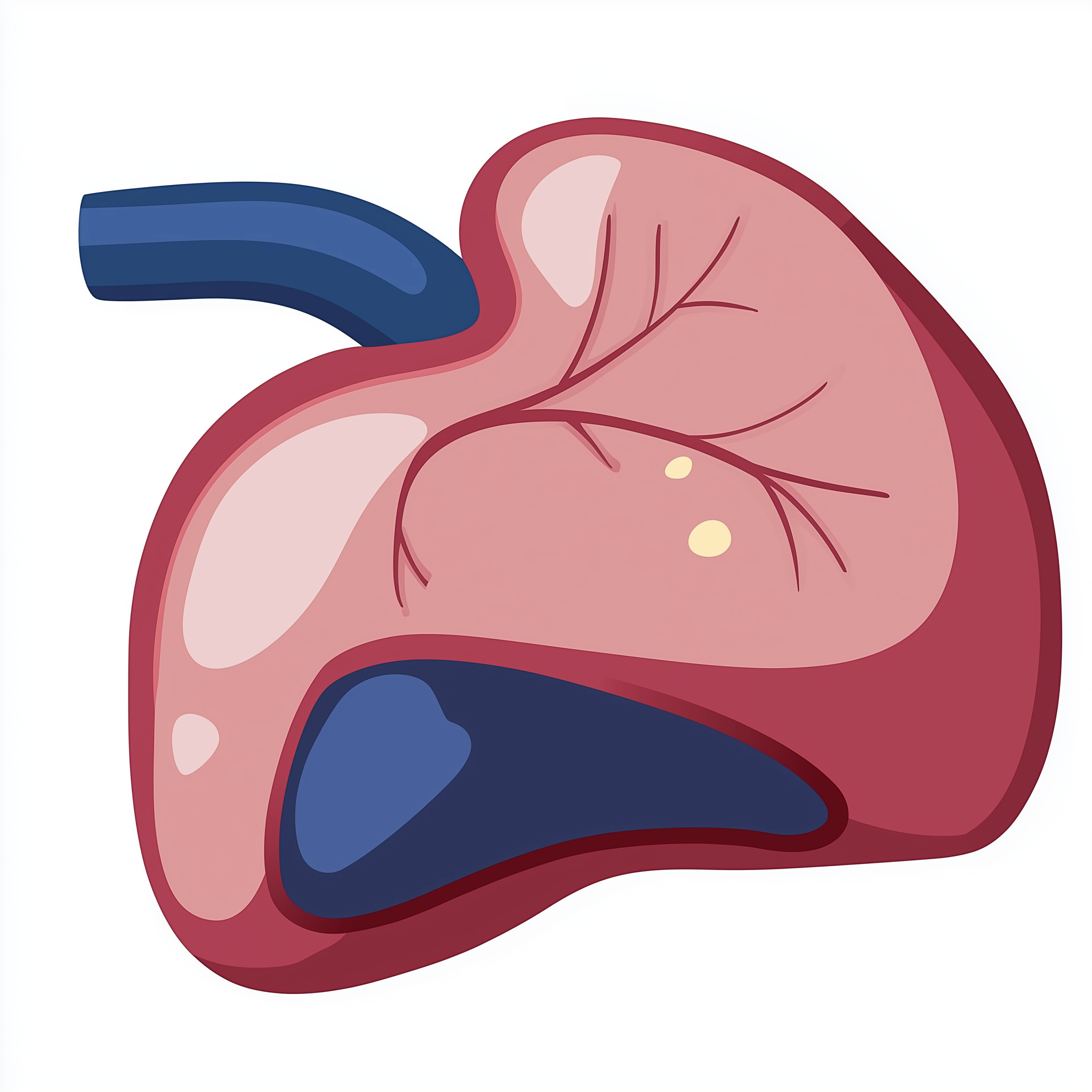
The primary organs affected in Alagille syndrome are the liver, heart, skeleton, eyes, and kidneys. In the liver, the main issue is paucity of intrahepatic bile ducts, meaning there are fewer small bile ducts than typical. This impairs bile flow and can lead to chronic liver disease. The heart is commonly affected by congenital defects, particularly those involving the pulmonary artery.
Skeletal abnormalities predominantly affect the vertebrae and long bones. The eyes may show specific structural changes, such as posterior embryotoxon, due to developmental differences. Kidneys can also be affected by structural anomalies or functional issues, contributing to the broad range of clinical presentations observed in this syndrome.

Risks & severity
The severity of Alagille syndrome can vary significantly, even among individuals with the same genetic change. Some people may have very mild symptoms that go undiagnosed until later in life, while others can experience life-threatening complications in infancy. Liver disease can range from mild bile stasis to severe scarring (cirrhosis) and liver failure, which may necessitate liver transplantation in some cases.
Heart defects, particularly pulmonary stenosis, can also vary in severity, with some requiring surgical intervention. The risk of complications generally depends on the specific organs affected and the extent of their involvement. For instance, severe liver disease or complex heart defects tend to be associated with more significant health challenges and a greater need for specialised medical care. The prognosis for individuals with Alagille syndrome has improved over time with advancements in medical management and liver transplantation techniques.
Genetic causes
Alagille syndrome is primarily caused by changes (pathogenic variants) in the JAG1 gene, which accounts for over 90% of cases [PMID:33678086]. A smaller number of cases, around 1-2%, are linked to pathogenic variants in the NOTCH2 gene. Both JAG1 and NOTCH2 play critical roles in the Notch signalling pathway, a fundamental cell communication system important for proper embryonic development of many organ systems, including the liver, heart, and skeleton.
The JAG1 gene provides instructions for making a protein called Jagged1, which is a ligand for Notch receptors. The NOTCH2 gene provides instructions for making the Notch2 receptor protein itself. When Jagged1 binds to the Notch2 receptor on a neighbouring cell, it initiates a signalling cascade that influences cell differentiation, growth, and patterning during development. Pathogenic variants in either JAG1 or NOTCH2 disrupt this crucial signalling pathway, leading to the developmental abnormalities seen in Alagille syndrome. These genetic changes can either be inherited from a parent or occur spontaneously (de novo) in the affected individual.
- JAG1 jagged canonical Notch ligand 1
- NOTCH2 notch receptor 2
Inheritance pattern
Alagille syndrome has an autosomal dominant pattern of inheritance. This means that an individual only needs to inherit one altered copy of the JAG1 or NOTCH2 gene to develop the condition. If a parent has Alagille syndrome, there is a 50% chance with each pregnancy that their child will also inherit the condition.
However, it's important to note that about 50-70% of Alagille syndrome cases are caused by new, spontaneous genetic changes (de novo variants) in individuals with no family history of the condition. In these instances, neither parent carries the altered gene. Genetic counselling is an important resource for families to understand the inheritance patterns and potential risks for future pregnancies.
Each child has a 50% chance of inheriting the pathogenic variant, regardless of sex.
Diagnosis & testing
The diagnosis of Alagille syndrome is typically suspected based on a combination of characteristic clinical features affecting at least three of the five major organ systems (liver, heart, skeleton, eyes, and kidneys). In the UK, if Alagille syndrome is suspected, individuals are typically referred to a paediatric gastroenterologist or a clinical geneticist for further assessment. Liver biopsy might show the characteristic paucity of intrahepatic bile ducts, which can support the clinical suspicion.
Confirmation of Alagille syndrome is achieved through genetic testing, which looks for pathogenic variants in the JAG1 or NOTCH2 genes. The NHS Genomic Medicine Service provides genetic testing for Alagille syndrome, falling under specific R-codes for inherited cholestasis or cardiac conditions. Genetic testing can identify a pathogenic variant in approximately 90-95% of individuals with a clinical diagnosis. This testing can be crucial for confirming the diagnosis, guiding management, and providing accurate genetic counselling to families.
Management & lifestyle
Management of Alagille syndrome is multidisciplinary and focuses on addressing the specific symptoms and complications experienced by each individual. In the UK, care is typically provided by specialist teams involving paediatric hepatologists, cardiologists, nephrologists, ophthalmologists, and clinical geneticists, often in regional centres.
Liver-related management often includes medications to improve bile flow and reduce itching, such as ursodeoxycholic acid, as well as nutritional support with fat-soluble vitamins (A, D, E, K) and medium-chain triglycerides [PMID:31613146]. In cases of severe liver disease or liver failure, liver transplantation may be considered. Heart defects, such as pulmonary stenosis, are monitored and may require surgical or catheter-based interventions. Regular monitoring of kidney function, skeletal health, and eye health is also essential to detect and manage potential complications early. Management plans are individualised and continuously adapted based on the progression of the condition and the patient's specific needs.
UK care pathway
In the UK, individuals with suspected or diagnosed Alagille syndrome are usually managed through the NHS Genomic Medicine Service (GMS) pathways. Referral to clinical genetics services is key for diagnosis confirmation through genetic testing, typically under relevant R-codes for inherited liver or cardiac conditions. A genetic counsellor will provide detailed information about the condition, its inheritance pattern, and implications for the wider family. Care is then coordinated by specialist teams within regional paediatric centres, ensuring a comprehensive, multidisciplinary approach to managing the various aspects of the syndrome.
Frequently asked questions
Is Alagille syndrome always severe?
No, the severity of Alagille syndrome can vary significantly. Some individuals have mild symptoms that may not be diagnosed until adulthood, while others experience more significant health issues from infancy. The impact on different organs also varies greatly.
Can Alagille syndrome be cured?
There is currently no cure for Alagille syndrome. Management focuses on treating the symptoms and complications to improve quality of life. For severe liver disease, a liver transplant may be a life-saving option.
Will my children inherit Alagille syndrome?
If you have Alagille syndrome, there is a 50% chance with each child that they will inherit the condition, due to its autosomal dominant inheritance pattern. However, many cases occur spontaneously (de novo) in individuals with no family history. Genetic counselling can provide personalised risk assessments.
How is Alagille syndrome diagnosed?
Diagnosis is based on a combination of clinical features affecting the liver, heart, skeleton, eyes, and kidneys. Genetic testing for changes in the JAG1 or NOTCH2 genes is used to confirm the diagnosis.
What kind of doctors treat Alagille syndrome?
Care for Alagille syndrome is multidisciplinary, involving a team of specialists. This typically includes paediatric hepatologists, cardiologists, nephrologists, ophthalmologists, and clinical geneticists, often within specialised NHS centres.
References
- Kohut TJ, Gilbert MA, Loomes KM. Alagille Syndrome: A Focused Review on Clinical Features, Genetics, and Treatment. Seminars in liver disease. 2021. PMID: 34215014
- Mitchell E, Gilbert M, Loomes KM. Alagille Syndrome. Clinics in liver disease. 2018. PMID: 30266153
- Hadchouel M. Alagille syndrome. Indian journal of pediatrics. 2002. PMID: 12420916
- Krantz ID, Piccoli DA, Spinner NB. Alagille syndrome. Journal of medical genetics. 1997. PMID: 9039994
- Gilbert MA, Bauer RC, Rajagopalan R. Alagille syndrome mutation update: Comprehensive overview of JAG1 and NOTCH2 mutation frequencies and insight into missense variant classification. Human mutation. 2019. PMID: 31343788
- Shendge H, Tullu MS, Shenoy A. Alagille syndrome. Indian journal of pediatrics. 2002. PMID: 12420920
- Flanagan E, Tan NP. Genetic Cholestasis Syndromes. Clinics in liver disease. 2026. PMID: 42486595
- Sodhani S, Nathani RR, Diaz-Frias J. Alagille Syndrome. 2026. PMID: 29939604