

How does warfarin dosing change based on your genes?
Genetic differences in two genes-VKORC1 and CYP2C9-can mean you need a higher or lower warfarin dose. Understanding your genetic makeup may help avoid bleeding or clotting complications.
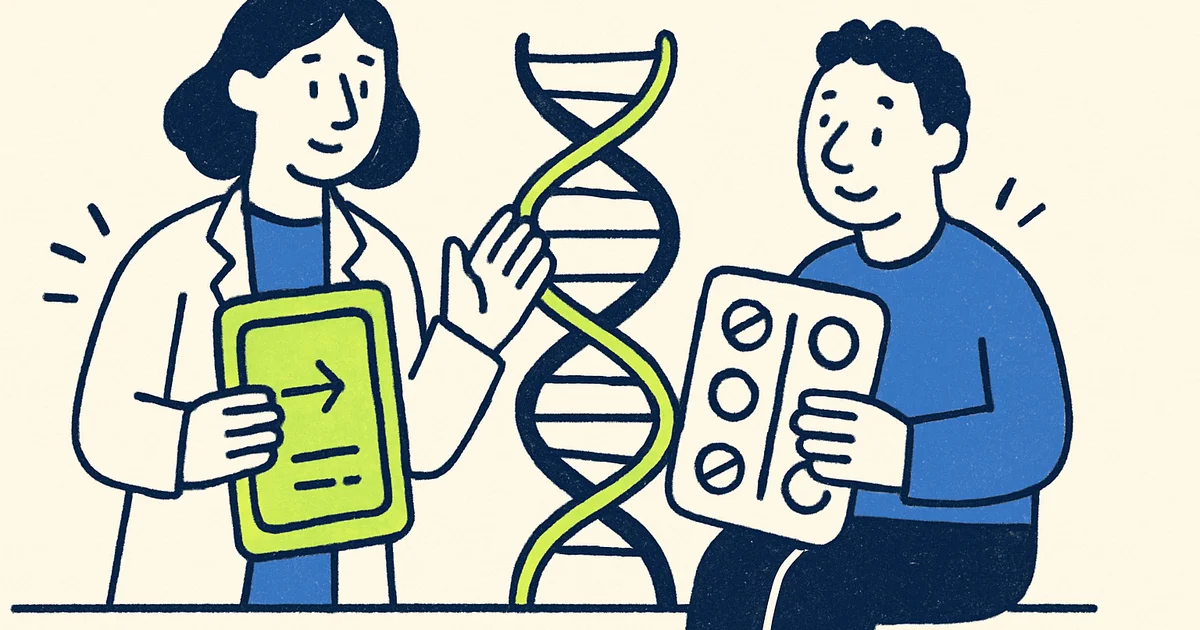
Warfarin is a common blood-thinning medication used to prevent strokes and treat blood clots. But finding the right dose can be tricky-too much raises the risk of serious bleeding, and too little leaves you vulnerable to clots. Research has shown that genetic differences in two genes, VKORC1 and CYP2C9, together account for a substantial share of the variation in the warfarin dose people need-studies suggest these two genes explain roughly a third of dose variability, and genetic and clinical factors combined explain around half.
Understanding how these genes influence warfarin response can help explain why some people need frequent dose adjustments, why others experience bleeding complications, and how pharmacogenomic testing might make starting warfarin safer.
Why warfarin dosing is difficult
Warfarin works by blocking vitamin K, which your body needs to make clotting proteins. The therapeutic range-the dose that prevents clots without causing bleeding-is narrow, and it varies widely between people. UK practice typically starts adults on around 5–10 mg daily (lower in older or frail patients), then adjusts the dose based on regular blood tests (INR monitoring) over several weeks.
Several factors influence your warfarin dose:
- Age and body size. Older adults and people with lower body weight usually need smaller doses.
- Diet. Foods high in vitamin K (like leafy greens) can reduce warfarin’s effect.
- Other medications. Many drugs interact with warfarin, speeding up or slowing down its breakdown.
- Genetics. Variants in VKORC1 and CYP2C9 affect how your body responds to and processes warfarin.
Genetic differences are present from birth and don’t change, which is why they’re such a consistent predictor of dose requirements.
The two key genes: VKORC1 and CYP2C9
VKORC1: the drug target
VKORC1 makes the enzyme that warfarin blocks (vitamin K epoxide reductase). A common variant in the gene’s control region, known as -1639G>A, lowers the amount of enzyme the body makes, which increases sensitivity to warfarin. People inherit one of three combinations:
- -1639 G/G (wild-type). Standard sensitivity to warfarin-these individuals typically need higher doses on average.
- -1639 G/A (heterozygous). Intermediate sensitivity-dose requirements fall in the middle range.
- -1639 A/A (variant). High sensitivity to warfarin-these individuals usually need lower doses to achieve the same blood-thinning effect.
The A variant is common. In people of European ancestry the A allele has a frequency of around 40%, so a large proportion carry at least one copy. In East Asian populations the A allele is the major form (around 90%), meaning most people carry two copies-which partly explains why standard Western dosing protocols can lead to over-anticoagulation in these populations.
CYP2C9: the metabolism gene
CYP2C9 is a liver enzyme that breaks down warfarin. Most people have the CYP2C9*1 version (sometimes called wild-type or normal metaboliser), but two common variants slow warfarin metabolism:
- CYP2C9*2. More common in European ancestry (studies report roughly 10–20%). It reduces enzyme activity moderately (studies suggest around a 30% reduction).
- CYP2C9*3. Less common (under 10% in most populations; around 5–7% in Europeans). It reduces enzyme activity much more substantially (studies suggest roughly 80%).
If you carry one or two copies of these slower variants, warfarin stays in your bloodstream longer. You’ll typically need a lower dose-and you’re at higher risk of bleeding, especially in the first few weeks of treatment when doses are being adjusted. People with CYP2C9*3/*3 (two copies of the slowest variant) may require markedly lower doses and face a higher bleeding risk if given standard starting doses; studies suggest CYP2C9 variants can increase the risk of bleeding several-fold during warfarin initiation.
How genetic information changes prescribing
The Clinical Pharmacogenetics Implementation Consortium (CPIC) publishes evidence-based guidelines recommending that, when genetic information is available, doctors use it alongside clinical factors (age, weight, other medications) to calculate a starting dose. Online calculators incorporate VKORC1 and CYP2C9 genotypes to estimate the maintenance dose before the patient takes their first tablet. The US Food and Drug Administration also lists CYP2C9 and VKORC1 as pharmacogenomic biomarkers in the warfarin label, with a table of suggested starting-dose ranges by genotype.
Potential benefits of genotype-guided dosing include:
- Fewer dose adjustments. Studies suggest patients may reach their target INR (blood-thinning level) sooner and need fewer adjustments when started on a genetically informed dose, though trial results have been mixed.
- Reduced bleeding risk. Some studies suggest patients with high-risk genotypes (e.g., CYP2C9*3 carriers) who receive genotype-adjusted doses have fewer adverse events early in treatment.
- Better time in therapeutic range. Genotype-guided dosing aims to help patients spend more time with an INR in the safe zone (commonly 2.0–3.0, depending on the indication).
However, genetic testing for warfarin is not yet standard NHS practice. The NHS relies on careful INR monitoring and dose titration, which works well for most people-but the initial weeks carry the highest risk, particularly for individuals with unknown high-risk genotypes.
Who might benefit from pharmacogenomic testing?
Genetic testing before starting warfarin may be most useful for:
- People of East Asian, South Asian, or African ancestry. Variant frequencies differ by population, and standard dosing protocols were historically based on European populations.
- Individuals with a family history of warfarin complications. If a close relative had serious bleeding or trouble stabilising on warfarin, shared genetics might explain why.
- Patients taking multiple medications. Drug interactions complicate dosing; knowing your genetic baseline removes one source of uncertainty.
- People restarting warfarin after a gap. If you needed an unusually high or low dose previously, genetics might explain it-and testing may help guide the right dose when restarting.
If you’re already stable on warfarin, there’s no need to change your dose based on retrospective genetic testing-your current regimen already reflects your individual response. The value lies in guiding initial dosing or explaining past difficulties.
Limitations and what genes can’t tell you
Genetics explain only part of dose variation-studies suggest around a third from VKORC1 and CYP2C9 together. The rest comes from:
- Non-genetic factors. Age, liver function, heart failure, and thyroid disease all affect warfarin metabolism.
- Diet and adherence. Inconsistent vitamin K intake or missed doses cause INR swings regardless of genotype.
- Drug interactions. Antibiotics, antifungals, and many other medications alter warfarin levels.
Genetic information improves the starting estimate but doesn’t eliminate the need for regular blood tests. All patients on warfarin require INR monitoring-genes reduce trial-and-error, they don’t replace monitoring.
Also, pharmacogenomic testing doesn’t cover every rare variant. The standard panel tests the most common and well-studied VKORC1 and CYP2C9 variants; very rare variants might be missed.
Alternatives to warfarin
Newer anticoagulants-such as apixaban, rivaroxaban, and dabigatran (sometimes called DOACs or NOACs)-don’t require genetic testing or routine blood monitoring. They have fixed dosing and fewer food and drug interactions. However, warfarin remains widely used because:
- It’s reversible. There’s an antidote (vitamin K and clotting factors) for serious bleeding.
- It’s lower cost. Warfarin is off-patent and inexpensive.
- It’s proven. Decades of evidence support its use in mechanical heart valves and specific conditions where DOACs aren’t licensed.
For some patients, warfarin is the only appropriate option. For others, the choice between warfarin and a DOAC depends on individual circumstances-your doctor can discuss what’s best for you.
What you can do at Jeen
Jeen’s Pharmacogenomic Test analyses your DNA for genetic variants that affect how you respond to 112+ medications, including warfarin and other blood thinners. The test screens genes like VKORC1 and CYP2C9, helping identify whether you’re likely to need a higher or lower dose-or might be at increased risk of side effects.
Key features of the test:
- 112+ medications screened across 14 therapy areas, including blood thinners, mental health drugs, pain relief, statins, and ADHD treatments.
- At-home saliva sample-no clinic visit, no fasting, and you can keep taking your current medication.
- Lab analysis at Eurofins UK on Illumina pharmacogenomic-array platforms, the same technology used in research and clinical settings.
- Complimentary 30-minute GP video appointment after your results, if you need one, to discuss what the findings mean for your treatment.
Whether you’re about to start warfarin, have had dosing difficulties in the past, or simply want to understand how your genes affect medication response, pharmacogenomic testing provides information you can share with your doctor to guide safer, more personalised prescribing.
Sources & further reading
- Johnson JA, Caudle KE, Gong L, et al. Clinical Pharmacogenetics Implementation Consortium (CPIC) Guideline for Pharmacogenetics-Guided Warfarin Dosing: 2017 Update. Clin Pharmacol Ther. 2017;102(3):397-404. DOI:
10.1002/cpt.668. Accessed 16 June 2026. - Dean L. Warfarin Therapy and VKORC1 and CYP Genotype. Medical Genetics Summaries [Internet]. Bethesda (MD): National Center for Biotechnology Information (US). Accessed 16 June 2026.
- MedlinePlus Genetics: Warfarin sensitivity Accessed 16 June 2026.
- PharmGKB: Warfarin Pathway, Pharmacokinetics/Pharmacodynamics Accessed 16 June 2026.
- NHS: Warfarin Accessed 16 June 2026.
- FDA: Table of Pharmacogenomic Biomarkers in Drug Labeling (warfarin: CYP2C9, VKORC1) Accessed 16 June 2026.