

What is Li-Fraumeni syndrome and should my family be tested?
Li-Fraumeni syndrome is a rare inherited condition that significantly raises the risk of several cancers, often at young ages. Learn when families should consider testing.
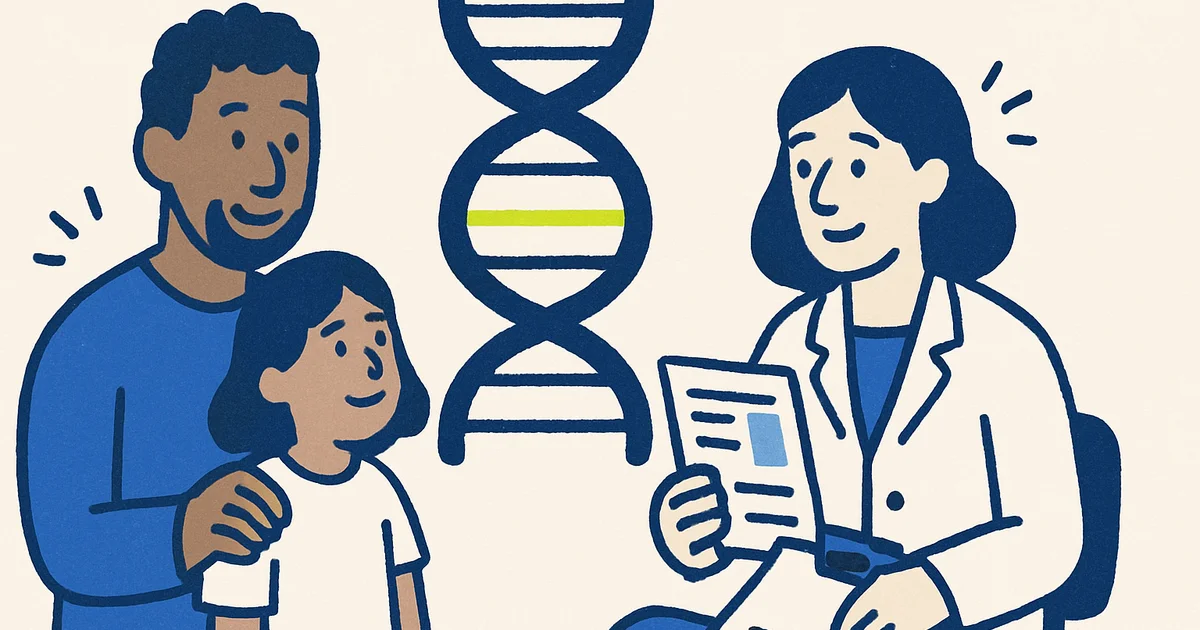
Li-Fraumeni syndrome (often written LFS) is a rare inherited condition caused by changes in a gene called TP53. People with Li-Fraumeni syndrome face a much higher-than-average chance of developing several types of cancer, often at younger ages than usual. Understanding whether your family might carry a TP53 gene change can help guide decisions about screening and early detection.
What causes Li-Fraumeni syndrome?
Li-Fraumeni syndrome happens when someone inherits a faulty copy of the TP53 gene. This gene normally helps control cell growth and repair damaged DNA – it acts as a ‘brake’ on cells turning cancerous. When TP53 isn’t working properly, cells can multiply out of control more easily, raising cancer risk.
The condition is autosomal dominant, which means inheriting just one changed copy of the gene (from either parent) is enough to cause the syndrome. If one parent has Li-Fraumeni syndrome, each of their children has a 50% chance of inheriting the gene change.
Not everyone with a TP53 change will develop cancer, but the risk is substantially higher than in the general population. The syndrome affects both men and women.
What cancers are linked to Li-Fraumeni syndrome?
People with Li-Fraumeni syndrome are at increased risk for several cancer types, often appearing before age 50:
- Breast cancer – one of the most common cancers in women with LFS, frequently diagnosed at younger ages than typical breast cancer
- Soft-tissue sarcomas – cancers of muscles, fat, blood vessels and connective tissues
- Osteosarcoma – bone cancer, which can occur in children, teenagers and young adults; research has identified associations between germline TP53 variants and osteosarcoma susceptibility
- Brain tumours – including gliomas and other types affecting the central nervous system
- Adrenocortical carcinoma – a rare cancer of the adrenal glands, sometimes appearing in early childhood
- Leukaemias – particularly acute leukaemias
People with the syndrome may develop more than one primary cancer during their lifetime. Cancers can appear in childhood, adolescence or adulthood.
Who should consider testing for Li-Fraumeni syndrome?
Testing might be relevant if your family has:
- Multiple close relatives (parent, sibling, child) diagnosed with LFS-related cancers
- Cancers at unusually young ages – for example, breast cancer before age 30, childhood sarcomas or brain tumours
- One person with several different primary cancers – not recurrences, but new cancers in different organs
- A known TP53 gene change already identified in the family
Your GP or a genetics specialist can review your family history to decide whether testing is appropriate. In the UK, families meeting certain criteria can be referred to NHS clinical genetics services for assessment and, if suitable, testing.
Not every early cancer or family history of cancer means Li-Fraumeni syndrome – many other factors influence cancer risk, and several genes besides TP53 are linked to hereditary cancer. A genetic counsellor can help interpret your specific situation.
What does testing involve?
Genetic testing for Li-Fraumeni syndrome looks for changes in the TP53 gene. The test uses a blood sample or, increasingly, a saliva or cheek-swab sample.
Results typically take several weeks. Three main outcomes are possible:
- Positive – a disease-causing TP53 change is found, confirming Li-Fraumeni syndrome
- Negative – no TP53 change detected; if someone else in the family is known to carry a specific variant, this result can be reassuring
- Uncertain (variant of uncertain significance) – a TP53 change is found, but it’s unclear whether it raises cancer risk; further research or family studies may be needed
Because finding a TP53 change has significant implications for cancer screening and family planning, genetic counselling before and after testing is strongly recommended. A counsellor explains what the results mean, discusses screening options, and addresses emotional and practical concerns.
What happens if I test positive?
If you’re found to carry a TP53 gene change, your healthcare team will discuss enhanced surveillance – more frequent or earlier cancer screening than offered to the general population. This can include:
- Regular whole-body MRI scans to look for tumours at an early stage
- Annual breast MRI (for women), often starting in the twenties or thirties
- Clinical examinations and blood tests at intervals tailored to your age and family history
- Discussions about risk-reducing options, though these are more limited for LFS than for some other hereditary cancer syndromes
Screening aims to detect cancers as early as possible, when treatment is most likely to succeed. The specific surveillance plan will depend on your age, sex and personal medical history.
Family members – particularly children and siblings – may also be offered testing if you test positive, so they can benefit from early screening if they’ve inherited the gene change.
What about children and Li-Fraumeni syndrome?
Because some LFS-related cancers (such as adrenocortical carcinoma and certain sarcomas) can appear in childhood, families often face difficult decisions about testing children. Genetic counselling helps parents weigh the benefits of early surveillance against the psychological impact of knowing a child carries a high-risk gene change.
In the UK, testing children for adult-onset conditions is generally discouraged unless there’s a clear medical benefit in childhood – but Li-Fraumeni syndrome is an exception, because surveillance can start early and may improve outcomes.
What you can do at Jeen
If you’re concerned about hereditary cancer risk in your family, our Cancer Risk Screening analyses 50 genes linked to inherited cancer predisposition, including TP53 and other genes associated with breast, ovarian, colorectal and other cancers. Every test includes a 45-minute specialist genetic counselling session to help you understand your results and discuss next steps. You can choose an at-home buccal swab (included), or an in-clinic blood draw for an additional fee (+£40), and results are available within 17-21 working days of your sample reaching the laboratory, with variant interpretation aligned to NHS Genomic Medicine Service standards.
If you’re also planning a family or want to understand carrier risks for recessive conditions alongside your own cancer predisposition, our Combined Cancer + Carrier Screening bundles the 50-gene hereditary cancer panel with our 1,008-gene carrier-screening panel in one test – one counselling session, one report, one price. It’s the best-value option when you want both sets of insights together.
Neither test replaces a formal diagnostic pathway if your family history suggests Li-Fraumeni syndrome and you meet NHS referral criteria, but they can provide clarity when your family history is less clear-cut or while waiting for an NHS genetics appointment. Your genetic counsellor will guide you on whether your results warrant onward referral.
Sources & further reading
- Mirabello L, et al. Germline TP53 variants and susceptibility to osteosarcoma. J Natl Cancer Inst. 2015. DOI:
10.1093/jnci/djv101. Accessed 14 July 2026. - MedlinePlus. Li-Fraumeni syndrome. Accessed 14 July 2026.
- Schneider K, et al. Li-Fraumeni Syndrome. GeneReviews. University of Washington, Seattle. Accessed 15 July 2026.