

What is genetic testing for thalassaemia, and should I consider it before or during pregnancy?
Thalassaemia is an inherited blood disorder that can be passed to your baby. Genetic testing before or during pregnancy helps you understand your risk and make informed decisions about family planning.
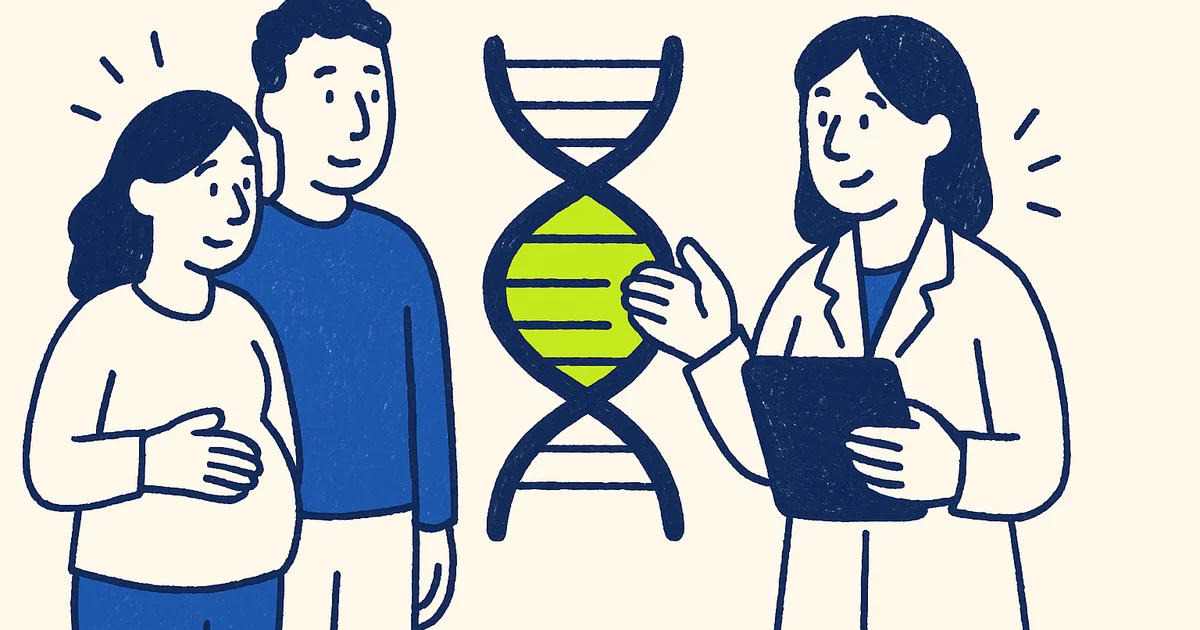
Thalassaemia is an inherited blood disorder that affects how your body makes haemoglobin – the protein in red blood cells that carries oxygen around your body. If you carry a thalassaemia gene change (also called being a ‘carrier’), you typically have no symptoms or only mild anaemia. But if both you and your partner are carriers, there’s a chance your baby could inherit a more severe form of the condition.
Genetic testing can tell you whether you carry a thalassaemia gene change. This information is especially important if you’re planning a pregnancy or already pregnant, because it helps you understand the risk to your baby and the choices available to you.
Who should consider thalassaemia genetic testing?
Thalassaemia carrier rates are higher in people with family origins in the Mediterranean, Middle East, South and Southeast Asia, and parts of Africa. However, anyone can carry a thalassaemia gene change.
You might consider testing if:
- You have family origins in regions where thalassaemia is more common, such as Cyprus, Greece, Italy, Turkey, India, Pakistan, Bangladesh, or Southeast Asian countries
- A family member has been diagnosed with thalassaemia or is a known carrier
- You have mild, unexplained anaemia that doesn’t respond to iron supplements
- You and your partner are planning a pregnancy and want to understand your genetic risks
- You’re already pregnant and want to know if your baby is at risk
In the UK, all pregnant women are offered screening for thalassaemia as part of routine antenatal care. If you’re found to be a carrier, your partner will be offered testing too.
What types of thalassaemia genetic testing are available?
Several types of test can detect thalassaemia gene changes, depending on when you’re tested and what information you need.
Carrier screening before pregnancy
A blood test can identify whether you carry gene changes for alpha-thalassaemia or beta-thalassaemia. The test looks at your haemoglobin levels and the size and shape of your red blood cells, then confirms any findings with DNA testing.
If both you and your partner are carriers for the same type of thalassaemia, there’s a 1 in 4 chance with each pregnancy that your baby will inherit two copies of the changed gene and have a more severe form of the condition.
Carrier screening during pregnancy
The NHS offers thalassaemia screening to all pregnant women early in pregnancy. If you’re found to be a carrier, your partner is tested. If both of you are carriers for the same type, you’ll be referred to a specialist for counselling and to discuss further testing for your baby.
Prenatal diagnostic testing
If both parents are carriers, you may be offered diagnostic testing during pregnancy to find out whether the baby has inherited thalassaemia. Options include:
- Chorionic villus sampling (CVS) from around 11 weeks of pregnancy, which takes a small sample of placental tissue
- Amniocentesis from around 15 weeks of pregnancy, which takes a sample of the fluid surrounding the baby
Both tests carry a small risk of miscarriage. You’ll be offered genetic counselling to help you understand the results and your options.
Pre-implantation genetic diagnosis (PGD)
If you’re planning a pregnancy through IVF and both you and your partner are known carriers, pre-implantation genetic diagnosis can test embryos before they’re transferred to the womb. PGD involves taking a cell from an embryo created in the laboratory and testing it for the thalassaemia gene changes. Only embryos unaffected by thalassaemia are selected for transfer. This approach avoids the need to consider terminating an affected pregnancy, though it is a complex procedure with an unpredictable outcome.
What do the test results mean?
Your test result will tell you whether you’re a carrier, and if so, which type of thalassaemia gene change you have.
- You’re not a carrier: Your baby cannot inherit thalassaemia from you, even if your partner is a carrier.
- You’re a carrier, your partner is not: Your children may be carriers, but they will not have severe thalassaemia.
- Both of you are carriers for the same type: There’s a 1 in 4 (25%) chance with each pregnancy that your baby will inherit two copies of the changed gene and have severe thalassaemia. There’s a 1 in 2 (50%) chance your baby will be a carrier like you, and a 1 in 4 (25%) chance your baby will not inherit the gene change at all.
If both of you are carriers, you’ll be referred to a specialist genetic counsellor or clinical geneticist. They can explain what the different forms of thalassaemia mean for a child, the likelihood of each outcome, and the options available to you – including prenatal testing, PGD if you’re considering IVF, or proceeding with the pregnancy and planning care for a baby with thalassaemia.
What you can do at Jeen
Jeen offers comprehensive carrier screening to help you understand your genetic risks before or during pregnancy.
Before pregnancy: comprehensive carrier screening
Our Carrier Screening test analyses 1,008 genes for inherited recessive conditions, including both alpha- and beta-thalassaemia. The test uses an at-home buccal swab (cheek swab), so you can collect your sample at home. Results are available within 17–21 working days of the sample reaching the laboratory. Every test includes 30-minute genetic counselling to help you understand your results and what they mean for your family planning. Our variant interpretation is aligned with the NHS Genomic Medicine Service standards.
For couples planning a family, our CGT – Igenomix Carrier Genetic Test offers whole-exome sequencing that reports 1,993 genes (for males) or 2,057 genes (for females), covering more than 2,200 inherited recessive conditions including thalassaemia. This test requires a blood sample – you can arrange a blood draw at any of our 200+ partner collection points (additional £40) or book a home-nurse visit (additional £65). Results are available within 25 working days of sample receipt, and every test includes 30-minute pre-test genetic counselling to discuss your medical and family history.
During pregnancy: non-invasive prenatal screening
If you’re already pregnant and both you and your partner are known carriers, our Niptify NIPT test is a non-invasive prenatal screen available from 10 weeks of pregnancy. While NIPT does not directly test for thalassaemia gene changes, it screens for a range of chromosomal conditions using a simple blood sample. Results are available within 5–10 working days. Every test includes a free midwife consultation before you take the test, and you can choose to include fetal sex information with greater than 99% accuracy.
Both carrier screening tests offer much broader coverage than the small, fixed set of conditions screened in the NHS newborn blood-spot test, giving you a comprehensive picture of your reproductive genetic risks. If you’re already pregnant and want specific thalassaemia testing, your NHS antenatal team or our genetic counsellors can guide you toward diagnostic testing options.
Sources & further reading
- NHS - Thalassaemia Accessed 25 September 2026.
- Pre-implantation genetic diagnosis (Traeger-Synodinos J, 2017) Accessed 25 September 2026.
- NICE Clinical Knowledge Summaries - Thalassaemia Accessed 25 September 2026.