

Should I have genetic testing if I'm pregnant and have a family history of intellectual disability?
If intellectual disability runs in your family, you may be wondering about genetic testing during pregnancy. This guide explains your options for screening and diagnosis, and when to speak to a doctor.
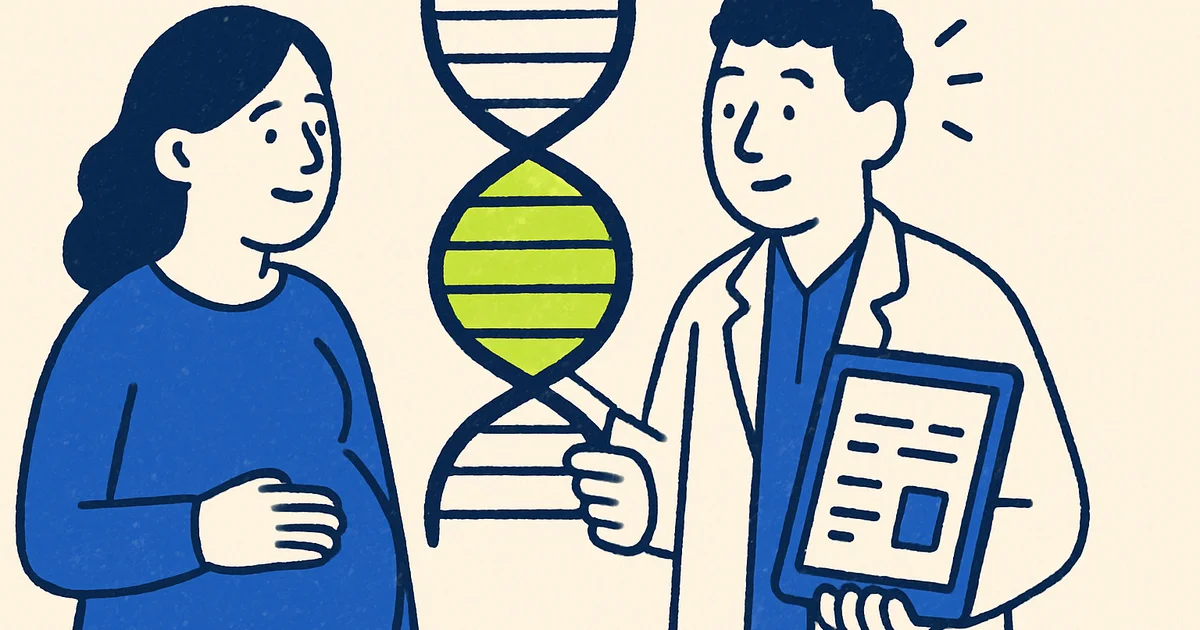
If someone in your family has intellectual disability, you might be concerned about passing it on to your baby. Genetic testing during pregnancy can sometimes help you understand the risk, but it’s important to know what these tests can and cannot tell you.
What causes intellectual disability?
Intellectual disability can have many different causes. Some cases are caused by changes in a single gene that can be inherited from parents. Other cases result from chromosomal conditions (where a baby has extra or missing genetic material), complications during pregnancy or birth, or environmental factors. In many cases, the cause is never identified.
When intellectual disability runs in families, it may be because a gene change is being passed from one generation to the next. Sometimes parents carry a gene change without having any symptoms themselves - they’re called ‘carriers’. If both parents carry the same gene change, there’s a chance their baby could inherit two copies and be affected.
What testing is available during pregnancy?
The type of testing that might help depends on what’s known about the intellectual disability in your family. There are two main approaches: screening tests and diagnostic tests.
Screening tests
Screening tests look at how likely it is that your baby has certain conditions. They don’t give a definite yes or no answer. Non-invasive prenatal testing (NIPT) is a screening test that analyses small fragments of DNA from the placenta in your blood. It can detect certain chromosomal conditions, such as Down’s syndrome, that are associated with intellectual disability.
NIPT is highly accurate for the conditions it screens for, but it only covers a limited number of chromosomal conditions. It won’t detect most single-gene causes of intellectual disability, even if they run in your family. The test can be done from around 9-10 weeks of pregnancy, depending on which version you choose.
Diagnostic tests
Diagnostic tests give a more certain answer. The two main options are:
- Chorionic villus sampling (CVS) - taking a small sample of placental tissue, usually between 11 and 14 weeks of pregnancy
- Amniocentesis - taking a sample of the fluid around your baby, usually from 15 weeks onwards
Both procedures carry a small risk of miscarriage. The sample can be tested using standard chromosome analysis (karyotyping) or, increasingly, chromosomal microarray analysis. Microarray can detect smaller chromosomal changes than traditional karyotyping and has been shown to identify additional genetic causes in pregnancies where ultrasound scans show abnormalities.
If doctors already know which specific gene change runs in your family, the sample can be tested directly for that change. This is called targeted testing and gives the clearest answer about whether your baby has inherited the condition.
Should you have carrier screening before or during pregnancy?
Carrier screening can tell you whether you or your partner carry gene changes that could be passed to your children. Information about carrier screening should be provided to every pregnant woman, and ideally it’s done before pregnancy so you can consider all your options. However, it can also be done once you’re already pregnant.
If one member of a couple is found to be a carrier for a specific condition, the other partner should be offered testing. If both partners are carriers of the same condition, genetic counselling should be offered to discuss the chances of having an affected child and what prenatal testing might be available.
Patients found to be carriers should be encouraged to inform their relatives, who may also be at risk of carrying the same gene change and may want screening themselves.
What to consider before testing
Before having any genetic test during pregnancy, it’s worth thinking through what you’d do with the information. Some questions to consider:
- What would a positive result mean for you? Would it change decisions about the pregnancy, or help you prepare for your baby’s needs?
- What about uncertain results? Sometimes tests find genetic changes where doctors can’t be sure whether they’ll cause problems. This is called a variant of unknown significance.
- Do you want to know about all conditions, or only certain ones? More comprehensive tests may detect findings unrelated to intellectual disability, including conditions that appear later in life.
Pretest and posttest counselling are important to ensure you understand what the results mean. Your GP can refer you to a genetic counsellor, who can help you work through these questions and understand your family history.
What you can do at Jeen
If you’re already pregnant, Jeen offers several non-invasive prenatal screening tests that can be done from early pregnancy:
-
Panorama NIPT screens for 9 chromosomal conditions from 9 weeks of pregnancy, with results in 7-10 working days. A free midwife consultation before you take the test is included, and you can choose to find out your baby’s sex with over 99% accuracy.
-
PrenatalSafe 3 UK offers the fastest turnaround - 2-4 working days - screening for the 3 most common chromosomal conditions from 10 weeks. The test has a detection rate over 99% for trisomy 21 (Down’s syndrome). A free midwife consultation is included, and results are reviewed by your midwife, with specialist follow-up if high-risk.
-
VeriSeq v2 NIPT is analysed on Illumina’s VeriSeq v2 platform at TDL Genetics in the UK. It screens for the 3 most common chromosomal conditions from 10 weeks, with optional fetal sex reporting and a 3-4 working day turnaround. A free midwife consultation is included.
-
Panorama Microdeletions offers a 13-condition panel including microdeletions (small missing pieces of chromosomes) from 9 weeks of pregnancy, with a detection rate over 99% for trisomy 21. Results take 7-10 working days, and a free midwife consultation is included.
-
Niptify NIPT screens for a broader 33-condition panel from 10 weeks of pregnancy, with results in 5-10 working days. A free midwife consultation is included, and you can opt for fetal sex reporting with over 99% accuracy.
These screening tests can detect certain chromosomal causes of intellectual disability, though they won’t identify most single-gene conditions. The NHS offers basic screening for the most common chromosomal conditions; these expanded panels cover additional, rarer chromosomal abnormalities. If you have a known gene change in your family, your GP or genetic counsellor can advise whether targeted diagnostic testing through the NHS would be more appropriate for your situation.
Sources & further reading
- Committee Opinion No. 691: Carrier Screening for Genetic Conditions DOI:
10.1097/AOG.0000000000001952. Accessed 28 July 2026. - Prenatal Diagnosis: Screening and Diagnostic Tools DOI:
10.1016/j.ogc.2017.02.004. Accessed 28 July 2026. - Microarrays in prenatal diagnosis DOI:
10.1016/j.bpobgyn.2017.01.003. Accessed 28 July 2026.