

Should I have genetic testing for Lynch syndrome if multiple family members have had colon or uterine cancer?
If several close relatives have had bowel or womb cancer, especially at younger ages, it may point to Lynch syndrome - an inherited condition that raises cancer risk. Genetic testing can clarify your own risk and guide screening.
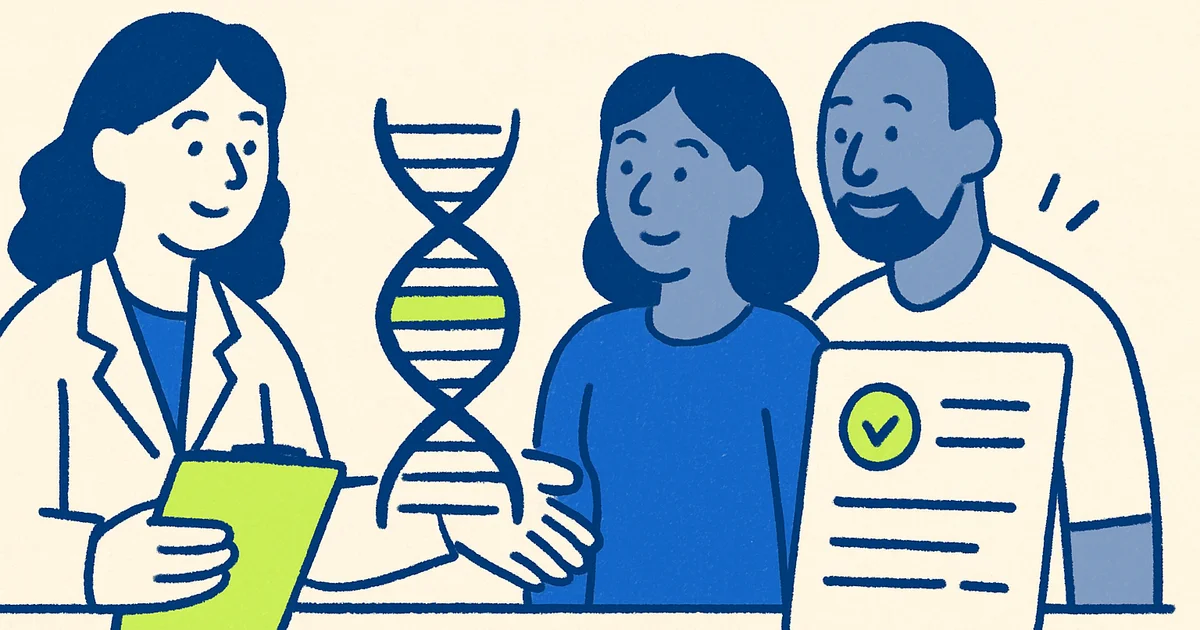
A pattern of bowel (colorectal) or womb (uterine) cancers in your family - particularly when several close relatives have been affected, or when cancers appear at younger ages - can be a sign of Lynch syndrome. This inherited condition significantly raises the risk of certain cancers, and knowing whether you carry it changes how you and your doctors approach screening and prevention.
What is Lynch syndrome?
Lynch syndrome is caused by changes (variants) in genes responsible for repairing mistakes in DNA. When these repair genes don’t work properly, cells accumulate errors that can lead to cancer. The main genes involved are MLH1, MSH2, MSH6, and PMS2 - collectively known as mismatch repair genes.
People with Lynch syndrome have a substantially higher lifetime risk of developing:
- Bowel (colorectal) cancer - the most common cancer associated with Lynch syndrome
- Womb (endometrial or uterine) cancer - affecting the lining of the uterus
- Ovarian cancer
- Cancers of the stomach, small bowel, pancreas, kidney, bladder, and bile ducts
These cancers often appear at younger ages than sporadic (non-inherited) cases - frequently before age 50. The condition follows an autosomal dominant pattern: if one parent carries a Lynch syndrome variant, each child has a 50% chance of inheriting it.
When does family history suggest Lynch syndrome?
Certain patterns in your family tree should prompt a conversation with your GP about genetic testing:
- Three or more relatives with Lynch-related cancers (bowel, womb, ovarian, stomach, or others listed above) across at least two generations, with at least one diagnosed before age 50
- Two close relatives with bowel or womb cancer, especially if one was diagnosed under 50 or someone has had two Lynch-related cancers (for example, bowel cancer followed by womb cancer)
- One relative diagnosed with bowel cancer before age 50, particularly if the tumour showed features suggesting mismatch repair problems
- You’ve had bowel or womb cancer yourself at a young age, or multiple Lynch-related cancers
The closer the relatives (parents, siblings, children) and the younger the age at diagnosis, the more the pattern suggests an inherited cause rather than chance.
What does genetic testing involve?
Genetic testing for Lynch syndrome analyses the MLH1, MSH2, MSH6, and PMS2 genes, looking for variants that disrupt DNA repair. The test typically uses a blood sample or a cheek (buccal) swab.
If a relative has already been diagnosed with Lynch syndrome and the family’s specific variant is known, your test can look directly for that change - a straightforward yes-or-no answer. If no one in the family has been tested yet, the laboratory sequences all four main genes to search for any disease-causing variant.
Results usually fall into three categories:
- Pathogenic variant detected - you have Lynch syndrome and face increased cancer risks
- No pathogenic variant detected - if the family variant is known and you don’t carry it, your risk returns to the general population level; if no family variant has been identified, the result is less definitive
- Variant of uncertain significance (VUS) - a change is found but current evidence can’t confirm whether it causes disease; this doesn’t change your medical management and is treated as a negative result for now
Genetic counselling - a discussion with a specialist trained in inherited conditions - is an essential part of testing. The counsellor helps you understand what the test can and cannot tell you, how results might affect family members, and what screening or prevention options follow from each outcome.
What happens if you test positive?
A confirmed Lynch syndrome diagnosis opens the door to more intensive surveillance and prevention strategies:
- Regular colonoscopy - typically every one to two years from your mid-twenties or early thirties, depending on which gene is affected. Catching polyps early, before they turn cancerous, significantly reduces bowel cancer risk.
- For women: gynaecological screening and risk-reducing surgery - annual womb and ovarian surveillance may be offered, though evidence for its effectiveness is limited. Many women with Lynch syndrome consider removing the womb and ovaries (hysterectomy and oophorectomy) once childbearing is complete, which substantially lowers the risk of womb and ovarian cancer.
- Aspirin - some evidence suggests daily aspirin reduces bowel cancer risk in Lynch syndrome, though the optimal dose and duration are still being studied.
- Family testing - once a variant is identified in you, close relatives can be tested for that specific change, clarifying their own risk.
Screening and early detection are highly effective for Lynch syndrome: regular colonoscopy can reduce bowel cancer death rates considerably, and surveillance for other cancers helps catch disease at earlier, more treatable stages.
What if the family history is less clear-cut?
Not every family with multiple cancers has Lynch syndrome. Cancers are common - around one in two people in the UK will develop cancer at some point - so some clustering happens by chance, particularly in larger families or when relatives share lifestyle risk factors like smoking.
Other hereditary cancer syndromes can also cause bowel and womb cancers. For example, variants in genes like BRCA1 and BRCA2 raise ovarian and womb cancer risk, while PTEN and STK11 variants are linked to different inherited cancer patterns.
If your family history is suggestive but doesn’t meet clear criteria, your GP may refer you to a clinical genetics service for assessment. Geneticists review the full family tree, sometimes test tumour tissue from affected relatives for signs of mismatch repair problems, and decide whether genetic testing is appropriate.
What you can do at Jeen
At Jeen, we offer genetic screening for hereditary cancer risk, including Lynch syndrome. Our Colorectal Cancer Risk Screening analyses a 14-gene panel focused on inherited bowel cancer predisposition, covering MLH1, MSH2, MSH6, PMS2, and other genes linked to colorectal cancer. For broader coverage, our Cancer Risk Screening examines 50 genes associated with hereditary cancer across multiple sites - bowel, womb, ovary, breast, and others.
Both tests include genetic counselling with a specialist - a 30-minute session for the colorectal panel, 45 minutes for the comprehensive screen - to discuss your family history, interpret results, and guide next steps. An at-home buccal swab is included; if you prefer a blood sample, an in-clinic draw is available for an additional £40. Variant interpretation aligns with NHS Genomic Medicine Service standards, and results are typically ready within 17-21 working days of the laboratory receiving your sample.
If you’re also planning a family and want to understand both your cancer risk and what genetic conditions you might pass on, our Combined Cancer + Carrier Screening bundles our 50-gene hereditary cancer panel with a 1,008-gene carrier screen - one counselling session, one report, one price.
The NHS offers genetic testing for Lynch syndrome through clinical genetics services when family history meets referral criteria. Our service provides direct access without a GP referral, broader gene coverage beyond the core Lynch genes, and the convenience of at-home sample collection. If you test positive for a high-risk variant, we provide a clinical-grade report you can share with your GP, and your ongoing screening and prevention would then be coordinated through the NHS.
Sources & further reading
- NHS - Lynch syndrome Accessed 25 August 2026.
- Cancer Research UK - Lynch syndrome Accessed 25 August 2026.
- National Cancer Institute - Genetics of Colorectal Cancer (PDQ®) Accessed 25 August 2026.